




Copyright © 2026 NOVABEYOND LIMITED (company number 2833487). All rights reserved.
Address: UNIT 616 6/F KAM TEEM INDUSTRIAL BUILDING 135 CONNAUGHT ROAD WEST SAI WAN HONGKONG.
Summary
This guide explains how Mintegral advertising costs are shaped by niche audience targeting, platform and placement choices, creative format complexity, and competitive demand. It outlines how to plan and measure spend using CPM, CPC, and CPA, and how to budget through research, clear objectives, dynamic allocation, and continuous monitoring. It also covers scalability tactics leveraging AI/ML, diversifying platforms, and executing cross-channel strategies alongside challenges of consistency, quality, and complexity. The central theme is a data-driven, agile approach to maximize ROI and sustain growth in a specialized market.
Why should you still care about Mintegral (Mintegral) ad costs in 2026?
By the end of 2025, overall programmatic advertising CPM had generally increased by around 5%–10% compared with 2021, which means advertisers must pay more budget for the same level of exposure. As a programmatic platform focused on mobile traffic, Mintegral’s cost fluctuations directly affect user acquisition strategies for overseas games, utility apps and e‑commerce apps.
1. Overall digital advertising CPM rose from about 2.80–3.10 USD in 2021 to 3.50–3.80 USD in 2023, an increase of close to 10%.
2. The average CPM for programmatic advertising was about 6.50 USD in 2021 and climbed to around 7.50 USD by 2023, also showing a clear upward trend.
3. From 2021 to 2023, programmatic ad spend grew by roughly 20%, intensifying competition and driving up the price of high‑quality inventory.
For advertisers who want to continue scaling their campaigns in 2026, understanding the 2025 cost ranges and pricing logic is the foundation for optimizing budgets and improving ROAS.
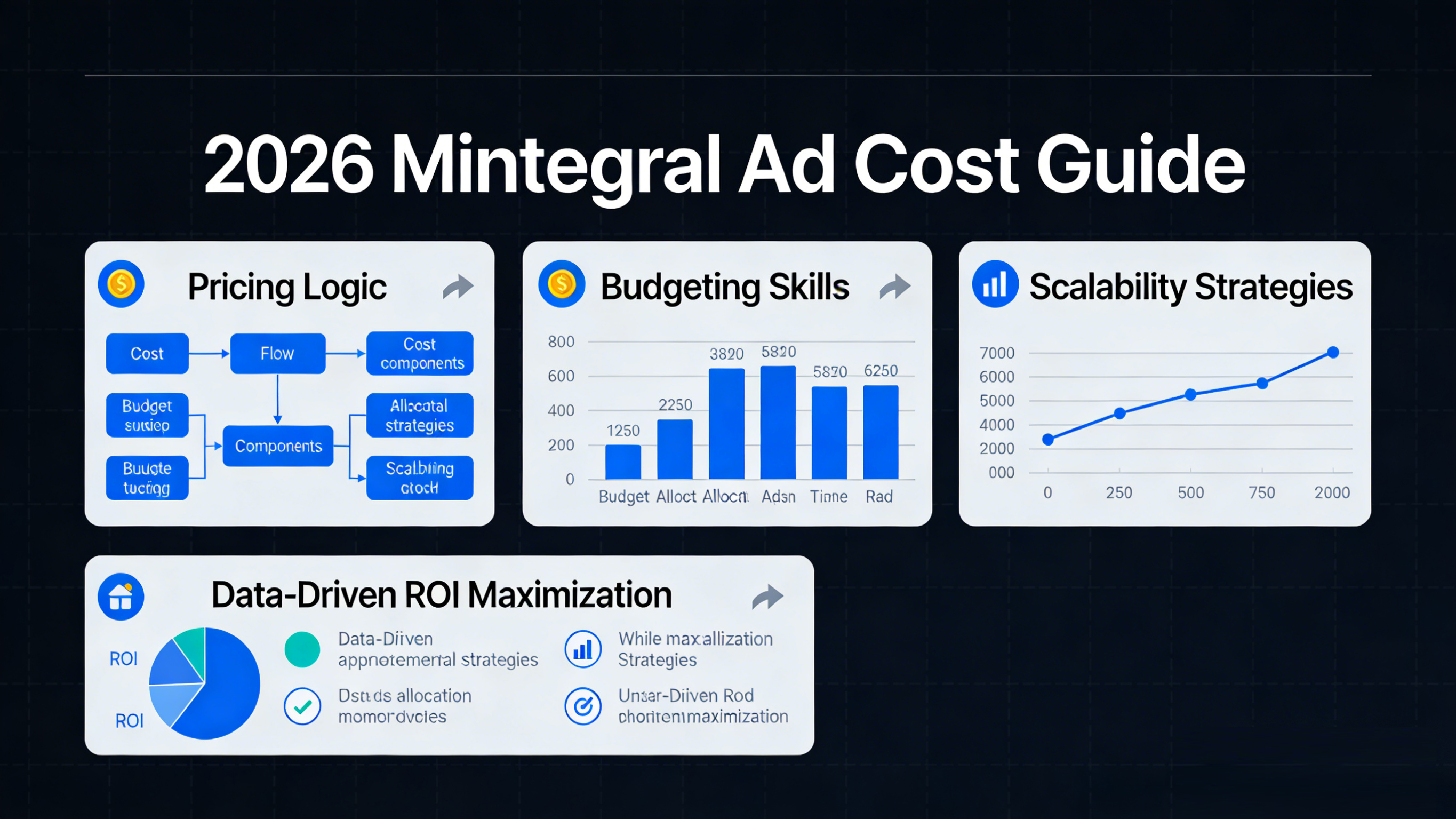
Understanding Mintegral Advertising Costs
Mintegral advertising represents a specialized segment within the broader digital advertising ecosystem. It is characterized by its focus on marketing products and services related to Mintegrals, including but not limited to mining equipment, Mintegral rights, and related technologies. The costs associated with Mintegral advertising are multifaceted and influenced by a plethora of variables, which we will explore in detail.
Defining the Mintegral Advertising Landscape
Mintegral advertising is not merely about promoting products; it's about understanding the complex ecosystem in which these products operate. This involves recognizing the regulatory environment, sustainability concerns, and the technological innovations driving the industry. Advertisers must possess an in depth knowledge of the sector to tailor their strategies effectively.
In addition to understanding the products themselves, advertisers must also grasp the broader market trends. This includes keeping abreast of geopolitical factors that may impact Mintegral supply chains, economic shifts affecting the industry, and technological advancements that could change the landscape. By doing so, advertisers can position their messages in a way that resonates with the current market conditions.
Furthermore, Mintegral advertising involves a degree of specialization that goes beyond traditional sectors. This specialization means understanding the technical jargon, the unique selling propositions of Mintegral-related products, and the specific needs of the target audience. Such a deep understanding ensures that advertising efforts are not only relevant but also impactful.
Key Factors Influencing Mintegral Advertising Costs
To comprehend the financial commitments required for Mintegral advertising, it is necessary to delineate the primary factors that exert influence over pricing.
Target Audience Specificity
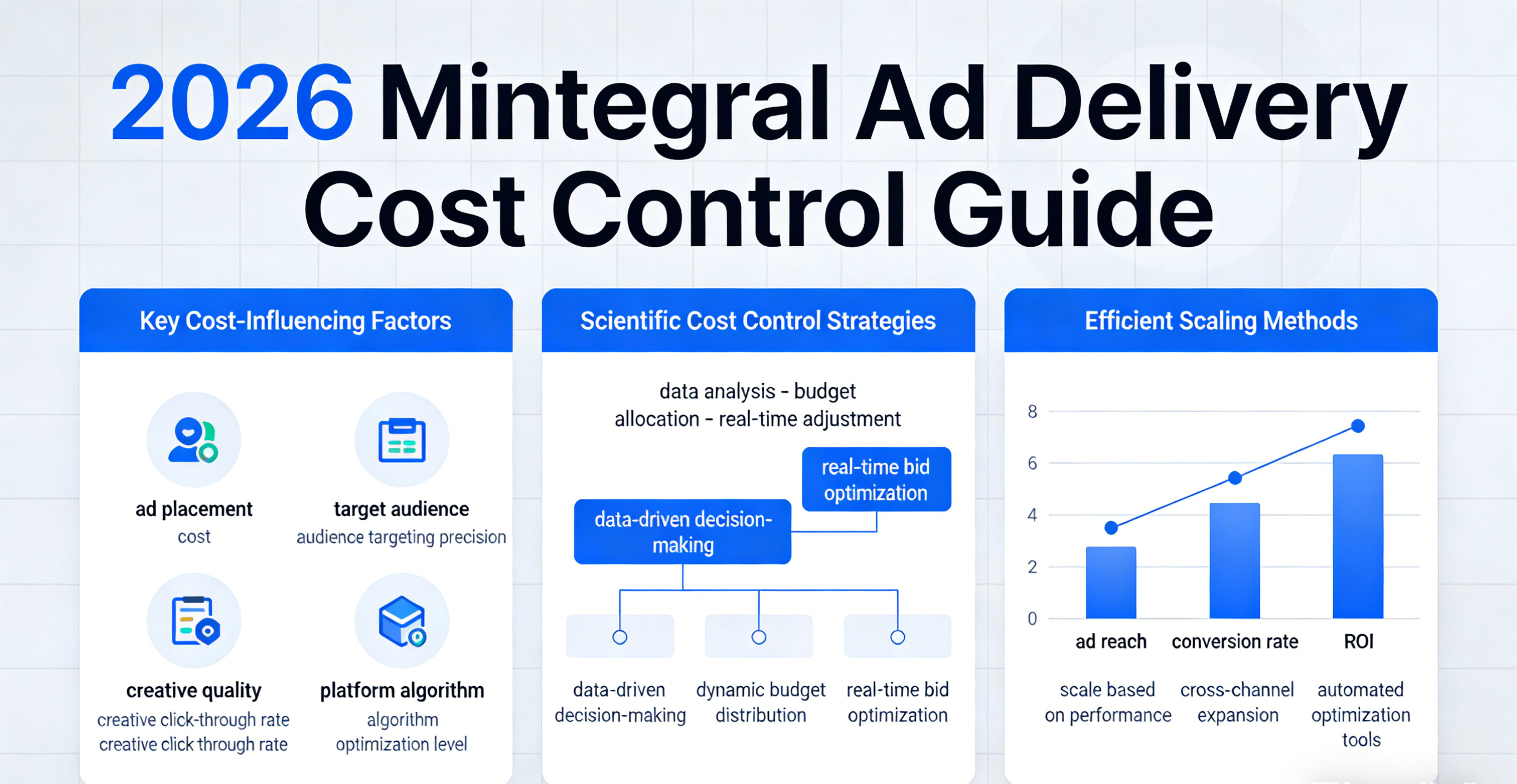
The specificity of the target audience plays a critical role in determining ad costs. In Mintegral advertising, the audience often consists of highly specialized groups such as industry professionals, investors, and businesses operating within the Mintegral sector. Reaching these niche audiences requires precision in targeting, which often comes at a higher cost per impression or click.
Furthermore, understanding the demographics, interests, and behaviors of this specific audience is essential. By leveraging data analytics and market research, advertisers can refine their targeting strategies to ensure maximum engagement and return on investment. The more precise the targeting, the more effective the advertising campaign will be.
In addition, developing content that speaks directly to the needs and interests of this audience is crucial. This might involve creating highly technical content, industry reports, or expert interviews that provide value to the audience. Such content not only enhances engagement but also justifies the higher advertising costs associated with niche targeting.
Ad Placement and Platform
The choice of platform plays a pivotal role in determining ad costs. Platforms that cater specifically to industrial sectors or B2B markets tend to charge a premium due to their specialized audience. For instance, advertising on industry-specific platforms or journals may incur higher costs compared to general platforms like Google Ads.
Moreover, selecting the right platform involves understanding where the target audience spends their time. Industry-specific websites, trade journals, and professional networks are often more effective than mainstream platforms for reaching Mintegral industry professionals. Advertisers must evaluate the potential reach and engagement of each platform to make informed decisions.
Additionally, the format and placement of ads on these platforms can significantly impact costs. Premium placements, such as front-page spots or featured content sections, often come at a higher price but offer increased visibility. Advertisers must weigh the benefits of such placements against their budget constraints to optimize their ad spend.
Ad Format and Creative Complexity
The complexity and format of advertisements, whether they are video ads, interactive media, or standard display ads, also impact the cost. High-quality, engaging content tends to require a greater investment but can yield higher returns.
Creating compelling ad formats involves a combination of creativity and technical expertise. For instance, interactive ads that engage the audience through quizzes, surveys, or virtual tours can enhance user experience but require more resources to develop. Similarly, high-production-value video ads can captivate audiences but demand a larger budget.
Furthermore, the creative complexity of an ad should align with the campaign's objectives. While simple display ads may suffice for brand awareness campaigns, more intricate formats are necessary for campaigns aiming to drive conversions or educate the audience. By aligning creative strategies with campaign goals, advertisers can maximize the effectiveness of their advertising efforts.
Competition and Demand
The level of competition within the Mintegral sector, coupled with market demand for advertising space, directly affects pricing. In periods of high demand, costs may escalate significantly.
Understanding the competitive landscape is crucial for advertisers to position their offerings effectively. This involves analyzing competitor strategies, identifying market gaps, and differentiating their products or services. By doing so, advertisers can create compelling value propositions that resonate with the target audience.
Moreover, market demand can fluctuate based on various factors, such as industry trends, economic conditions, and technological advancements. Advertisers must stay agile and adapt their strategies to respond to these changes. By monitoring market dynamics closely, they can optimize their ad spend and maintain a competitive edge.
Calculating Mintegral Ad Costs
The methodology for calculating ad costs within the Mintegral sector involves a sophisticated blend of analytics and strategy. Advertisers must consider the Cost Per Mille (CPM), Cost Per Click (CPC), and Cost Per Action (CPA) metrics, which provide a granular view of expenditure relative to campaign objectives.
Understanding CPM, CPC, and CPA Metrics
CPM (Cost Per Mille)
This metric is integral for brand awareness campaigns, where the aim is to reach a broad audience within the Mintegral industry. CPM measures the cost per thousand impressions, making it ideal for campaigns focused on increasing visibility and brand recognition.
Brand awareness campaigns often prioritize broad reach over direct conversions. By leveraging CPM, advertisers can assess the efficiency of their campaigns in reaching a large audience. However, it's essential to balance reach with relevance to ensure that the ads are seen by the right people.
Additionally, CPM campaigns can benefit from creative strategies that capture attention and leave a lasting impression. This might involve using eye-catching visuals, compelling headlines, or unique storytelling techniques to engage the audience effectively.
CPC (Cost Per Click)
For targeted campaigns focused on driving traffic to specific web pages or landing sites, CPC is a critical metric. It reflects the cost incurred each time a potential customer engages with an ad.
Targeted campaigns require precise audience targeting and compelling calls to action. By focusing on CPC, advertisers can measure the effectiveness of their ads in generating clicks and driving traffic to their desired destinations. This metric is particularly useful for campaigns aiming to boost website visits or promote specific offers.
Moreover, optimizing CPC campaigns involves continuous testing and refinement. Advertisers should experiment with different ad creatives, headlines, and landing pages to identify the most effective combinations. By analyzing performance data, they can make data-driven decisions to improve campaign outcomes.
CPA (Cost Per Action)
This metric is crucial for assessing the cost-effectiveness of campaigns designed to elicit a specific action, such as signing up for a newsletter or downloading a whitepaper.
CPA campaigns focus on driving specific actions that align with business objectives. By measuring the cost per desired action, advertisers can evaluate the return on investment of their campaigns. This metric is particularly valuable for lead generation or conversion-focused campaigns.
To optimize CPA campaigns, advertisers should ensure a seamless user experience from ad engagement to action completion. This involves creating clear and compelling calls to action, optimizing landing pages for conversions, and minimizing friction in the user journey. By focusing on user experience, advertisers can enhance the effectiveness of their CPA campaigns.
Budgeting for Mintegral Advertising
Effective budgeting is the cornerstone of successful advertising campaigns. In the Mintegral sector, where costs can fluctuate based on external market conditions and technological advancements, strategic budget allocation is essential.
Strategic Budget Allocation
Market Research and Analysis
Conducting thorough market research to understand current trends, audience behavior, and competitive strategies is vital. This research informs budget allocation by highlighting areas of potential opportunity and risk.
Market research involves gathering insights into the target audience's preferences, pain points, and purchasing behavior. By understanding these factors, advertisers can tailor their messaging and budget allocation to maximize impact. Additionally, competitive analysis provides valuable insights into industry benchmarks and successful strategies.
Furthermore, market research should be an ongoing process rather than a one-time activity. By continuously monitoring market dynamics, advertisers can adapt their budget allocation to respond to emerging trends and opportunities. This proactive approach ensures that advertising efforts remain relevant and effective.
Setting Clear Objectives
Defining clear, measurable objectives enables businesses to allocate resources effectively. Objectives should align with broader business goals, whether they pertain to brand awareness, lead generation, or sales conversion.
Setting objectives involves identifying the desired outcomes of the advertising campaign. These objectives should be specific, measurable, achievable, relevant, and time-bound (SMART). By aligning objectives with business goals, advertisers can ensure that their budget allocation supports the overall strategic direction.
Moreover, clear objectives provide a framework for evaluating campaign performance. By measuring progress against predefined goals, advertisers can assess the effectiveness of their budget allocation and make informed adjustments as needed. This data-driven approach enhances accountability and decision-making.
Dynamic Budgeting
Given the volatility of the Mintegral market, adopting a flexible budgeting approach that allows for adjustments based on real-time data is advantageous. Dynamic budgeting can optimize resource allocation and maximize ROI.
Dynamic budgeting involves regularly reviewing and adjusting budget allocations based on campaign performance and market conditions. This approach enables advertisers to respond to changes in audience behavior, competitive dynamics, and industry trends. By remaining agile, advertisers can optimize their ad spend and maximize return on investment.
Additionally, dynamic budgeting encourages experimentation and innovation. Advertisers can allocate a portion of their budget to test new strategies, platforms, or creative approaches. By analyzing the results of these experiments, they can identify successful tactics and scale them for greater impact.
Monitoring and Adjusting Budgets
Continuous monitoring of campaign performance is imperative. Utilizing advanced analytics tools to track key performance indicators (KPIs) ensures that budgets are being used efficiently. Adjustments should be made as necessary to improve performance and achieve desired outcomes.
Monitoring campaign performance involves analyzing various metrics, such as impressions, clicks, conversions, and engagement rates. By tracking these KPIs, advertisers can identify trends, assess the effectiveness of their strategies, and make data-driven decisions to optimize budget allocation.
Moreover, advanced analytics tools provide valuable insights into audience behavior and campaign performance. By leveraging these tools, advertisers can gain a deeper understanding of their audience's preferences and interactions, allowing for more targeted and effective advertising efforts.
Adjusting budgets based on performance data is a critical aspect of optimizing advertising campaigns. Advertisers should be prepared to reallocate resources to high-performing strategies or platforms while scaling back on underperforming ones. This iterative approach ensures that budgets are used efficiently and effectively to achieve desired outcomes.
Scalability in Mintegral Advertising
Scalability refers to the capacity of advertising strategies to grow and adapt in response to evolving business needs and market conditions. In the context of Mintegral advertising, scalability is essential for sustaining growth and competitiveness.
Enhancing Scalability
Leveraging Technology
The integration of cutting-edge technologies such as artificial intelligence and machine learning can enhance the scalability of Mintegral advertising campaigns. These technologies facilitate precise targeting and personalization, thus improving efficiency and impact.
Artificial intelligence and machine learning enable advertisers to analyze vast amounts of data and identify patterns in audience behavior. By leveraging these insights, advertisers can create highly targeted and personalized campaigns that resonate with their audience. This level of precision enhances the scalability of advertising efforts, allowing businesses to reach a wider audience without sacrificing relevance.
Moreover, technology can automate various aspects of the advertising process, such as ad creation, optimization, and reporting. Automation streamlines workflows, reduces manual effort, and enhances efficiency, enabling advertisers to scale their campaigns more effectively.
Expanding Platform Usage
Diversifying the platforms used for advertising can enhance reach and scalability. By incorporating a mix of traditional and digital platforms, businesses can tap into a wider audience base and optimize ad performance.
Expanding platform usage involves identifying new opportunities for reaching the target audience. This might include exploring emerging digital platforms, leveraging social media channels, or partnering with industry publications. By diversifying platform usage, advertisers can increase their reach and engagement, enhancing the scalability of their campaigns.
Additionally, cross-platform strategies enable advertisers to reinforce their messaging across multiple touchpoints. Consistent messaging across platforms enhances brand recognition and strengthens audience connections, driving long-term engagement and loyalty.
Cross-Channel Strategies
Implementing cross-channel advertising strategies that utilize a blend of digital, social, and traditional media can enhance scalability. This approach ensures consistent messaging across various touchpoints, thus reinforcing brand presence.
Cross-channel strategies involve creating integrated campaigns that leverage the strengths of different media channels. By combining digital, social, and traditional media, advertisers can reach their audience through multiple touchpoints, enhancing brand visibility and engagement.
Moreover, cross-channel strategies enable advertisers to tailor their messaging to the unique characteristics of each platform. This customization ensures that the content resonates with the audience, maximizing impact and driving desired outcomes. By leveraging cross-channel strategies, advertisers can enhance the scalability of their campaigns and achieve sustained growth.
Challenges and Considerations
While scalability offers significant advantages, it also presents challenges. Ensuring message consistency, maintaining quality, and managing increased complexity require strategic foresight and careful planning.
Achieving scalability without compromising quality requires a balance between automation and human oversight. While technology can streamline processes, human creativity and strategic thinking are essential for crafting compelling messages and maintaining brand integrity.
Additionally, managing increased complexity involves coordinating efforts across multiple platforms and channels. Advertisers must ensure that their messaging remains consistent and aligned with brand values, even as they expand their reach. This requires effective communication and collaboration among team members and stakeholders.
How Novabeyond Helps You Reduce Mintegral Media Cost Risks in 2026
As a service team specializing in overseas advertising account opening and strategy optimization, Novabeyond has accumulated extensive hands‑on experience on DSP platforms such as Mintegral. Our role is not just to “help you open an account”, but to help you achieve sustainable scale‑up with lower risk against the backdrop of continuously rising costs in 2025–2026.
By opening a Mintegral/Mintegral advertising account through Novabeyond, you can benefit from:
1. A compliant and stable account system: Access official Mintegral resources or top‑tier partner accounts, reducing risk control issues caused by irregular account opening channels.
2. Industry‑aligned bidding benchmarks: Based on your vertical and target regions, we provide reasonable CPM/CPI/ROAS reference ranges for 2025–2026, instead of blindly pushing bids up or down.
3. Integrated multi‑platform planning: We manage accounts for Mintegral, Meta, Google, TikTok, Kwai, BIGO Ads, Molocco and more in a unified way, avoiding budget waste caused by each platform “fighting its own battle”.
4. Higher account approval rate and delivery continuity: Drawing on historical cases, Novabeyond’s account opening success rate, account longevity and ROI improvement across multiple platforms significantly outperform advertisers who open accounts on their own, which is critical for long‑term, stable campaigns.
If you are planning to increase your 2026 budget on Mintegral/Mintegral but are worried about cost overruns or account instability, Novabeyond can provide you with a one‑stop solution that covers everything from account opening and strategy to day‑to‑day optimization.
Q&A
Question: When should I use CPM, CPC, or CPA for Mintegral advertising campaigns?
Short answer: Map the metric to your objective. Use CPM to maximize brand visibility among industry stakeholders when reach and recognition are the priority. Choose CPC for traffic-focused efforts that drive qualified visitors to product pages, reports, or offers. Opt for CPA when you need a defined action (e.g., demo requests, whitepaper downloads) and want to judge spend strictly by cost per conversion, optimizing the full path from ad to landing page.
Question: Why does targeting niche Mintegral audiences cost more, and how can I keep those costs efficient?
Short answer: Mintegral audiences are specialized (operators, investors, engineers), so precision targeting and premium B2B environments raise CPMs/CPCs. Efficiency comes from rigorous research and analytics to refine audience definitions, aligning creative with industry needs (technical content, expert perspectives), and ensuring placements where these professionals actually spend time. Tighter relevance improves engagement and ROI, helping justify or offset higher unit costs.
Question: How do I choose the right platforms and placements for Mintegral ads?
Short answer: Prioritize where your audience is most active: industry-specific sites, trade journals, and professional networks typically outperform general platforms for B2B Mintegral buyers. Weigh premium placements (e.g., front-page or featured sections) against budget by estimating their incremental visibility and engagement. Evaluate each channel’s reach and quality using KPIs, and allocate spend to the mix that delivers the strongest results for your objectives.
Question: What does dynamic budgeting look like in practice for this sector?
Short answer: Start with clear, measurable goals, then monitor KPIs (impressions, clicks, conversions) in near real-time and reallocate based on performance. Keep a portion of budget flexible to test creatives, audiences, and platforms, scaling what works and trimming what doesn’t. This agile loop—measure, learn, adjust—helps manage market volatility common in Mintegrals while maximizing ROI.
Question: How can I scale Mintegral advertising without losing message consistency or quality?
Short answer: Leverage AI/ML to automate targeting, personalization, and optimization, while maintaining human oversight for strategy and brand voice. Diversify platforms and run cross-channel campaigns to expand reach, but enforce consistent messaging and standards across all touchpoints. Plan for added complexity with clear processes and collaboration so quality, accuracy, and brand integrity keep pace as you grow.
Conclusion
The landscape of Mintegral advertising is intricate, characterized by its unique challenges and opportunities. As businesses strive to navigate this domain, understanding the nuances of pricing, budgeting, and scalability becomes indispensable. By leveraging strategic insights, advanced technologies, and comprehensive planning, businesses can optimize their Mintegral advertising efforts, achieving sustainable growth and competitive advantage.
In conclusion, while Mintegral advertising costs may appear daunting, they represent an investment in future growth and market presence. Through strategic budgeting and scalable approaches, businesses can harness the full potential of their advertising efforts, ensuring long-term success in the dynamic Mintegral market. By staying informed, agile, and innovative, advertisers can overcome challenges and seize opportunities, driving success in the evolving landscape of Mintegral advertising.
more posts

Google Ads Suspended in 2026? How to Appeal and Unblock Your Manager Account
September. 20 2026
LEARN MORE

Swiftproxy Review 2026: Exploring Its Residential Proxy Features and Performance
July. 17 2026
LEARN MORE
Verified Agency Ad Account Provider | Stable Ad Accounts 2026
May. 25 2026
LEARN MORE
2026 Agency Advertising Account Leasing Service: A Guide
May. 20 2026
LEARN MORE