




Copyright © 2026 NOVABEYOND LIMITED (company number 2833487). All rights reserved.
Address: UNIT 616 6/F KAM TEEM INDUSTRIAL BUILDING 135 CONNAUGHT ROAD WEST SAI WAN HONGKONG.
After running ads overseas for a few years now, I'm more convinced than ever of one thing: choosing the right ad account structure can sometimes matter even more than optimizing creative or audience targeting.
Last year we had a new product we were dying to launch. We fired it up on a regular personal ad account, and right when we were starting to get some traction and just when momentum started building, the account was suddenly restricted.. The appeal process dragged on for almost two weeks. Those days I was glued to the dashboard 24/7, barely sleeping. After talking to a few old-timers in the industry, I realized I'd been completely overlooking
something: Facebook Agency Accounts.
I'm gonna lay out what I've learned and experienced in this article. Can't promise it's the most polished thing you'll read, but I can promise it's real.
So What Is an Agency Account, Anyway?
A Facebook Agency Account is pretty much exactly what it sounds like an ad account opened and managed on your behalf by a Meta-authorized agency.
Unlike the personal account you set up yourself, these accounts come into this world with a little "pull." The agency backs them with its own reputation and historical ad performance. So what you're getting isn't some blank slate that needs months of babysitting it's an account that already carries a certain weight right from day one.
Think of it this way: your self-registered personal account is like a brand new account still grinding through the tutorial. An Agency Account you get through a legit partner? That's like being handed an established account that's already leveled up and ready to go. Keep in mind though you're still the one in the driver's seat. The agency just handles the annoying stuff, like getting past the account-opening hurdles and skipping that whole "seasoning" period.
Why I'd Rather Pay Than Deal With Personal Accounts Anymore
Honestly, at first I thought going through an agency was just throwing money away. But after a few account meltdowns, my thinking did a complete 180. Here's where the real differences are:
You skip the whole "account seasoning" nightmare
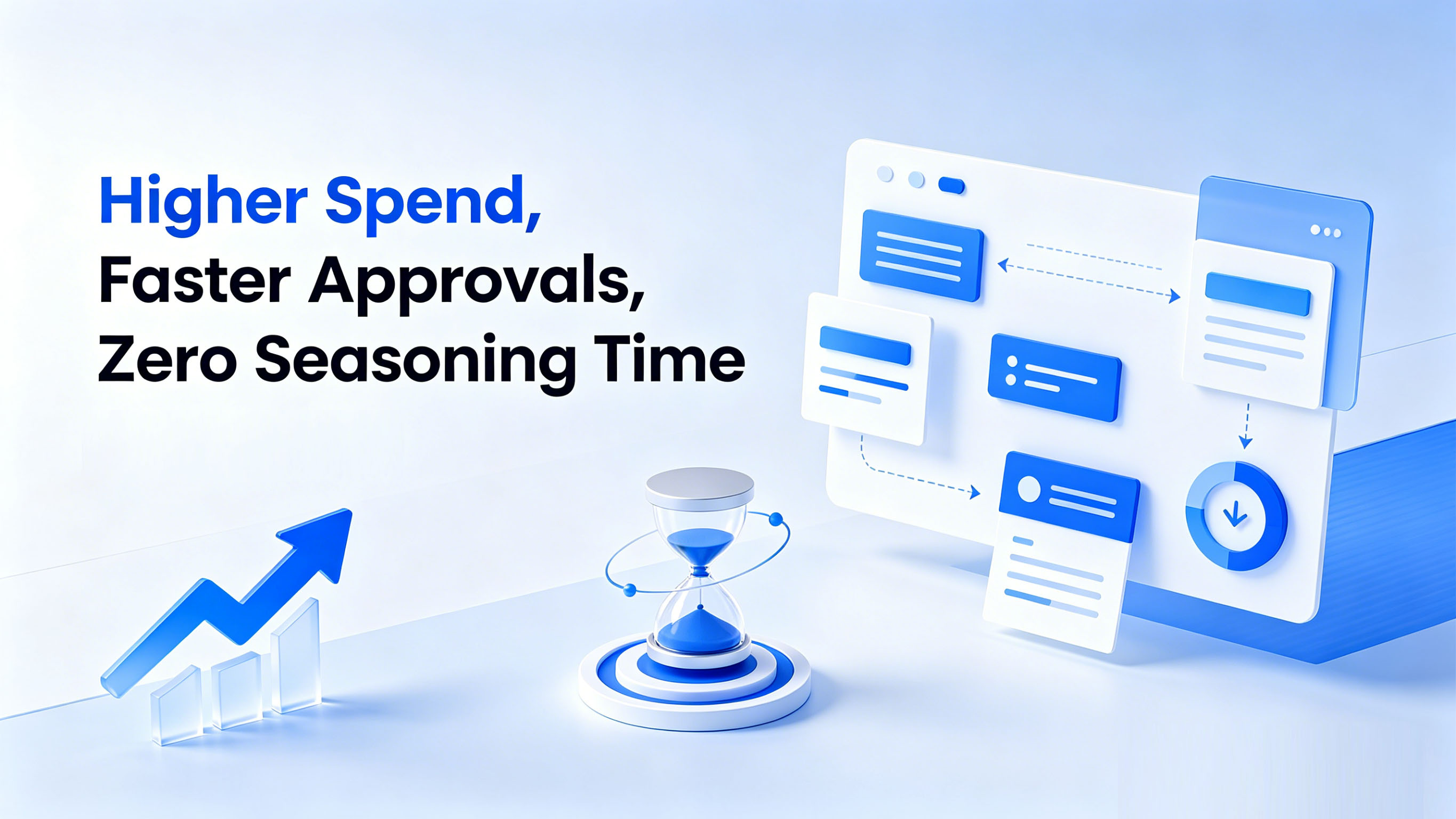
A regular personal account starts with a pathetically low daily spend limit, and you've gotta gradually work it up. We're talking one or two weeks of consistent spending sometimes longer and the whole time you can't afford a single misstep before the platform might consider raising your cap. When you're rushing to test products and scale, time literally is money. A Facebook Agency Account is different. Straight out of the gate, you're looking at daily spend limits that blow away what you'd have on a personal account you've been nursing for months. In some setups, there's in some cases, significantly higher spend capacity than standard self-serve accounts. The moment you validate a winning product, you can crank up the spend that same day. No waiting around.
That kind of spending power doesn't just fall from the sky, by the way. It comes from the agency's long-term relationship and built-up trust with Meta. You're essentially paying to access a slice of that goodwill. And honestly? Totally worth it.
It's stable. Like, really stable. Not just a little.
I don't know if you've been through it yourself, but there's a special kind of pain that comes from having an account shut down for no clear reason. Personal accounts are like that. Sometimes you have no clue what policy you tripped, and the account is just gone along with whatever balance was sitting in there.
The chances of a successful appeal? Let's just say it's not great, and the process sucks the life out of you.
A proper agency account is on a whole different level of stability. Because the agency has a clean track record with the platform, any account under their name may benefit from stronger historical account signals during platform review processes. What that translates to in practice: faster ad reviews and way fewer false positives for bans. Think about it during peak season, one suspended account can mean days of dead air on your campaigns. That's not just lost time; that's revenue walking out the door.
Approval times that'll spoil you
In feed-based advertising, opportunities have very short shelf lives. If you've run TikTok or something similar, you know this feeling. With a regular Facebook account, your ad creative can sit in review limbo for hours sometimes an entire day. An Agency Account? Often clears in 15 to 20 minutes.
We had a situation once where we decided to launch new creative at 10 p.m. for a flash sale. On a normal account, it'd still be sitting there pending when we woke up. On the agency account, we were seeing performance data by 11 p.m. That kind of instant feedback is huge for an optimization guy. You can adjust the same night instead of burning a whole business day waiting.
There's someone in your corner when things go sideways
When you open an account through an agency, you're getting more than just the account itself. Legit agencies will have their own optimization team, a compliance team basically a built-in advisory crew. When your account gets flagged or you're scratching your head over some vague policy update, there's an actual human you can talk to. They'll give you a heads-up on risks and walk you through the appeal. If you're running solo on a personal account, you're stuck figuring all that out yourself, probably relying on forum threads you're not even sure you can trust.
Personal, Business, Agency, "No-Limit" How to Choose
A lot of people just getting into cross-border advertising get totally twisted around on this. I'll break it down as simply as possible, and you can see where you fit:
• Personal Ad Account: Zero barrier to entry, you just sign up. But features are weak, and it gets slapped down constantly. Fine for poking around or running tiny tests. For a real business? Forget it.
• Standard Domestic Business Account: Requires a mainland business license. Once opened through an agency, you get more features than a personal account. But the account weight, spend limit, and review speed still lag noticeably behind a real agency account. Suitable for long-term players with patience and moderate budgets.
• Facebook Agency Account: Opened through a qualified agency partner. High trust, high limits, smoother operational approval processes, and you're not nailed down by strict page or domain restrictions. This is where most cross-border sellers eventually land when they need reliable delivery at scale.
• "No-Limit" Accounts (overseas whitelist level): Built for high-volume advertisers with greater operational flexibility and custom account structures. Maximum freedom. And also the hardest to get approved. These are pretty much reserved for proven, high-volume professional teams.
This table might make it even clearer:
Account Type | Barrier | Stability | Flexibility | Who It's For |
Personal | Almost none | Poor | Limited, weak features, hard to spend | Very small budget testing |
Domestic Business | Needs biz license | Medium | More features, but stricter review | Small/medium budget, long-term branding |
Agency Account | Through an agency | Very high | High trust, high limits, loose review | Most teams that need reliable scale |
No-Limit Whitelist | Extremely high, specific channels | Extremely high | Almost unrestricted | Mature, high-volume teams |
One thing worth pointing out: personal accounts aren't just unstable. They're also missing critical features stuff like lookalike audience expansion, some automatic optimization rules, etc. Also, some people think you can just waltz into Meta's backend and register a business account directly. That door is basically nailed shut at this point; you still need an agency. But even if you go through an agency for a standard business account, it's not the same thing as what people mean when they talk about an "agency account." Two different beasts.
How to Actually Get Your Hands on a Solid Agency Account
Meta's Bar for Agencies Is No Joke
Look, the entry requirements here aren't something you and I are going to casually meet. Meta has pretty clear standards for agencies that can issue these accounts: a legal business entity, step-by-step progression through the Meta Business Partners program, a demonstrable track record of stable, scaled ad spend, and being granted "Badged Partner" status. Only after all that do agencies unlock the real perks a listing in Meta's official directory, direct access to platform support, and most importantly, the ability to open high-trust accounts.
For a regular advertiser, that path takes way too long and costs way too much. The smart move? Find an agency that's already done the heavy lifting and just jump on board.
The Process, More or Less
Details might vary from one agency to the next, but the core steps are pretty standard:
Step 1: Get your basic assets lined up. You'll need a Facebook personal account that's been verified and aged for a while. Also, set up your own Business Manager (BM) in advance, because once the agency creates the ad account, they'll push it directly into your BM. Your Facebook Page needs to look like a real thing profile pic, cover photo, filled-out bio. Ideally, post a few normal updates beforehand so it doesn't look like a freshly baked shell.
Step 2: Prepare your credentials. If you're running a legitimate business, a mainland business license is the fundamental requirement. Make sure the status on the license is active and matches what's in the national public database. You'll probably also need your ID, your website URL, or your product page link. One piece of advice: don't even think about photoshopping anything. The system is way smarter than you'd like to believe.
Step 3: Choose your agency partner this is the single most important decision. Based on my own experience, here's what you should be looking at:
• Are they actually a verified official partner? Not just claiming it on their website.
• Do they have a functional dashboard? Something where you can independently check your account status and fee breakdown instead of having to ping someone on WhatsApp for every little thing.
• Is there a real person you can actually reach? Not the kind that vanishes the minute payment clears.
• Is the pricing upfront and clear? No mystery "service fees" or random deductions that make your math never add up.
Once your materials and agency are sorted, the agency will do a pre-review round. This step is a lifesaver. A lot of documentation that looks fine to us actually trips some Meta compliance rule we never would've spotted. Catching that before the official submission saves you from a rejection stamp on your record.
Step 4: Wait for the verdict. If everything's clean, you'll usually have your account within one to three business days. Once approved, you'll see the authorization notification in your BM. Accept it, add your team as admins, top up the account and you're officially in business.
You Got the Account Now Keep It Alive
Even with an Agency Account, don't get complacent. Meta's risk engine isn't the old-school passive review system anymore. It's constantly, dynamically watching every move every account makes.
A few habits that have served me really well:
• Verify your BM as soon as possible.
The moment you get access, do whatever company verification steps are available. A verified BM looks more like a real business to the system, which cuts down on false positive flags.
• Don't get sloppy with your landing pages.
Whatever URL you put on the account application, that's the one you run. Don't quietly swap it out later. The page needs to load properly. No fake countdown timers, no dead social media icons that go nowhere.
• Watch your ad copy.
Words like "100% effective," "get rich," "permanent cure," those absolute-sounding claims? Just don't. Keep your Facebook Page alive too. Post something occasionally so it looks like an active brand, not a hollow shell spun up just to run ads.
• This is the big one: start with gradual, policy-compliant budget ramping.
Please, for the love of everything, do not uncap a massive budget the moment the account is handed to you. Spend a modest amount on page engagement or boosted post campaigns for a few days. Let the system see low-risk, consistent activity and build up that build stable performance history gradually. I can't tell you how much this helps.
• Keep your operating environment clean.
Try not to hop between IP addresses constantly, and stay away from sketchy, overcrowded VPNs. A stable, stable and secure operating environment and a consistent device setup will save you from a ton of completely avoidable headaches.
What if you still get banned?
Don't panic. Go into your BM's "Account Quality" section and figure out exactly what reason they gave. Then put together your appeal package: business license, ID, screenshots showing how you've fixed the offending landing page issues, and a clear, professional explanation of the situation. Submit it through the official appeal channel, and then this part's hard wait patiently. Whatever you do, don't spam-create new accounts while an appeal is still pending. That just makes the system think you're playing whack-a-mole, and it makes getting reinstated even harder.
What a Decent Agency Partner Should Look Like, In My Book
When it comes to actual recommendations, I'll just tell you who my team is working with right now: Novabeyond. Not trying to sound like a sales pitch here just that their approach has genuinely unclogged a lot of our workflow, so they're worth a mention.
First off, they're not just a not limited to a single platform with Facebook. They're also official partners for BIGO Ads, Kwai, Mintegral, MediaGo, and others. What that means in practice is you don't have to go out and vet a new agency every single time you want to expand onto another platform. Being able to open accounts for most of your core channels in one place massively simplifies things for your team's bandwidth and internal communication.
Then there's how they actually operate. Their process isn't the "hand over your documents and wait" type. Before the account is even opened, their team helps with a compliance check and weeds out issues that would get your application rejected. After the account lands, if you need it, they can assist with strategy, provide input on budget allocation across platforms, and their response time is solid when an account runs into turbulence. On top of that, they've covered more than 100 countries and served north of a thousand clients. When you run into a situation in an unfamiliar market or vertical, they've usually seen something similar and can give you a reference point faster.
For me, the ideal partner is one that keeps me from having to stare at the dashboard in a constant state of paranoia. Novabeyond, at least in that respect, fits the bill.
Stuff You Might Be Wondering (FAQ)
Q: Is there really that big of a difference between an agency account and my personal one?
Honestly? Night and day. An agency account starts with trust baked in. A personal account starts at zero and stays high-risk. The first one lets you spend meaningfully and gets your ads through review; the second one needs to be coddled and can vanish on you without warning. Ask yourself this: are you just messing around testing the waters, or do you actually need your ad spend to generate revenue? If it's the latter, the agency route makes a lot more practical sense.
Q: How safe is my money if I open an account through an agency?
In a properly structured setup, fund management is typically more transparent than with informal reseller arrangements.. In a proper setup, the account lives inside your Business Manager, and you handle your own top-ups and spending. The agency doesn't control your ad funds directly. Plus, if something ever does go wrong, the balance protection on a business account is way more structured than what you'd get on a personal account.
Q: What materials do I need to prepare to open an account?
The essentials: a scan of your business license, your promotion URL or website, an authenticated Facebook personal profile, a properly set up Facebook Page, and a Business Manager you've already created. Some agencies might ask for a couple of extra supporting docs just clarify with them during the initial conversation.
Q: How long does the whole account opening process take?
If your documents are complete and compliant, from submission to getting your account issued, the typical window is one to three business days.
Q: I just got my new account. Can I blast it with a huge budget right away?
Seriously, don't. Even the strongest account needs a warm-up. Run a small budget on some engagement or boosted post ads for a few days to let the system get familiar with you, then start scaling up. Those few days are not going to make or break you.
Q: Besides opening the account, will the agency actually help me run my ads?
Plenty of legit agencies offer add-on services like that. Novabeyond, for example, covers everything from account setup to strategy consulting to managed optimization services. If your team doesn't have a dedicated media buyer yet or you're still getting your head around foreign market rules, having them guide you through the initial phase can seriously shorten your learning curve.
Q: If my account gets restricted, do I lose whatever balance was in there?
With a proper agency business account, as long as the violation wasn't egregious and intentional, there's usually an appeal path. If the account gets restored, remaining balances are subject to platform policies and account status, but reputable partners can usually help coordinate next steps. Even in a worst-case scenario, a responsible agency will help you work with the platform to figure out what happens to the remaining funds. This is also a pretty good reason to avoid sketchy, no-name resellers.
Q: How do I tell if an agency is actually legit?
Ask to see their official partner badge not some blurry screenshot, but something verifiable. Ask for a clear breakdown of their fees and see if they can explain it without being evasive. Ask about their support workflow and whether they give you an independent dashboard to manage things. Also, poke around in a few industry groups and ask about their reputation. That last one tends to give you the most honest read.
The Bottom Line
Here's where I've landed on this: choosing a Facebook Agency Account is fundamentally about solving three problems making your delivery more stable, letting your budget actually spend, and getting back some peace of mind. At the end of the day, what wins in advertising is your product and your creative. But you need a secure, reliable track to run on first.
If you're sick of dealing with unstable accounts or you'd rather pour your energy into your actual business instead of wrangling with account issues, Novabeyond is worth checking out. Multi-platform credentials, full-funnel support, and experience gained from serving a ton of clients across the globe for a scaling team that just wants to grow without constant headaches, having a solid support system behind you makes a massive difference. Honestly, it'll save you from a lot of detours.
more posts
Google Ads Suspended in 2026? How to Appeal and Unblock Your Manager Account
September. 20 2026
LEARN MORE

Swiftproxy Review 2026: Exploring Its Residential Proxy Features and Performance
July. 17 2026
LEARN MORE
Verified Agency Ad Account Provider | Stable Ad Accounts 2026
May. 25 2026
LEARN MORE
2026 Agency Advertising Account Leasing Service: A Guide
May. 20 2026
LEARN MORE