




Copyright © 2026 NOVABEYOND LIMITED (company number 2833487). All rights reserved.
Address: UNIT 616 6/F KAM TEEM INDUSTRIAL BUILDING 135 CONNAUGHT ROAD WEST SAI WAN HONGKONG.
For years, performance marketing was built around a straightforward idea: buy quality traffic efficiently, and growth will follow. Media buying became the primary lever, while creative was often treated as a supporting function, launched at the start of a campaign, then refreshed only when results began to slow.
That model is under pressure.
User journeys are now fragmented across apps, websites, devices, and multiple touchpoints. Competition in major ad auctions has intensified. Privacy changes have reduced some targeting precision. At the same time, users have become faster at ignoring repetitive or irrelevant ads.
The result is clear: buying traffic still matters, but traffic alone is no longer enough. In many categories, the difference between profitable scale and flat performance comes down to how well creative matches intent.
This is why DPB and DCO are becoming increasingly important for brands focused on efficient growth.
Why the Market Is Shifting Toward Dynamic Creative
A few years ago, advertisers could often scale with a limited creative library and strong audience targeting. Today, campaigns run across more placements, more formats, more regions, and more audience states than ever before.
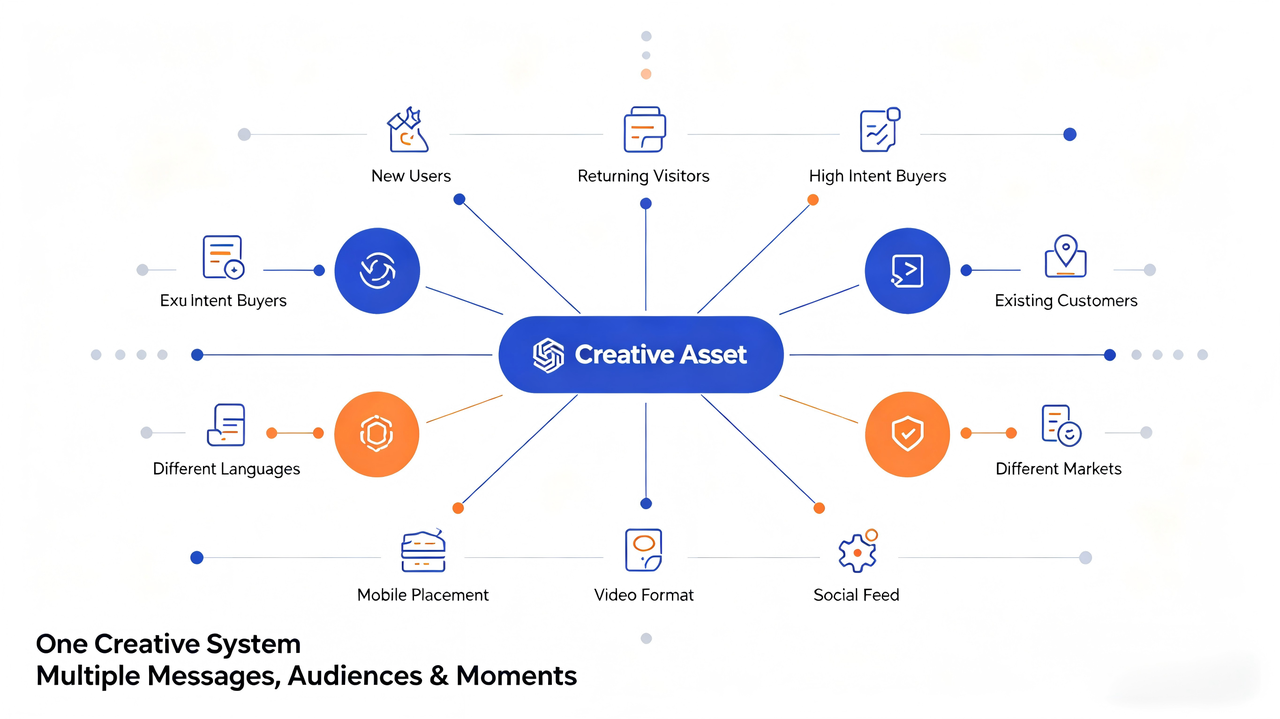
Within the same campaign, users may include:
• First-time prospects discovering a brand
• Returning visitors comparing options
• High-intent users close to purchase
• Existing customers ready for repeat transactions
• Audiences in different languages and markets
Showing identical messaging to all of them creates inefficiency.
A generic awareness message may be too weak for a ready-to-buy audience. A direct-response offer may feel premature for a first-time user. Messaging that performs in one market may fail in another because relevance is contextual, not universal.
This is the core reason the market is moving toward dynamic creative systems: scale now requires personalization logic, not just bigger budgets.
What DPB & DCO Actually Do
DPB (Dynamic Product Banners) is commonly used in e-commerce and catalog-driven campaigns. It dynamically builds ads using live product feeds, categories, pricing, availability, or recently viewed items.
DCO (Dynamic Creative Optimization) goes further by adjusting creative combinations based on audience and context. Headlines, images, CTA language, layouts, offers, and messaging angles can all be optimized dynamically.
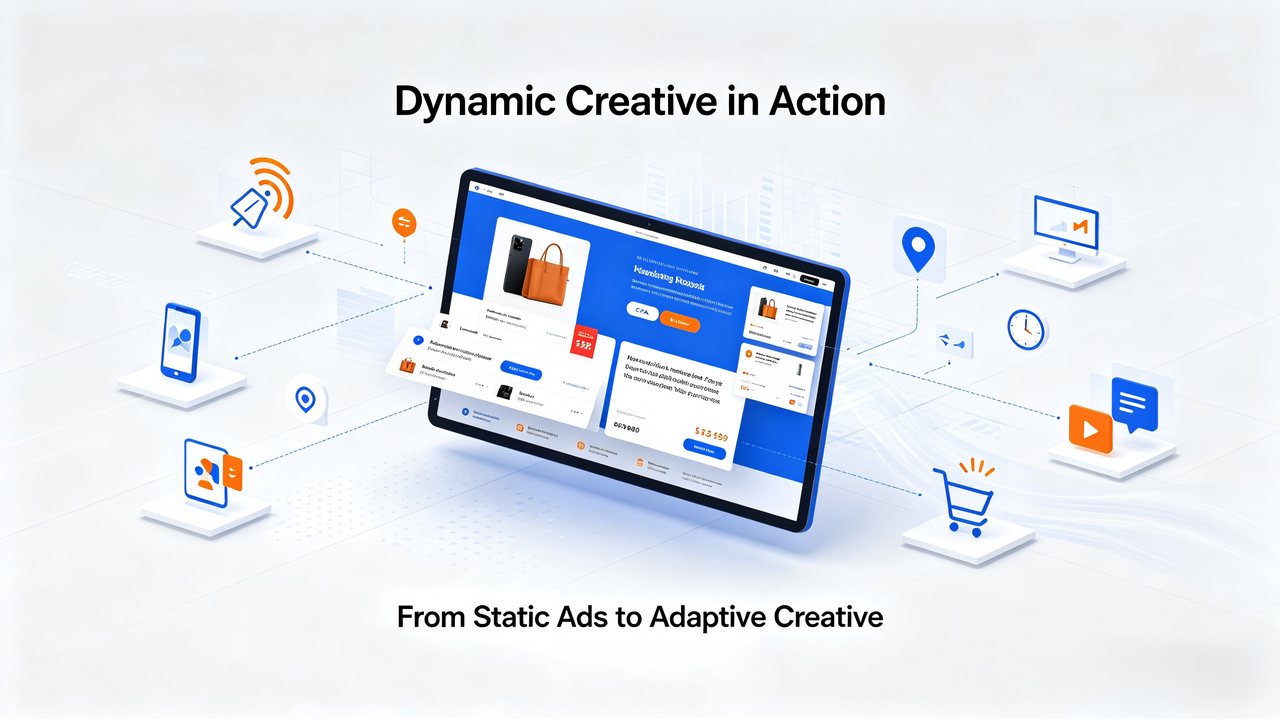
In practice, that means campaigns can adapt creative delivery based on signals such as:
• Browsing or purchase intent
• Funnel stage
• Geography and language
• Device type
• Placement environment
• Time of day
• Promotional windows
• Past engagement behavior
Instead of one static creative set, advertisers operate a responsive system designed to improve relevance at scale.
Why Generic Creative Lowers ROAS
When performance weakens, many teams first look at CPM, audience quality, or bidding efficiency. Those factors matter, but creative mismatch is often the hidden issue.
If one message is shown to every audience type, waste appears quickly:
• Cold users receive messages that assume too much intent
• Warm users receive basic introductions instead of conversion triggers
• Repeat visitors see ads they have already ignored
• International markets receive translations instead of localized messaging
• High-value segments see the same creative as low-intent traffic
Each mismatch reduces the efficiency of paid spend. CTR declines because fewer users engage. Conversion rates soften because motivation is not aligned. Frequency rises because more impressions are needed to create the same result.
That is how ROAS drops even when buying systems remain active.
How Smart Matching Improves Performance
Smart matching means connecting different users with the most relevant message rather than forcing one creative to do every job.
Examples include:
• New users see trust, brand value, or category education
• Returning users see urgency, reminders, or social proof
• Users in different countries see local language and market-specific offers
• Product browsers see relevant SKUs instead of generic brand ads
• App prospects see the feature set most aligned with likely intent
This approach improves the economics of existing traffic. Instead of relying only on cheaper media costs, brands improve the conversion value of traffic already being purchased.
That is one of the most reliable ways to improve ROAS in competitive markets.
Why This Matters for Mobile Growth
Mobile growth teams face even tighter constraints. Attention spans are shorter, creative space is smaller, and install competition is intense.
More importantly, an install alone does not create business value. Real value comes from activation, subscriptions, repeat purchases, retention, or downstream revenue.
That means pre-install creative needs to qualify users, not just attract clicks.
The right creative can bring in higher-intent users who understand the product value proposition before install. The wrong creative may generate low-cost installs that churn quickly.
This is why advanced mobile growth strategies increasingly combine:
• Audience segmentation
• Creative angle testing
• Dynamic messaging
• Post-install quality optimization
• Cross-channel traffic diversification
Growth today is not just about volume. It is about acquiring users who create long-term value.
Why DPB & DCO Need Strong Programmatic Infrastructure
Dynamic creative systems work best when paired with scalable traffic infrastructure. Without enough quality inventory, fast optimization loops, or diversified supply, creative systems have limited room to perform.
This is where programmatic media becomes critical.
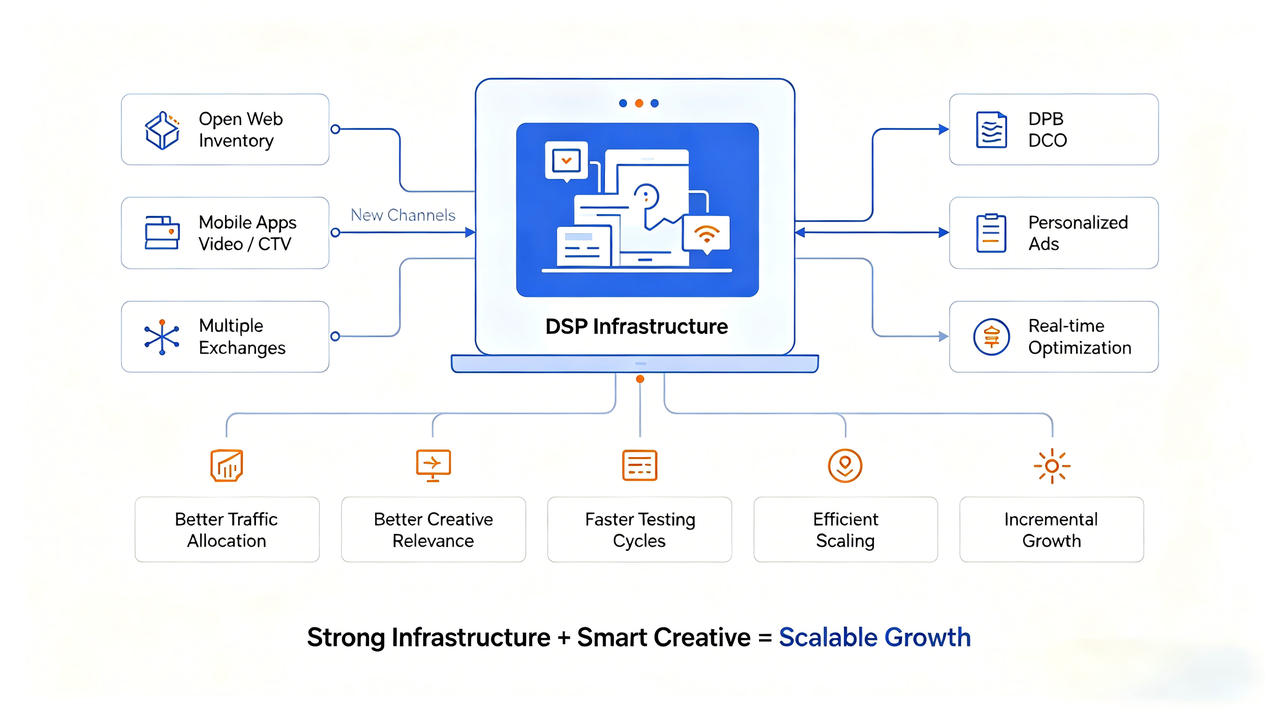
A strong DSP-led setup allows brands to expand beyond a single channel, access wider inventory pools, test across multiple environments, and optimize spend in real time. When that is connected with DPB and DCO, advertisers can improve both sides of the equation:
• Better traffic allocation
• Better creative relevance
• Faster testing cycles
• More efficient scaling
• Stronger incremental growth beyond saturated channels
This is especially valuable for brands that have already hit growth ceilings inside major walled gardens.
Where We See the Biggest Opportunity
At Novabeyond, we increasingly see brands reaching a point where adding budget alone no longer creates proportional growth. They need a smarter operating model.
That usually means combining three capabilities:
1. Programmatic traffic expansion to unlock new scalable inventory sources beyond core channels.
2. Dynamic creative systems such as DPB & DCO to improve conversion efficiency.
3. Mobile growth strategy focused on user quality, retention, and long-term ROAS rather than installs alone.
When these three layers work together, growth becomes more sustainable and less dependent on any single platform.
The Future of Performance Growth
The old model separated media buying from creative execution. One team bought traffic, another refreshed assets later, and optimization happened in slow cycles.
The new model is integrated. Traffic acquisition, audience intelligence, creative decisioning, and downstream growth metrics operate as one system.
That is why DPB and DCO matter more today than they did a few years ago. They are not just creative tools, they are growth tools.
For brands looking to scale efficiently, the opportunity is not choosing between better traffic or better creative. It is combining both through stronger programmatic media infrastructure and smarter mobile growth execution.
Because in modern performance marketing, winning the impression is only the start. Real ROAS is built by what happens next.
more posts
Programmatic Campaign Underperforming? 5 Data-Driven Fixes to Rescue ROAS in 2026
August. 31 2026
LEARN MORE

Beyond Google UAC: Rethinking Growth Strategies for Mobile Game Publishers in a Maturing Market
July. 21 2026
LEARN MORE
AI’s Impact on Gaming, Short Drama, and Live Commerce Advertising: Why Traffic Reallocation Is Reshaping App Growth
June. 15 2026
LEARN MORE
Middle East / Southeast Asia / LATAM: Regional Growth Differences & Strategy Guide for Mobile Apps
June. 08 2026
LEARN MORE