




Copyright © 2026 NOVABEYOND LIMITED (company number 2833487). All rights reserved.
Address: UNIT 616 6/F KAM TEEM INDUSTRIAL BUILDING 135 CONNAUGHT ROAD WEST SAI WAN HONGKONG.
For many e-commerce apps, growth often starts with one simple objective: get more installs. Teams focus on lowering CPI, scaling traffic sources, and pushing aggressive acquisition campaigns. In the early stage, that can work. But installs alone rarely build sustainable growth.
The real challenge begins after the first download. Many users browse without purchasing, some make one transaction and disappear, while only a small percentage become loyal repeat buyers. As acquisition costs continue to rise across major media platforms, relying only on new user growth is no longer enough.
Today, successful e-commerce apps are shifting toward a full-funnel advertising model , one that connects acquisition, activation, conversion, retention, and repurchase into one continuous growth engine.
This article breaks down how modern e-commerce apps can build a complete advertising strategy from first impression to long-term customer value.
Why Install-Only Growth Is No Longer Enough
A few years ago, app marketers could often scale through broad targeting, discount-led offers, and simple install campaigns. Competition was lower, CPMs were cheaper, and many categories still had room for fast expansion.
That environment has changed.
Today’s e-commerce app market is far more competitive:
• Multiple apps compete for the same users across Meta, Google, TikTok, and DSP channels
• Rising CAC puts pressure on first-order profitability
• Users compare products across platforms before purchasing
• Many installs never become active buyers
• One-time buyers can be expensive if retention is weak
This means growth teams need to optimize beyond installs and think in terms of customer lifetime value.
The most valuable user is rarely the cheapest install. It is the user who purchases repeatedly over time.
The Full Funnel Framework for E-commerce Apps
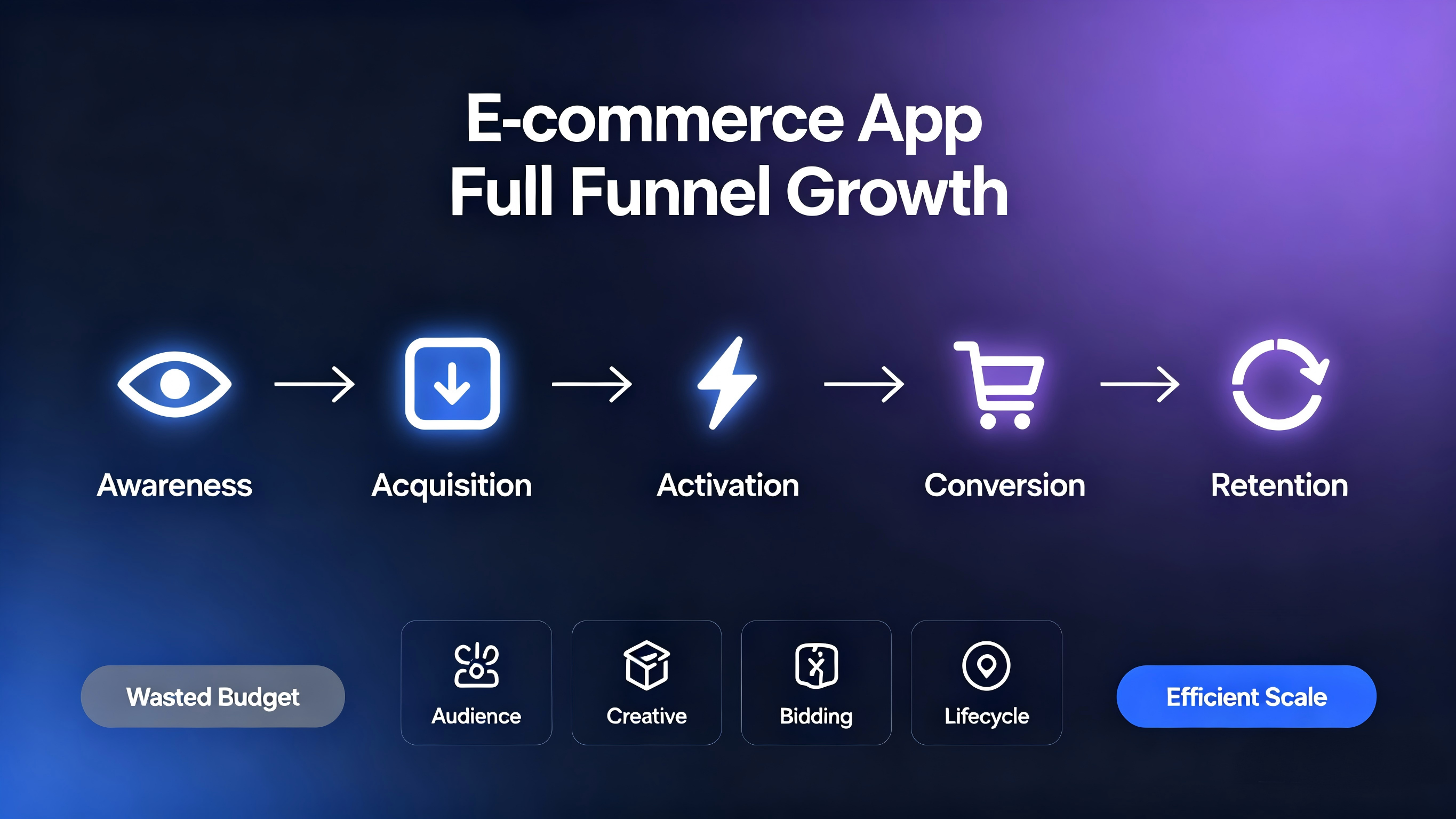
A practical growth model can be divided into five stages:Awareness→Acquisition→Activation→Conversion→Retention & Repurchase
Each stage requires different messaging, audiences, bidding logic, and creative strategy.
Apps that treat every user the same often waste budget. Apps that adapt strategy by user stage usually scale more efficiently.
1. Awareness: Building Demand Before the Click
Not every market responds well to direct-response ads immediately. In many categories, users need familiarity before they convert.
This is especially true for:
• New brands entering a market
• Cross-border commerce apps
• Premium pricing products
• Emerging verticals with low trust
• Highly competitive categories
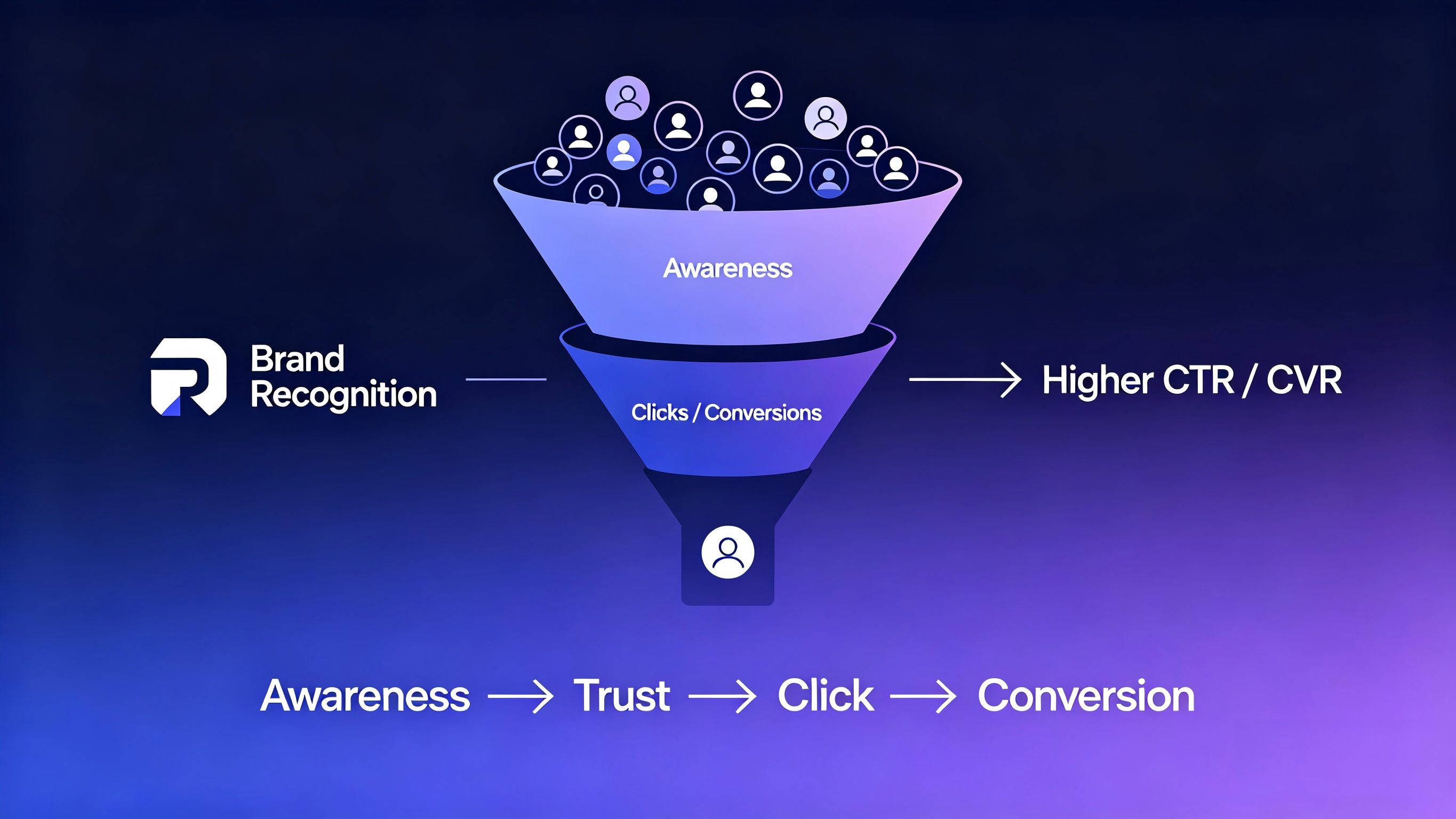
Awareness campaigns can help improve later performance acquisition efficiency.
Effective upper-funnel formats include:
• Short-form video storytelling
• Creator partnerships
• UGC-style social proof
• CTV / OTT reach campaigns
• Display prospecting with broad audiences
The objective here is not immediate ROAS. It is reducing friction for future conversion. When users recognize the brand later, click-through and conversion rates often improve.
2. Acquisition: Smarter User Growth, Not Just More Traffic
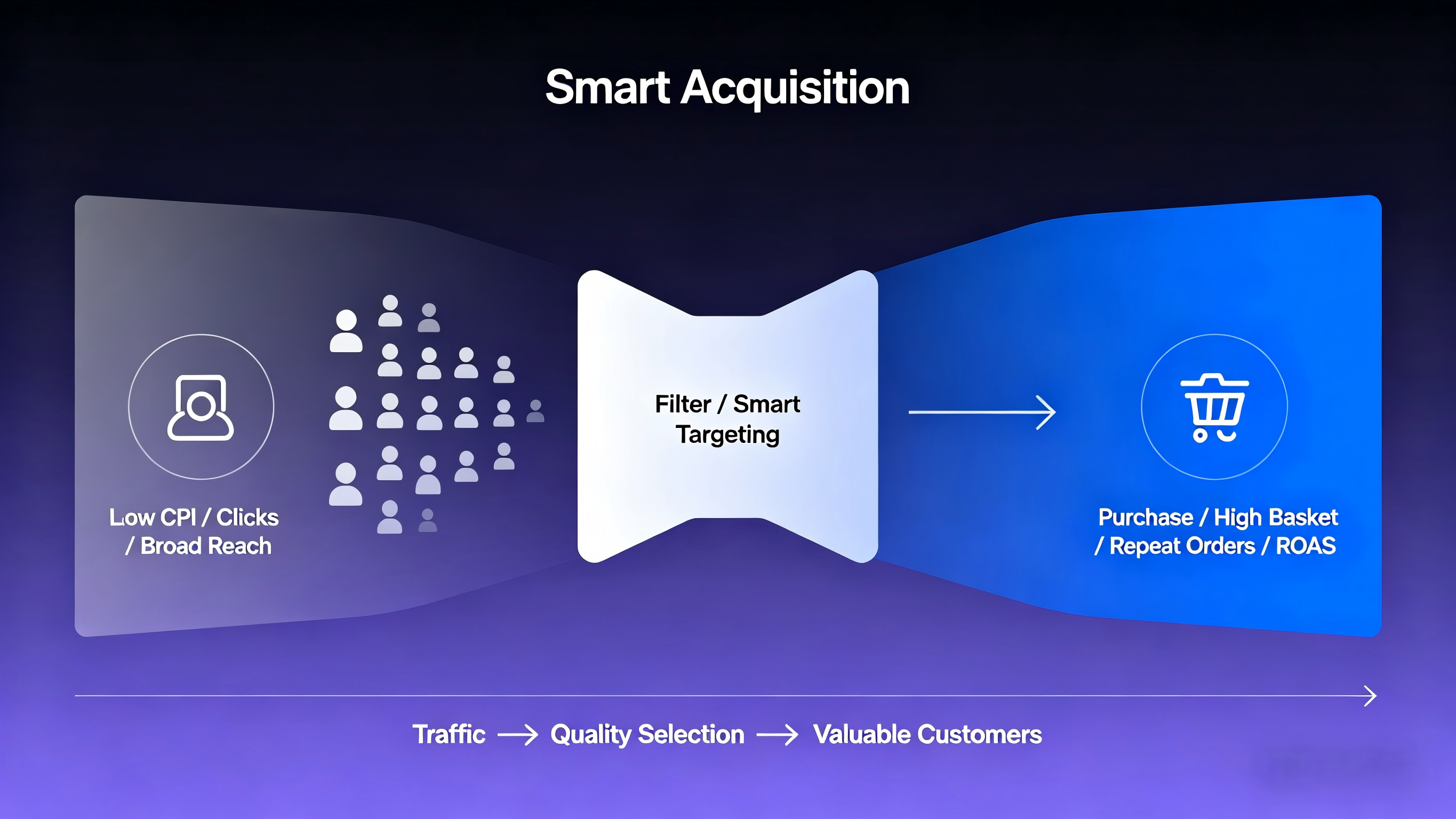
Once demand exists, acquisition campaigns should focus on quality users rather than low-cost installs.
Common mistakes include optimizing only for: Lowest CPI, Broadest audience reach, Click volume.
Instead, modern e-commerce apps should optimize toward:
• First purchase probability
• Basket value potential
• Category affinity
• Repeat order likelihood
• Long-term ROAS
The key is measuring post-install value, not just install count.
3. Activation: Turning Installs into Engaged Shoppers
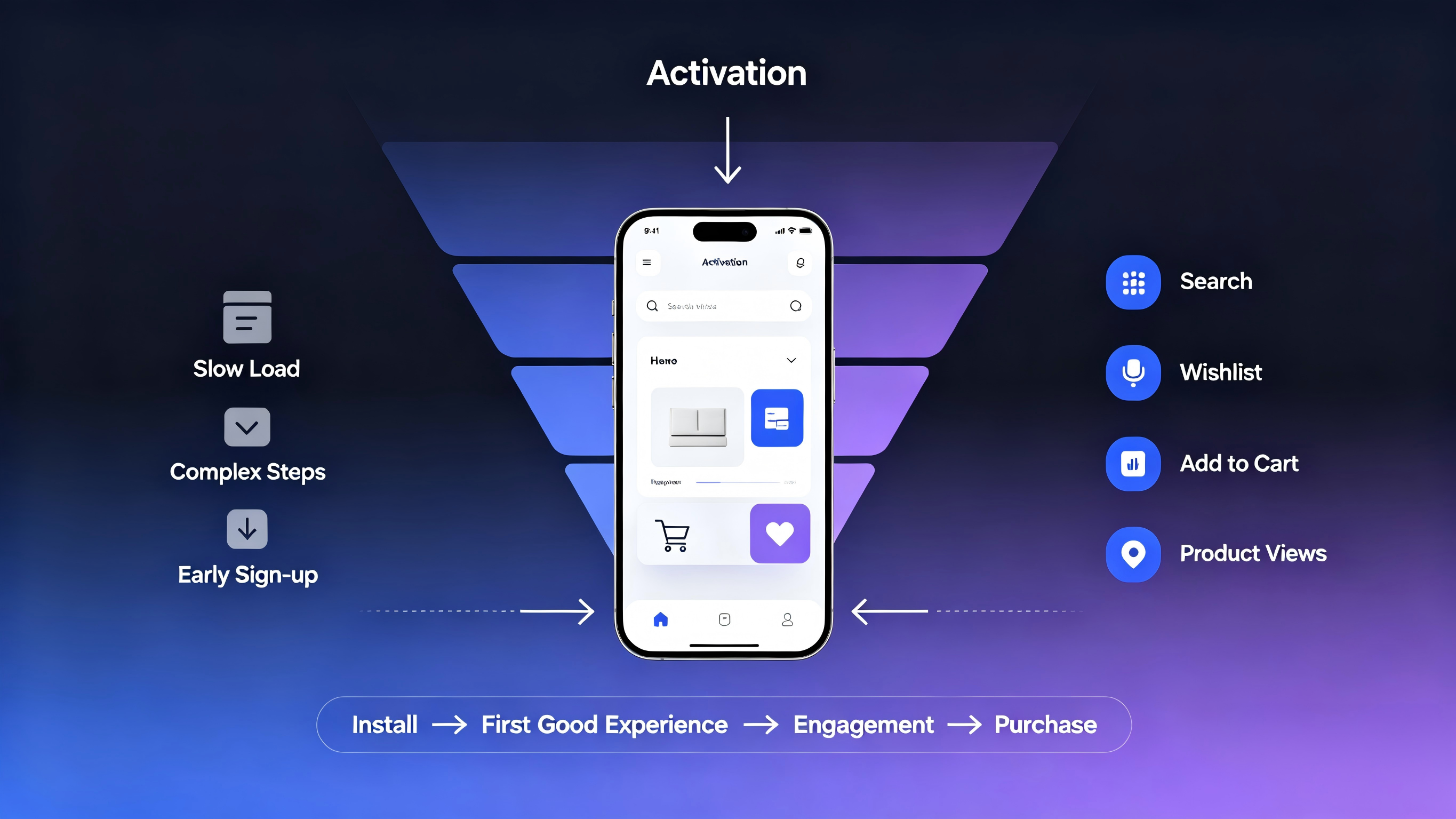
Many apps lose users within the first few days because onboarding is weak or ad expectations do not match the product experience. Activation is where growth leaks often happen.
Strong activation tactics include:
3.1 Align Ad Promise with Landing Experience
If the ad promotes fast delivery, discounts, or specific product categories, users should immediately see that value inside the app.
3.2 Simplify First Session UX
Reduce barriers such as:
• Forced registration too early
• Complex onboarding steps
• Irrelevant homepage feeds
• Slow loading pages
3.3 Trigger Early Intent Signals
Encourage actions like: Search, Wishlist saves, Add to cart, Product view depth and Category follows.
These behaviors improve downstream conversion rates and create retargeting signals.
4. Conversion: Turning Intent into Revenue
At this stage, users already know the app and have shown interest. Advertising should focus on removing hesitation.
This is where performance retargeting becomes highly efficient.
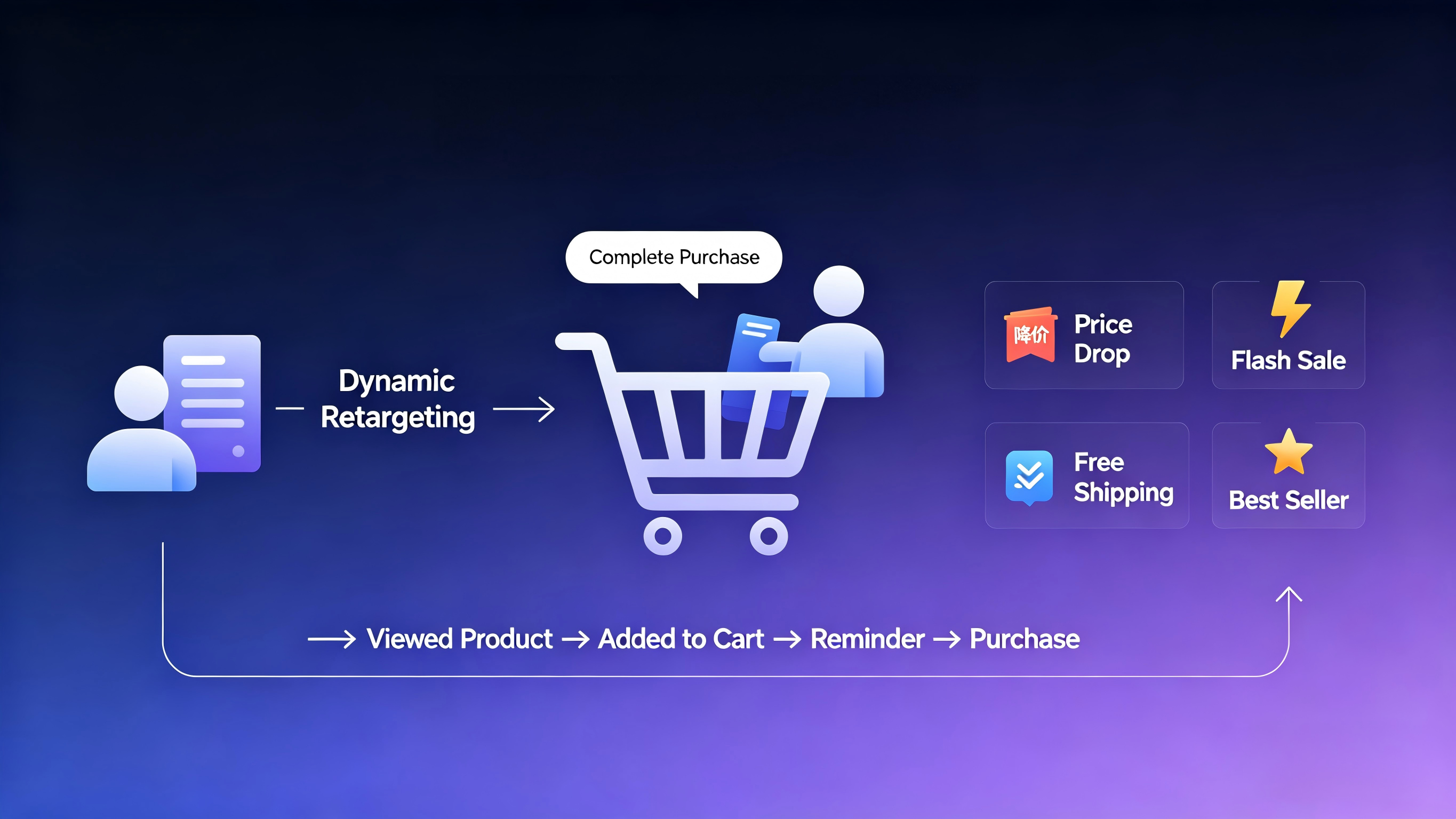
High-performing conversion tactics include:
4.1 Dynamic Product Ads
Show users the exact SKUs or categories they viewed.
4.2 Promotional Urgency
Use timely triggers such as:
• Price drops
• Limited stock
• Flash sales
• Free shipping windows
4.3 Social Proof Messaging
Examples:
• Best sellers
• Trending now
• Highly rated items
4.4 Cart Recovery Campaigns
Users who added to cart but did not purchase often represent one of the highest intent segments. Cross-platform retargeting via Meta, Google, and programmatic channels can recover meaningful lost revenue.
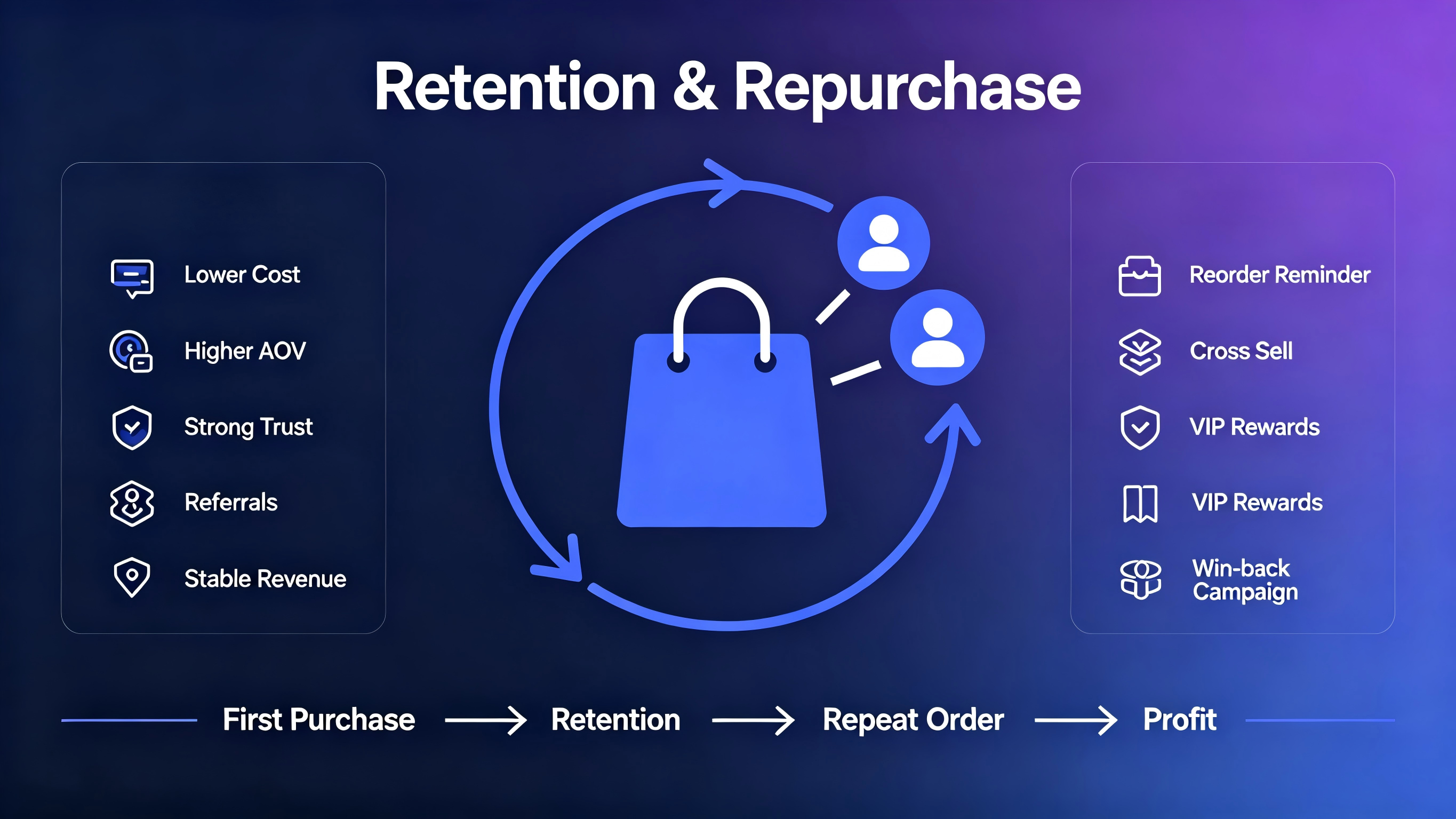
5. Retention & Repurchase: Where Real Profit Lives
Many brands overspend on acquisition while underinvesting in existing customers.
But repeat customers usually have:
• Lower cost to convert
• Higher AOV over time
• Better trust levels
• Stronger referral potential
• More predictable revenue contribution
Retention advertising should focus on personalized relevance.
Examples:
• Replenishment Logic
For consumables or routine categories, re-engage users near expected reorder timing.
• Category Expansion
If a user buys skincare, recommend adjacent beauty products.
• Loyalty Campaigns
Promote points systems, VIP benefits, or exclusive access.
• Seasonal Win-Back
Reconnect inactive buyers during major shopping periods.
This is where CRM, push, email, paid retargeting, and audience sync should work together.
Creative Strategy Across the Funnel
One creative rarely performs well at every stage of the customer journey. Users discovering your app for the first time need a different message from those who have already browsed products or purchased before. Strong e-commerce app advertisers therefore build creative around user intent, not one generic concept.
At the prospecting stage, creative should build awareness and trust through:
• Brand story
• Lifestyle value
• Hero categories
• Social proof
In the mid-funnel stage, users are comparing options, so messaging should reduce hesitation with:
• Benefits comparison
• Why choose us messaging
• Price/value proof
• Category depth
At the lower funnel, relevance matters most. Users with clear intent respond better to:
• Exact products viewed
• Promotions
• Scarcity messaging
• Reviews
For retention and repeat purchase, the focus shifts to long-term value:
• Personalized recommendations
• Loyalty offers
• New arrivals
• Reorder reminders
This is where DPB and DCO become highly valuable, helping brands automatically match the right message to the right user.
Measurement: What Teams Should Actually Track
Different stages need different KPIs. Looking only at installs or top-line ROAS can create misleading conclusions.
Acquisition: CPI, CAC, First purchase rate
Activation
• Day 1 / Day 7 retention
• Product views per user
• Add-to-cart rate
Conversion: CPA, ROAS, Checkout completion rate
Retention
• Repeat purchase rate
• 30 / 60 / 90 day LTV
• Churn rate
Without stage-based measurement, teams often optimize the wrong outcomes.
Final Thoughts
For e-commerce apps, growth is no longer about buying as many installs as possible. It is about building a connected system that moves users from awareness to first order, then from first order to long-term loyalty.
The brands that win next will not simply spend more. They will use smarter full-funnel strategy, stronger signals, better personalization, and optimize for lifetime value.
Because in e-commerce apps, the first purchase is only the beginning.
more posts
Programmatic Campaign Underperforming? 5 Data-Driven Fixes to Rescue ROAS in 2026
August. 31 2026
LEARN MORE

Beyond Google UAC: Rethinking Growth Strategies for Mobile Game Publishers in a Maturing Market
July. 21 2026
LEARN MORE
AI’s Impact on Gaming, Short Drama, and Live Commerce Advertising: Why Traffic Reallocation Is Reshaping App Growth
June. 15 2026
LEARN MORE
Middle East / Southeast Asia / LATAM: Regional Growth Differences & Strategy Guide for Mobile Apps
June. 08 2026
LEARN MORE