




Copyright © 2026 NOVABEYOND LIMITED (company number 2833487). All rights reserved.
Address: UNIT 616 6/F KAM TEEM INDUSTRIAL BUILDING 135 CONNAUGHT ROAD WEST SAI WAN HONGKONG.
Introduction
The demand for reliable proxy infrastructure continues to grow as businesses increasingly depend on web data, automation, and online intelligence. From e-commerce monitoring to SEO analysis and AI data collection, organizations need stable IP solutions that can handle large-scale operations while
maintaining accessibility.
Residential proxies have become an important part of modern data workflows because they provide real-user IP addresses and help distribute online requests more naturally.
In this review, we take a closer look at Swiftproxy, including its proxy types, pricing model, key features, advantages, limitations, and suitable use cases.
Overview of Swiftproxy
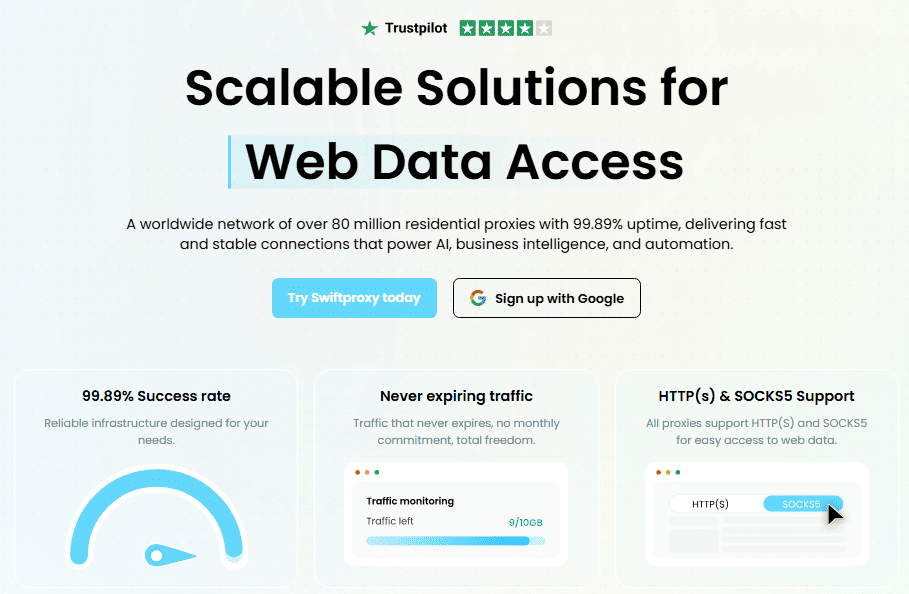
Swiftproxy is a residential proxy provider offering access to a global network of real residential IP addresses. The platform provides proxy solutions for users involved in web scraping, automation, SEO monitoring, market research, and other data-intensive tasks.
The service supports HTTP, HTTPS, and SOCKS5 protocols, making it compatible with many popular scraping frameworks and automation environments.
With a network of 90M+ residential IPs across 195+ locations, Swiftproxy allows users to collect data from different regions while maintaining flexible control over IP rotation and sessions.
Proxy Types Offered by Swiftproxy
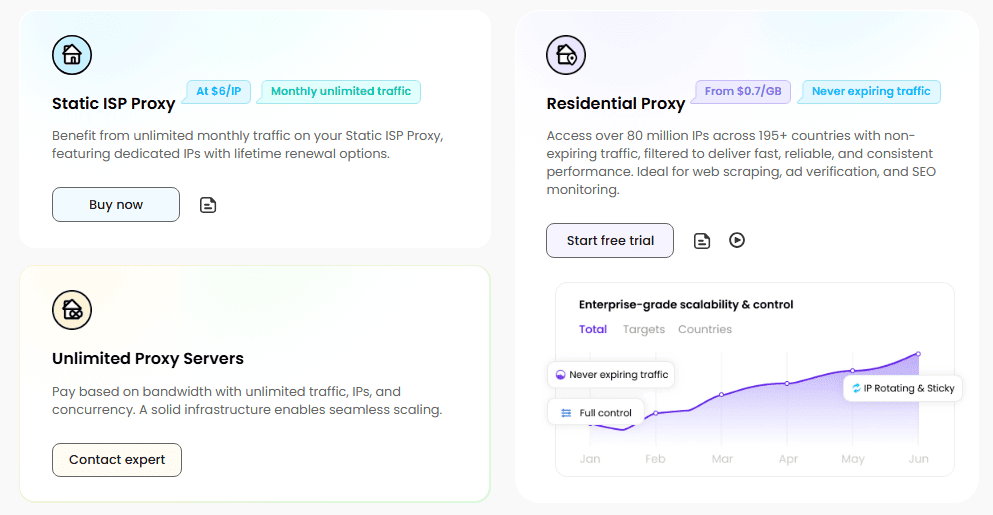
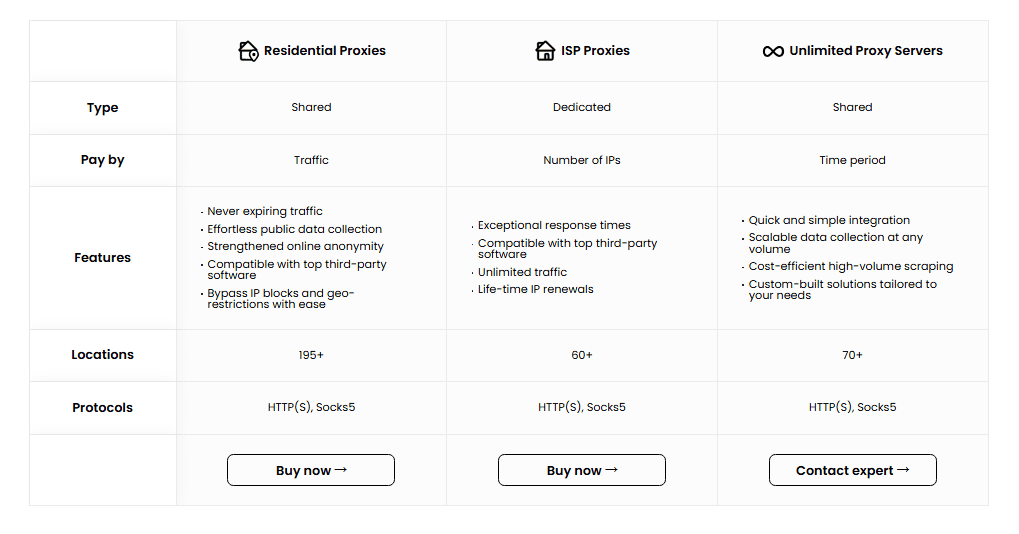
Residential Proxies
Swiftproxy’s residential proxy network is designed for users who need scalable IP access for large-scale online data operations.
Common applications include:
• Web scraping
• Price monitoring
• Search engine data collection
• Market research
• Ad verification
• AI data gathering
Users can choose between rotating IP sessions for frequent IP changes or sticky sessions for maintaining the same IP connection longer.
One feature worth mentioning is that residential proxy traffic does not expire, giving users more flexibility when managing bandwidth.
Static Residential (ISP) Proxies
Static residential proxies are designed for tasks where IP consistency is important.
They are commonly used for:
• Social media management
• Account operations
• Long-term automation
• Login-based workflows
Compared with rotating proxies, static residential proxies provide a more stable identity for applications that require persistent connections.
Swiftproxy Pricing
Swiftproxy uses a straightforward pricing structure:
The pricing model allows users to start with smaller requirements and scale according to their actual usage.
For users who do not run continuous scraping operations, non-expiring residential traffic can be especially useful because purchased bandwidth remains available until consumed.
Key Features
1.Global Residential IP Coverage
Swiftproxy provides residential IP resources across multiple countries and regions, allowing users to collect localized information and test websites from different markets.
2. Flexible Session Management
Users can configure proxy behavior depending on their workflow:
• Rotating sessions for high-volume requests
• Sticky sessions for longer connections
This flexibility makes Swiftproxy suitable for different automation scenarios.
3. Multiple Integration Options
Swiftproxy works with common tools and frameworks, including:
• Scrapy
• Selenium
• Playwright
• Puppeteer
• Browser automation platforms
The setup process is designed to be simple for both developers and non-technical users.
4. Support for Data-Driven Workflows
The service can support various industries that rely on online data, including e-commerce, digital marketing, SEO, and AI research.
Pros and Cons
Advantages
• Large residential IP pool
• Wide geographic coverage
• Supports multiple proxy protocols
• Flexible session control
• Non-expiring traffic
• Competitive pricing
• Suitable for various automation scenarios
Limitations
• Advanced enterprise requirements may need customized solutions
• Proxy performance can vary depending on target websites and regions
Who Is Swiftproxy Best For?
Swiftproxy is suitable for:
Data Scraping Teams
Teams collecting public web information can use residential IPs to improve scalability and reduce blocking issues.
SEO Professionals
SEO specialists can analyze search results from different locations and monitor keyword performance.
E-commerce Companies
Businesses can track competitor pricing, product availability, and market changes.
Automation Developers
Developers building automated workflows can integrate proxies into their applications through standard proxy protocols.
AI Companies
Organizations collecting training data or performing web research can use residential proxies to access diverse datasets.
Final Thoughts
Swiftproxy provides a practical residential proxy solution for users who need reliable IP resources for web scraping, automation, and data collection.
Its combination of a large residential IP network, flexible session options, non-expiring traffic, and simple pricing structure makes it suitable for both individual developers and businesses.
For users looking for a scalable residential proxy provider in 2026, Swiftproxy offers a balanced option between performance, flexibility, and cost efficiency.
more posts

Google Ads Suspended in 2026? How to Appeal and Unblock Your Manager Account
September. 20 2026
LEARN MORE


Verified Agency Ad Account Provider | Stable Ad Accounts 2026
May. 25 2026
LEARN MORE

2026 Agency Advertising Account Leasing Service: A Guide
May. 20 2026
LEARN MORE

Rent Agency Advertising Account in 2026
May. 18 2026
LEARN MORE