




Copyright © 2026 NOVABEYOND LIMITED (company number 2833487). All rights reserved.
Address: UNIT 616 6/F KAM TEEM INDUSTRIAL BUILDING 135 CONNAUGHT ROAD WEST SAI WAN HONGKONG.
For years, ROAS (Return on Ad Spend) has been the dominant metric guiding user acquisition decisions. Marketing teams evaluate campaigns through ROAS, media budgets are allocated according to ROAS, and channels are scaled or reduced based on ROAS performance.
There is no doubt that ROAS remains an important indicator of marketing efficiency. However, as the digital advertising landscape becomes increasingly competitive, relying on ROAS alone is no longer enough to support sustainable growth.
Many advertisers today are facing a common challenge: campaign efficiency remains relatively stable, yet overall growth is slowing. Acquisition costs continue to rise, audience saturation is becoming more obvious, and scaling budgets on the same platforms no longer delivers the incremental results it once did.
This raises an important question: if ROAS is still strong, why does growth feel harder than ever?
ROAS Measures Efficiency, Not Growth
The answer lies in understanding what ROAS actually measures.
ROAS tells advertisers how effectively a channel converts advertising spend into revenue. It is an efficiency metric designed to answer the question: "How much return am I generating from every dollar spent?"
What ROAS does not tell us is whether those conversions represent genuinely new growth opportunities.
A campaign may generate excellent returns because it is repeatedly reaching users who are already familiar with the brand, already in-market, or already likely to convert. In this case, the campaign is capturing existing demand rather than creating new demand.
As digital ecosystems mature, this distinction becomes increasingly important.
Many advertisers have spent years optimizing within the same environments, primarily Meta, Google, and TikTok. These platforms continue to be highly effective, but they are also where competition is most concentrated. As more brands compete for the same audiences, acquisition costs inevitably rise while opportunities for incremental reach become more limited.
The result is a situation where efficiency remains acceptable, but growth begins to plateau.
The Shift Toward Incremental Growth Thinking
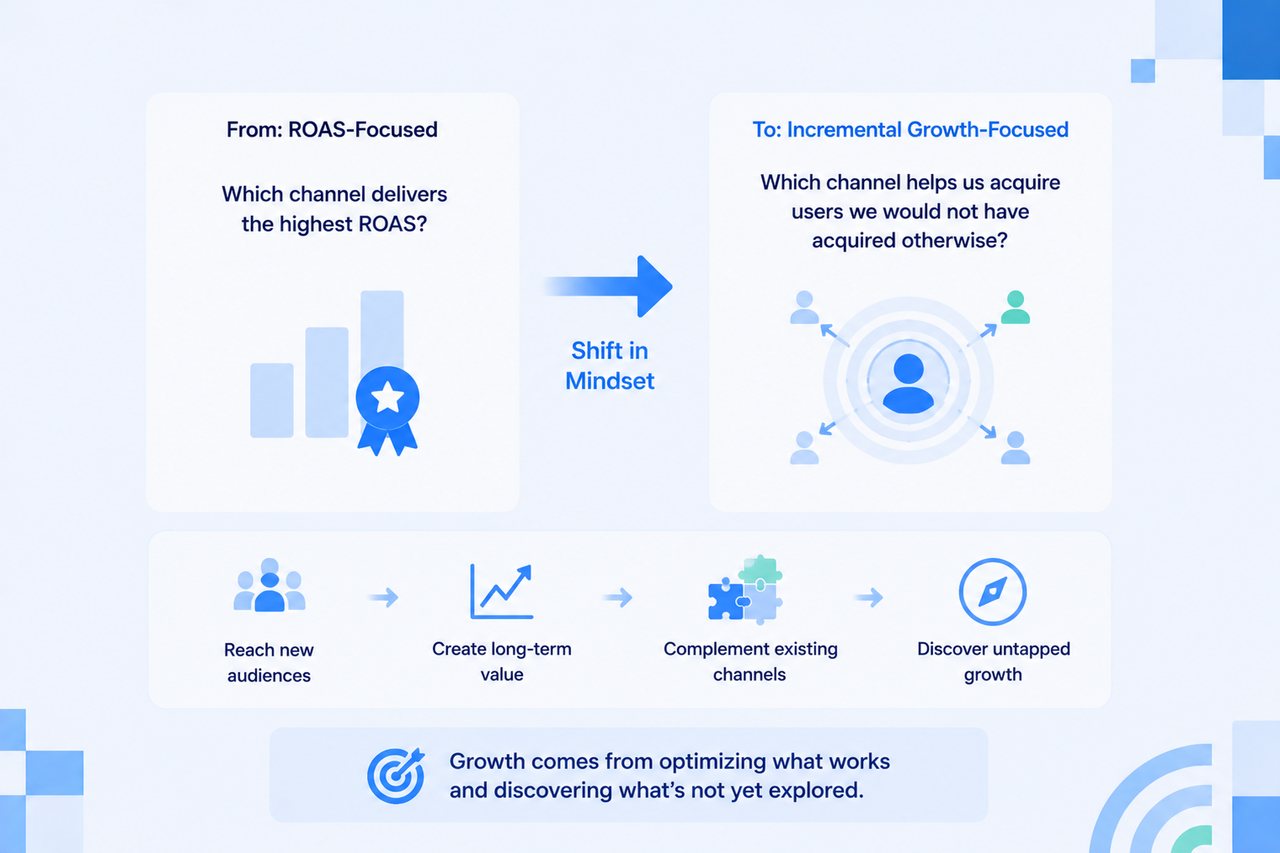
This is where incremental growth thinking comes into play. Instead of asking, "Which channel delivers the highest ROAS?", advertisers need to start asking a different question:
"Which channel helps us acquire users we would not have acquired otherwise?"
This shift fundamentally changes how growth opportunities are evaluated.
A channel may generate a lower short-term ROAS than a mainstream platform while creating significantly more long-term value because it introduces the brand to entirely new audiences.
Incremental growth is not about replacing existing performance channels. Rather, it is about expanding beyond them.
The objective is to identify acquisition opportunities that complement current media investments instead of competing with them. In other words, growth comes not only from optimizing what already works, but from discovering what has not yet been fully explored.
Why Emerging Media Channels Are Gaining Attention
As advertisers search for new growth opportunities, emerging media ecosystems are becoming an increasingly important part of acquisition strategies.
These channels provide access to audiences that are often difficult to reach through traditional social and search advertising alone.
OEM advertising, for example, enables brands to engage users directly through device-level touchpoints such as app stores, browser recommendations, native placements, and system notifications. Because these touchpoints exist outside conventional advertising environments, they often introduce advertisers to entirely new segments of users.
Connected TV (CTV) represents another growing opportunity. As streaming consumption continues to increase globally, advertisers can reach highly engaged audiences in premium viewing environments while benefiting from digital targeting capabilities. Unlike traditional performance channels that focus heavily on bottom-funnel conversion, CTV often plays a critical role in generating awareness and influencing future purchase behavior.
Regional media ecosystems also offer significant potential. In many high-growth markets, local publishers, content platforms, telecom-owned media properties, and alternative advertising networks provide access to audiences that remain underserved by global advertising platforms.
The common characteristic across these channels is their ability to unlock incremental reach rather than simply compete for the same users.
The Challenge of Measuring Incrementality
One reason many advertisers remain heavily focused on ROAS is that it is easy to measure. Incremental growth, on the other hand, is more complex.
A consumer's journey rarely happens within a single platform. A user may first discover a brand through CTV, later interact with an OEM placement, and eventually complete a purchase after conducting a branded search.
Under traditional attribution models, the final touchpoint often receives most of the credit. As a result, channels that play a critical role in creating demand may appear less effective than they truly are.
This is why advertisers need a broader measurement framework. Beyond ROAS, marketers should also evaluate:
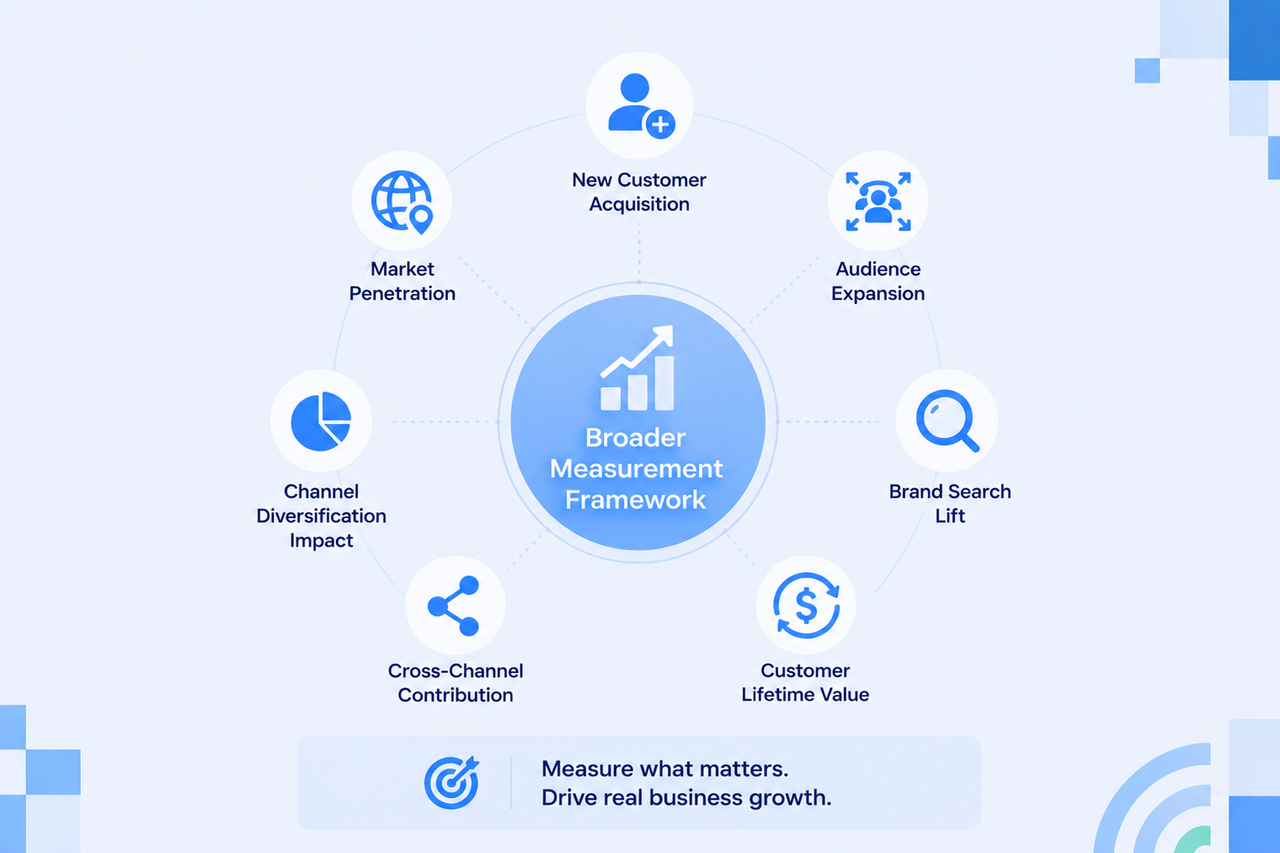
• New customer acquisition
• Audience expansion
• Market penetration
• Brand search lift
• Cross-channel contribution
• Customer lifetime value
• Channel diversification impact
These metrics provide a more complete understanding of whether media investments are driving genuine business growth rather than simply optimizing existing demand.
Building a More Sustainable Growth Model
The future of user acquisition is unlikely to be defined by a single platform or a single metric.
The most successful advertisers are increasingly adopting a balanced approach. They continue to optimize performance within established channels while simultaneously investing in new ecosystems that can generate incremental growth.
This approach helps reduce dependency on any one platform, expand audience reach, and create more resilient acquisition systems over time.
Rather than asking how to spend more budget on the same audiences, leading brands are asking how to discover audiences they have not yet reached.
That distinction may ultimately determine which advertisers continue to scale and which ones encounter growth ceilings.
Looking Beyond ROAS
ROAS will remain an essential performance metric, and it should continue to play a central role in media planning and campaign optimization. However, in a world where competition is increasing and audience attention is becoming harder to capture, efficiency alone is no longer enough.
Sustainable growth requires a broader perspective, one that values audience expansion as much as conversion efficiency, and one that recognizes the importance of emerging media ecosystems in unlocking new opportunities.
The next generation of growth leaders will not be those who simply achieve the highest ROAS. They will be the ones who consistently create incremental demand, reach untapped audiences, and build diversified acquisition strategies capable of sustaining growth far beyond the limits of traditional channels.
That is the essence of incremental growth thinking, and increasingly, it is becoming the foundation of modern user acquisition.
more posts
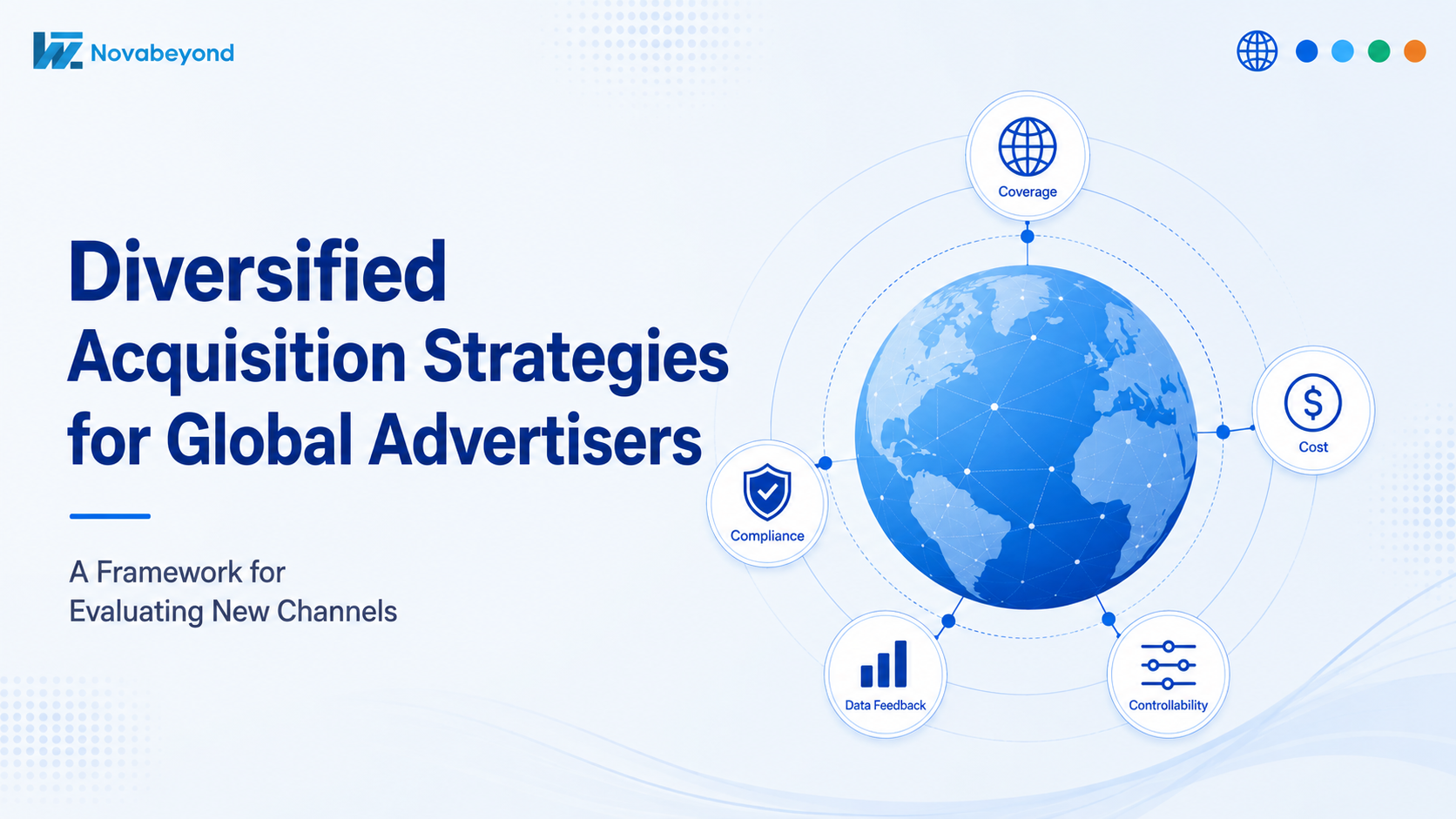
Diversified Acquisition Strategies for Global Advertisers: A Framework for Evaluating New Channels
September. 11 2026
LEARN MORE

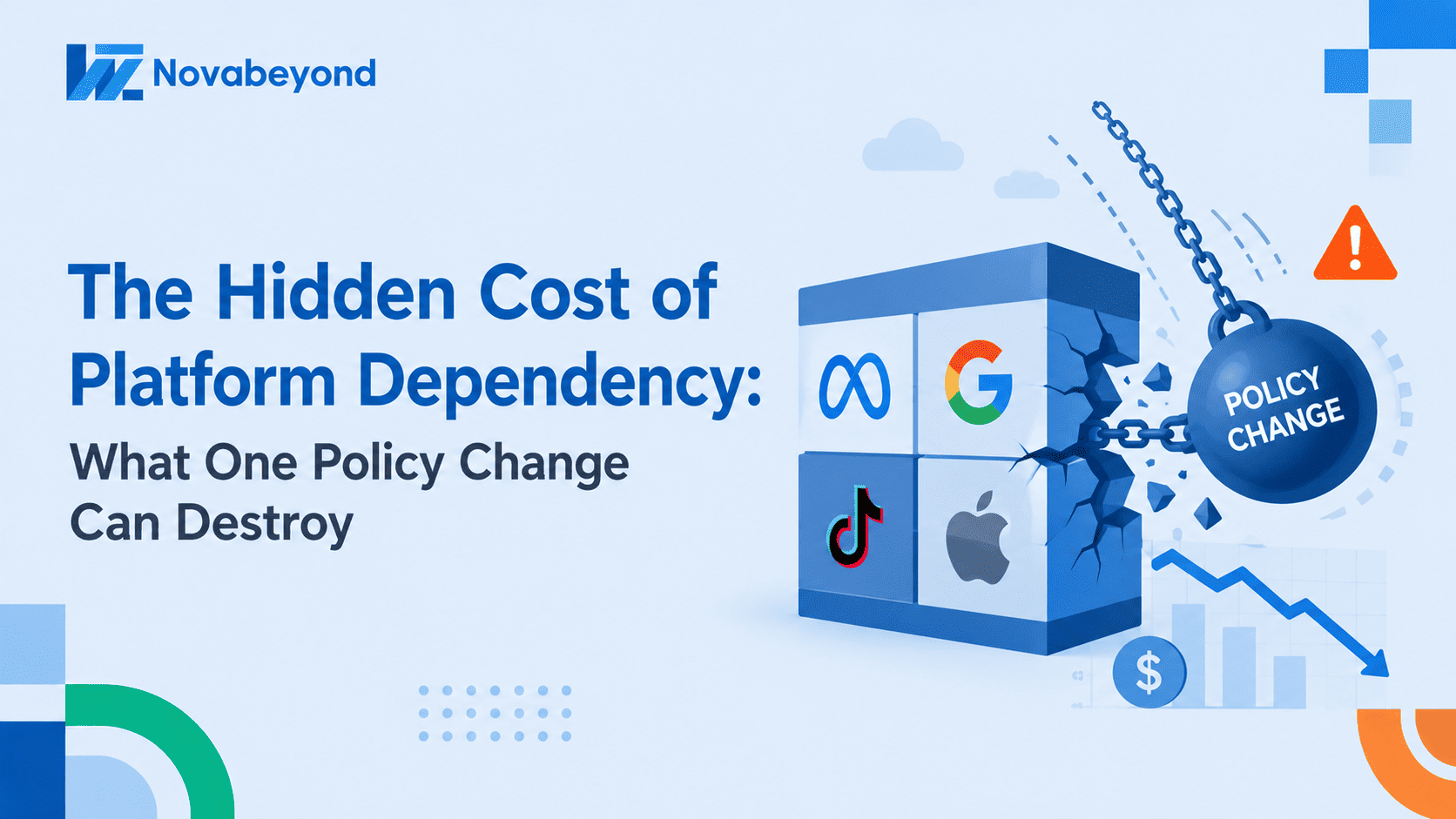
The Hidden Cost of Platform Dependency: What One Policy Change Can Destroy
August. 27 2026
LEARN MORE
How Incremental Growth Is Changing Performance Marketing
August. 25 2026
LEARN MORE

Diminishing Returns: What to Do When You Double the Budget but Scale Doesn't Follow
August. 20 2026
LEARN MORE