





UNIT 616 6/F KAM TEEM INDUSTRIAL BUILDING 135 CONNAUGHT ROAD WEST SAI WAN HONGKONG.
Copyright © 2026 NOVABEYOND LIMITED (company number 2833487). All rights reserved.
When Black Friday, Cyber Monday, and other major shopping events come to an end, many advertisers shift their attention from acquisition to reporting and budget planning. New channel tests are often postponed until January, when teams expect campaigns to return to a more predictable rhythm.
But the days immediately after a major sales peak can offer a valuable opportunity: testing emerging media channels before the next quarter begins.
During peak season, intense competition and aggressive bidding can make it difficult to distinguish a channel's underlying potential from temporary market pressure. After the rush, advertisers have an opportunity to reassess costs, explore alternative media ecosystems, and gather early performance signals with controlled budgets.
For growth teams planning Q1, the goal is not to scale immediately. It is to enter the new year with better evidence about where incremental growth may come from.
1. Why the Post-Sale Window Matters
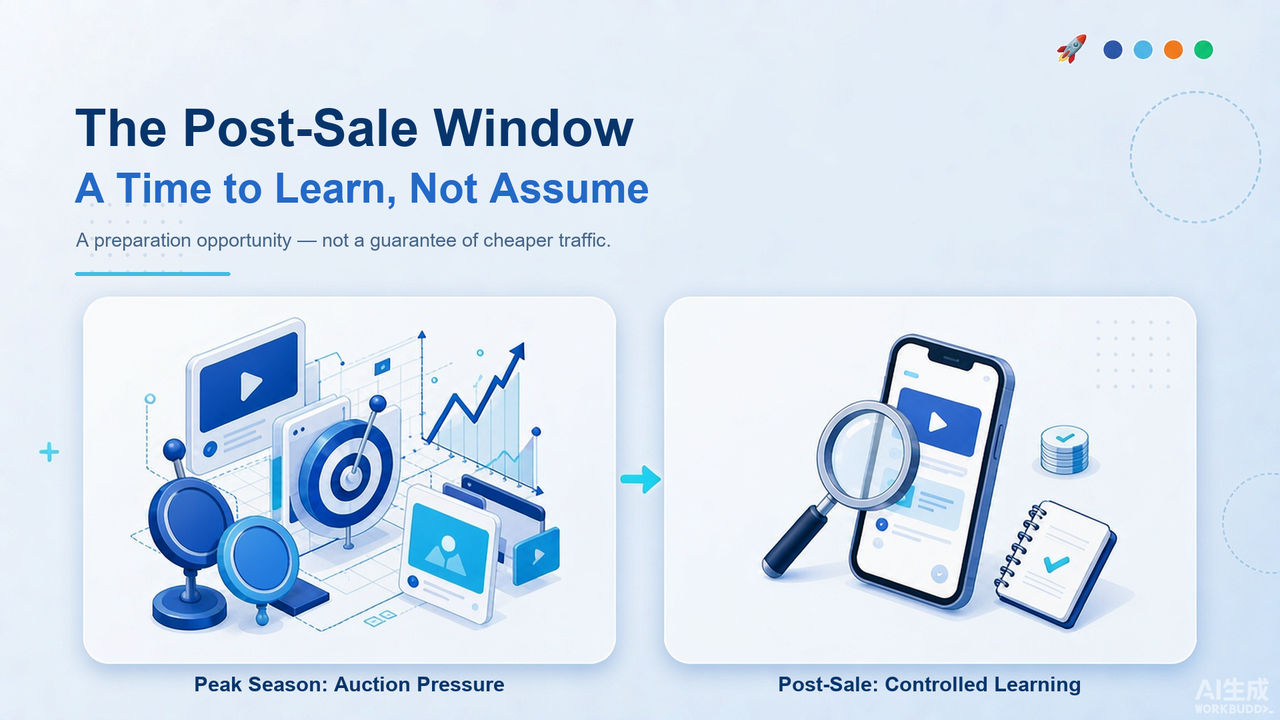
Peak-season performance doesn't tell the whole story
During major shopping events, advertisers compete for high-intent audiences across established platforms. Increased demand can put pressure on CPMs and CPCs, while aggressive promotional campaigns make auction dynamics and conversion behavior harder to compare with normal periods.
For advertisers relying heavily on mainstream channels, this creates two challenges. Acquisition costs may become less predictable, and teams may have limited time to explore alternative sources while managing peak-season delivery.
Emerging media platforms offer another avenue to investigate. Depending on the market and audience, alternative social apps, content platforms, OEM environments, and programmatic inventory may provide access to users beyond an advertiser's existing media mix.
The post-sale period creates an opportunity to test these options without treating every experiment as an immediate budget-scale decision.
December is a preparation window, not a guaranteed low-cost period
It is important not to assume that advertising costs automatically fall after a major sale. Competition, consumer demand, and inventory availability vary by platform, geography, and vertical. Some advertisers continue spending heavily throughout December.
The real advantage is strategic: teams can use this period to establish initial benchmarks, assess operational readiness, and identify promising channels before Q1 budgets are fully committed.
2. A Practical Framework for Testing Emerging Media in Seven Days
A short testing window should prioritize learning over volume. The objective is to determine whether a channel deserves further investment, not to declare a definitive winner after a few days of data.
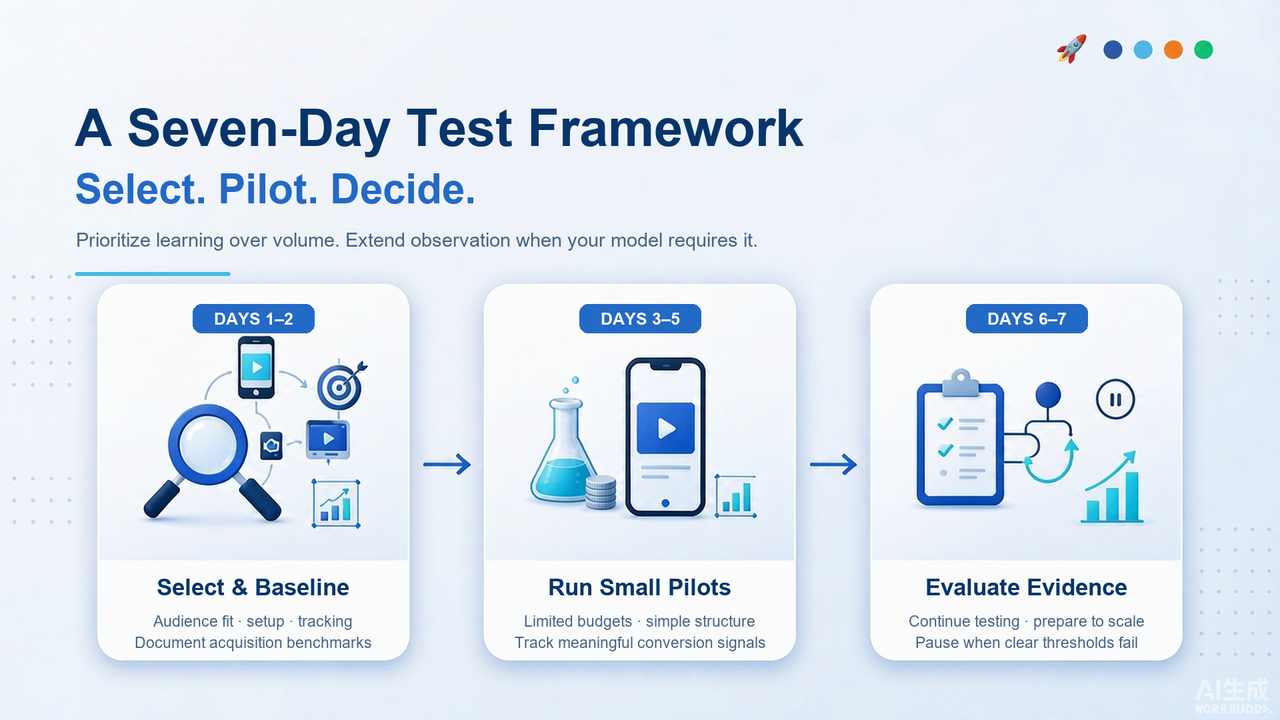
Days 1–2: Select channels and define the baseline
Start with two or three emerging media opportunities that match your target markets and business model.
Evaluate each option against three questions:
• Audience fit: Can the platform reach users who are underrepresented in your current acquisition mix?
• Operational readiness: Are account access, billing, campaign setup, tracking, and compliance requirements clear?
• Measurement feasibility: Can you track meaningful outcomes beyond impressions and clicks?
Before launch, document your existing acquisition benchmarks, including CPI or CPA, conversion rates, and downstream quality where available. These provide a reference point for evaluating early results.
Days 3–5: Launch controlled, small-budget pilots
Allocate a limited test budget to each selected channel. Keep the campaign structure simple enough to identify meaningful performance differences.
Where practical, use comparable markets, audiences, creative concepts, and conversion objectives. Differences between platforms make perfect comparisons difficult, so document any important variations in targeting, attribution, and optimization.
During this stage, focus on whether the channel can deliver relevant traffic and whether users progress beyond the initial click or install.
Avoid making major budget changes based on short-term fluctuations. Early performance can be affected by limited conversion volume, campaign learning, and attribution delays.
Days 6–7: Evaluate the evidence and decide what comes next
At the end of the initial window, classify each test into one of three groups:
• Continue testing: Early signals are promising, but more data is needed to establish conversion quality or cost stability.
• Prepare to scale: Performance meets predefined targets, measurement is sufficiently reliable, and there is a clear path to increasing spend.
• Pause or stop: Results consistently fall outside acceptable thresholds, traffic quality raises concerns, or operational requirements cannot be met.
Seven days may be enough to identify operational problems or promising early signals, but not necessarily enough to evaluate retention, long conversion cycles, or true incrementality. Extend the observation period when the business model requires it.
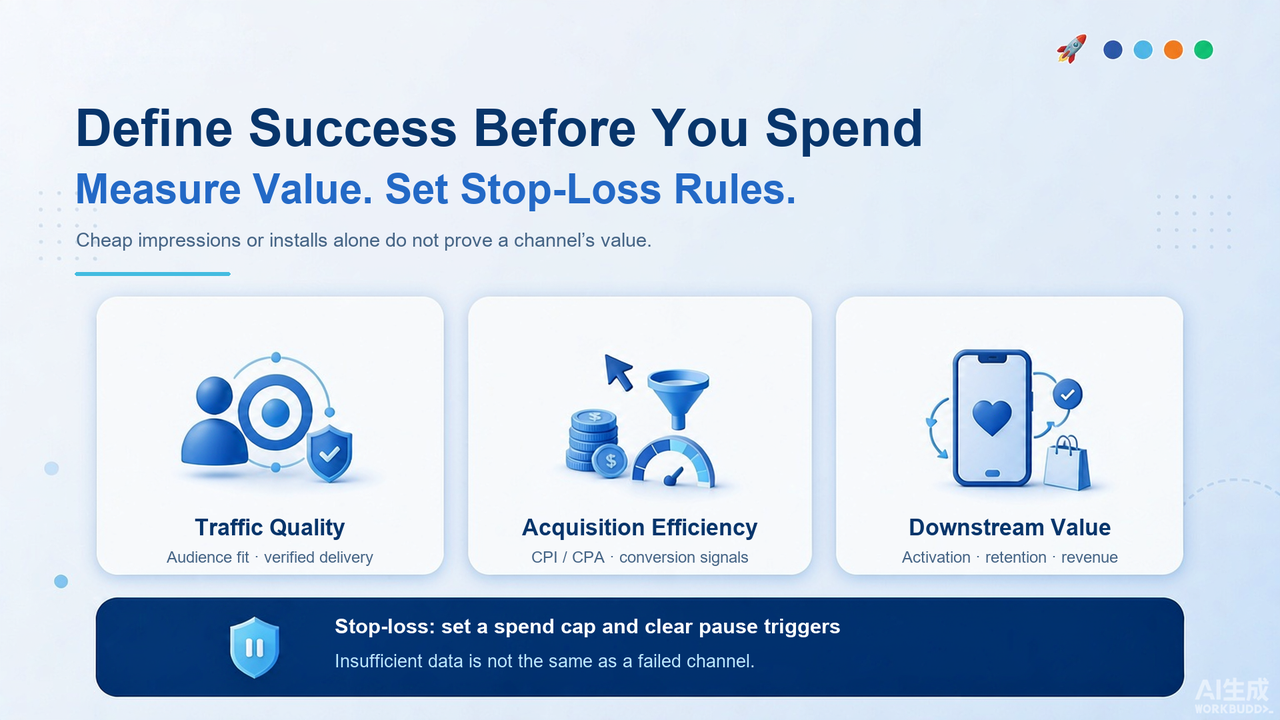
3. Define Success and Stop-Loss Criteria Before Launch
A small-budget test is useful only when the team knows what it is trying to learn.
For emerging media, success should not be defined by cheap impressions or a low initial CPI alone. A channel may generate inexpensive installs but fail to deliver meaningful activation, retention, or revenue.
Before launching, establish three levels of evaluation.
Delivery and traffic quality: Is the campaign reaching the intended audience? Are engagement patterns and traffic signals within acceptable ranges?
Acquisition efficiency: Are CPI, CPA, or other relevant costs approaching the business target? Is conversion performance improving as sufficient data accumulates?
Downstream value: Do acquired users activate, retain, subscribe, or purchase at a level that supports the business case?
Stop-loss rules should be equally clear. Pause a campaign when spending reaches a predefined limit without the expected conversion signals, when traffic quality becomes questionable, or when compliance and operational issues emerge.
However, distinguish between a channel that has failed and a test that has not generated enough evidence. A limited number of conversions may justify extending a controlled experiment rather than immediately rejecting the platform.
4. Turn December Learnings Into a Q1 Growth Plan
The real value of December testing comes from what happens next.
By the end of the test window, each channel should have a documented status, a set of performance benchmarks, and a clear next step.
For promising channels, use the remaining December period to validate tracking, refine campaign structure, prepare creative variations, and resolve operational bottlenecks. This reduces the amount of setup work required when Q1 budgets become available.
For channels that need more evidence, plan a second testing phase with a defined budget and evaluation period. For underperforming options, record the reasons for stopping so the team does not repeat the same experiment without new assumptions or improvements.
When scaling in Q1, increase budgets progressively and monitor whether acquisition costs and downstream quality remain stable. Performance at a small test budget does not guarantee equivalent results at a larger scale.
Most importantly, evaluate emerging media as part of the broader acquisition mix. The goal is not necessarily to replace Meta, Google, or TikTok, but to identify additional sources of reach and determine whether they contribute incremental value.
Use December to Prepare for Growth Beyond Mainstream Channels
The seven days after a major sales event will not guarantee cheaper traffic or immediate campaign success. Their value lies in creating a focused opportunity to test new options while preparing for the next growth cycle.
For advertisers, the approach is straightforward: select relevant emerging media channels, launch controlled pilots, define success and stop-loss criteria, and translate the findings into a practical Q1 investment plan.
In a competitive acquisition environment, waiting until January to explore new channels can mean starting the year without the evidence needed to allocate budgets confidently.
Use December to learn. Use Q1 to scale what the evidence supports.
At Novabeyond, we help advertisers explore emerging media ecosystems and evaluate new acquisition opportunities beyond mainstream channels. The right time to test a new channel is not necessarily when budgets are largest, but when your team can turn early results into better decisions for the growth ahead.
more posts
Category × Platform: Three Questions to Find Your First Emerging Media Test
November. 19 2026
LEARN MORE

Same Offer, Two Playbooks: How News-Feed and Social-Story Platforms Differ
November. 13 2026
LEARN MORE
MediaGo URL Pre-Approval: Landing Page Checklist and Fixes
October. 30 2026
LEARN MORE
Beyond the Duopoly: The 2027 Guide to Alternative Traffic Sources and Emerging Media Solutions
October. 26 2026
LEARN MORE