




UNIT 616 6/F KAM TEEM INDUSTRIAL BUILDING 135 CONNAUGHT ROAD WEST SAI WAN HONGKONG.
Copyright © 2026 NOVABEYOND LIMITED (company number 2833487). All rights reserved.
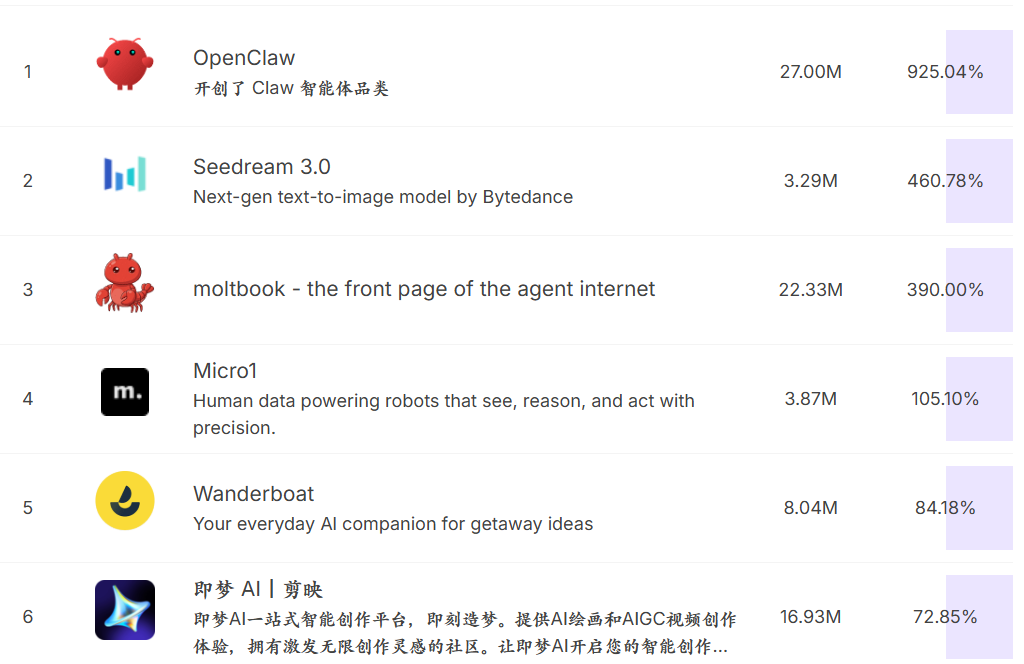
Over the past few months, a new pattern has emerged in the mobile app ecosystem. Instead of another social or gaming breakout, the fastest-growing products are increasingly AI creative tools, especially apps focused on video, image, and content generation.
One of the clearest signals behind this shift is the rapid rise of Seedance 2.0, a new-generation AI video model that has gained significant attention across creator communities and tech media. While models like Seedance 2.0 represent breakthroughs at the technology layer, the real impact is happening at the application layer.
Mobile apps built on top of these capabilities are translating innovation into mass user adoption.
This signals a broader transition: AI creativity is no longer experimental.It is becoming a mainstream user behavior.
But as the category scales, a new challenge emerges. Early growth is driven by novelty. Sustainable growth depends on acquisition efficiency.
1. From Viral Moments to Scalable Growth Systems
Creative AI apps often see rapid early traction, driven by viral content spreading across social platforms as users experiment with new formats and downloads spike quickly. However, this momentum is hard to sustain. As more competitors enter, user attention fragments, creative fatigue accelerates, organic reach becomes less predictable, and paid acquisition costs rise.
This creates a clear inflection point: growth is no longer about going viral once, but about building a repeatable, scalable acquisition system, where programmatic advertising becomes a critical lever.
2. Why AI Creative Apps Change the Rules of Acquisition
Traditional mobile acquisition relies on explaining product features, communicating value propositions or optimizing conversion funnels.
But AI creative apps behave differently. Users don’t install because they understand the product. They install because they see what it can create.
This leads to a fundamental shift:
• Conversion is driven by visual output, not messaging
• Decisions happen in seconds, not through consideration
• Creatives act as product demonstrations, not ads
For programmatic advertising, this is a structural advantage. Because the environments where programmatic thrives: short-form feeds, native placements, content-driven platforms, are exactly where this type of content performs best.
3. Where Programmatic Unlocks Incremental Growth
Once initial traction is achieved, programmatic becomes the key channel for expanding reach and stabilizing acquisition.
The biggest opportunities lie in three areas:
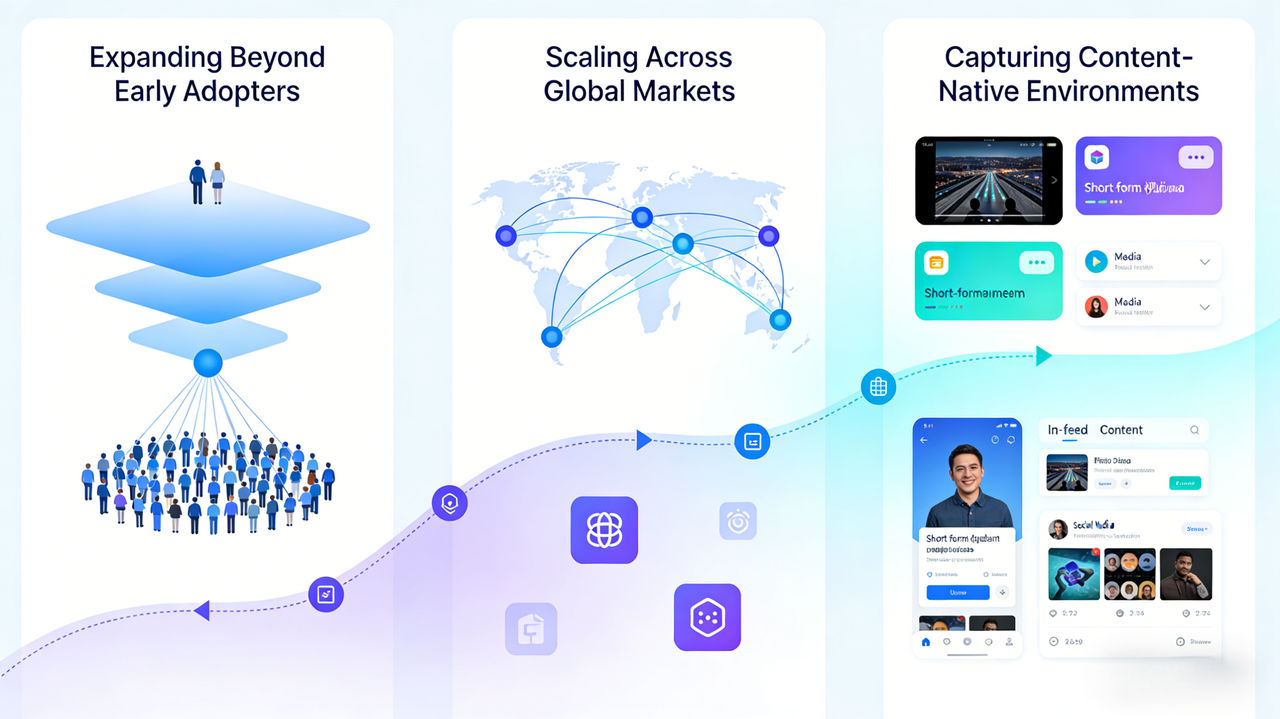
① Expanding Beyond Early Adopters
Early growth is typically concentrated among creators, tech-savvy users and early AI adopters.
Programmatic enables expansion into broader segments:
• casual social media users
• small businesses
• everyday content creators
These users don’t search for “AI tools.”. They respond to use cases and outcomes.
Growth implication:
• move toward broad targeting
• rely on creative variation instead of narrow audience assumptions
• let algorithms discover new demand pockets
② Scaling Across Global Markets
Creative demand is inherently global, but competition is uneven.
Programmatic platforms allow teams to:
• access lower-cost inventory in emerging markets
• test multiple regions simultaneously
• scale based on performance signals
Growth implication:
• localize creatives early
• adapt outputs to local content styles
• prioritize efficiency-driven expansion
③ Capturing Content-Native Environments
AI-generated content naturally fits into:
• short-form video feeds
• in-feed native placements
• recommendation-driven ecosystems
These are the environments where programmatic performs best.
Instead of interrupting users, effective campaigns:
• blend into organic content
• mimic platform-native formats
• prioritize visual impact over explanation
4. How to Structure Programmatic Campaigns for AI Apps
Scaling acquisition in this category is less about campaign setup, and more about aligning creative, signals, and product experience.
① Turn Creatives into Product Experiences
High-performing creatives typically follow a simple pattern:
• immediate hook (final output)
• minimal process (prompt or action)
• clear result (generated content)
The goal is to trigger instant intent: “I want to try this.”
② Build a Continuous Creative Iteration Engine
Winning teams build systems, not campaigns:
• generate new creatives daily
• adapt to trending formats
• test multiple variations continuously
AI itself becomes a tool for scaling creative production.
③ Optimize for First Creation, Not Just Installs
In Creactive AI apps, installs are not the true conversion point.The critical moment is: first successful content generation. If users don’t create something immediately, retention drops sharply.
Optimization should:
• track and optimize toward in-app events
• align ad expectations with onboarding
• reduce time-to-value to seconds
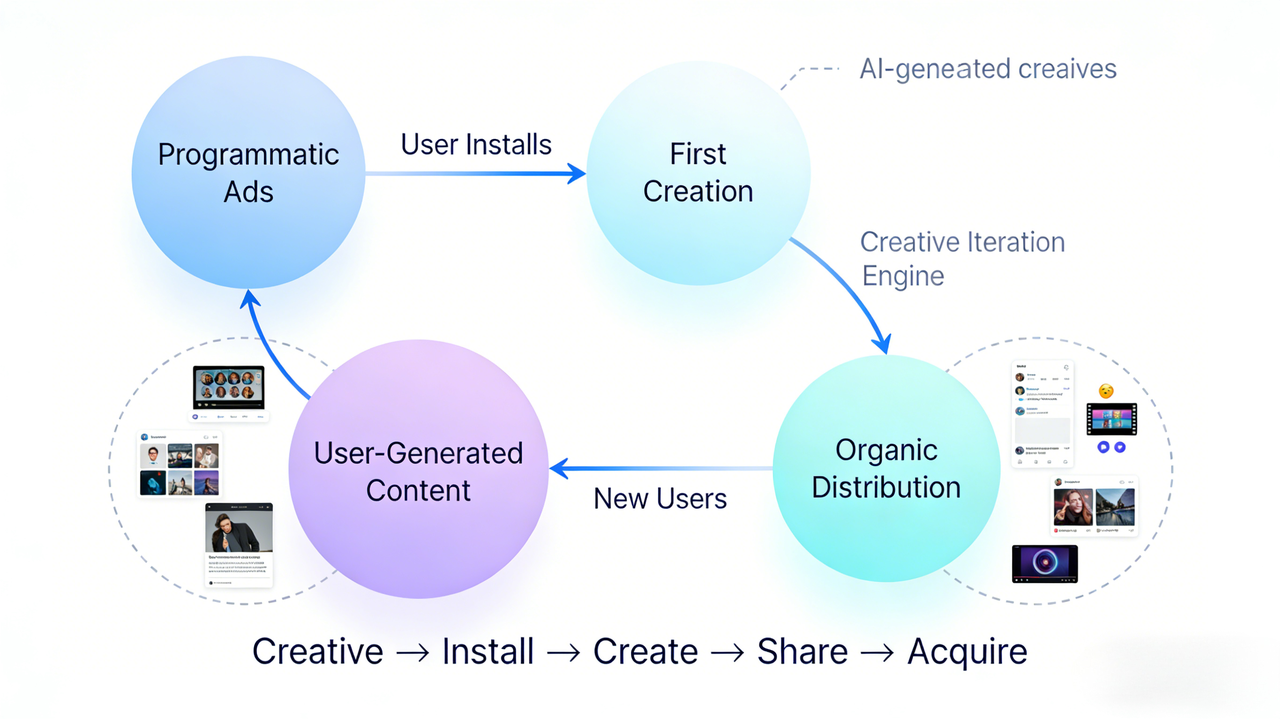
④ Turn Paid Acquisition into a Growth Loop
The most scalable AI apps connect paid and organic growth:
• programmatic drives installs
• users generate content
• content spreads organically
• new users are acquired
This creates a self-reinforcing acquisition loop. Without it, growth becomes increasingly dependent on paid spend.
Conclusion: From AI Breakthroughs to Scalable Growth Systems
The rise of models like Seedance 2.0 reflects a broader shift in the mobile ecosystem: while innovation at the model layer is expanding what’s possible, long-term success is ultimately determined at the growth layer. Creative AI apps already capture attention, but the real challenge is turning that attention into predictable, scalable user acquisition.
Programmatic advertising plays a central role in this transition by expanding reach beyond early adopters, enabling continuous creative optimization, and connecting paid acquisition with organic distribution. In this new model, growth is no longer just about buying traffic, it’s about building systems where content drives conversion, users drive distribution, and programmatic drives scale. Teams that get this right won’t just ride the AI wave—they’ll define how growth works within it.
more posts
Driving Scale in SEA: Why Indonesia and Vietnam Are App UA Growth Hotspots (And How to Win via Programmatic Ads)
October. 15 2026
LEARN MORE

Mastering Mobile User Acquisition for Fintech Apps in 2026: What Actually Works
October. 08 2026
LEARN MORE
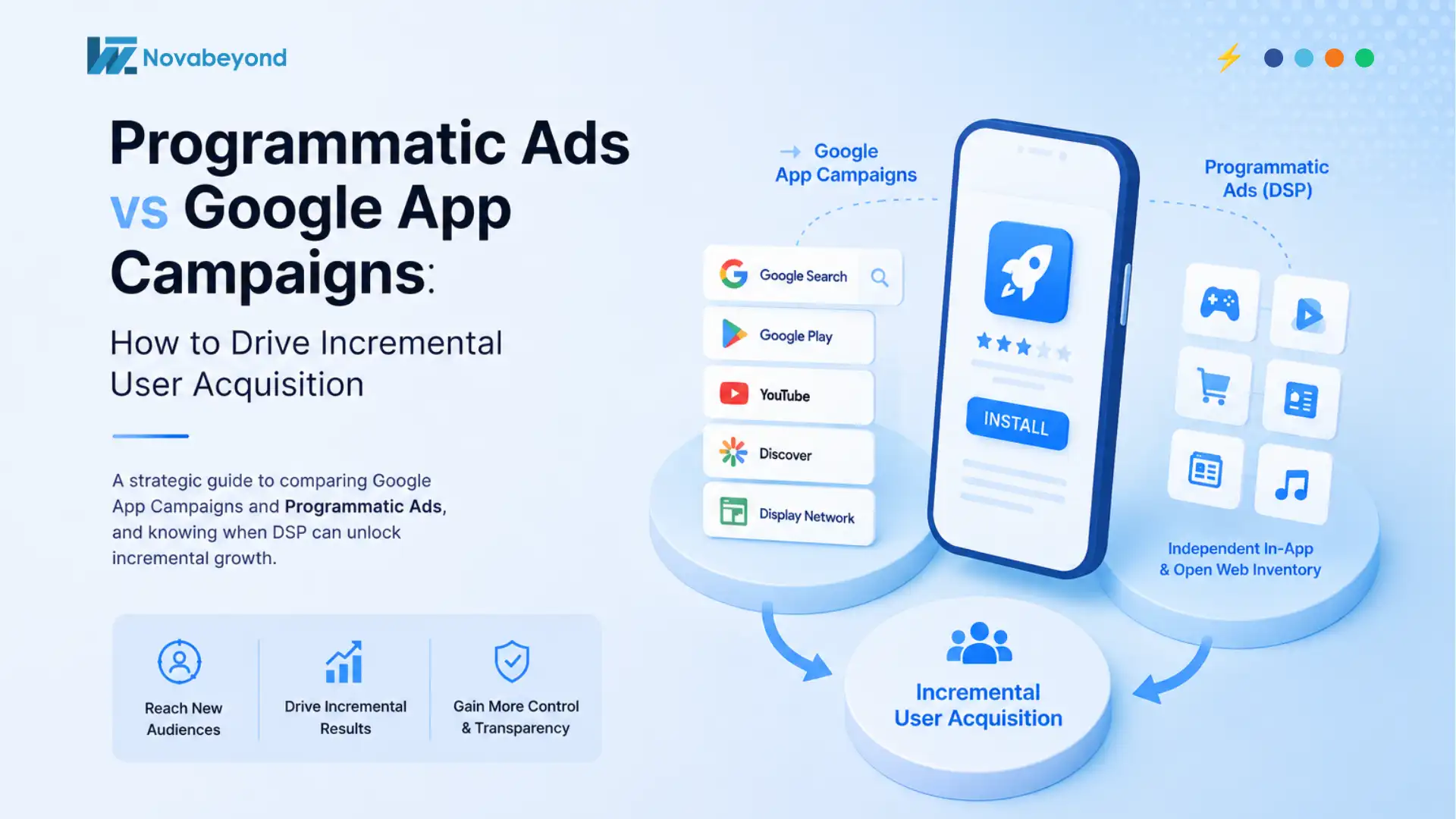
Programmatic Advertising vs. Google App Campaigns: How to Drive Incremental UA in 2026
September. 23 2026
LEARN MORE
The Complete Practical Guide to Mobile App User Acquisition in 2026: Bidding, Creatives, and Scaling
September. 22 2026
LEARN MORE