




UNIT 616 6/F KAM TEEM INDUSTRIAL BUILDING 135 CONNAUGHT ROAD WEST SAI WAN HONGKONG.
Copyright © 2026 NOVABEYOND LIMITED (company number 2833487). All rights reserved.
Introduction
As we navigate 2027, performance marketers and growth leads are encountering an undeniable reality: the era of relying solely on a handful of mainstream platforms for limitless user acquisition has ended. With privacy frameworks like Apple's AdAttributionKit and Google's Privacy Sandbox fundamentally altering measurement, and global ad spend reaching new heights, the digital landscape has become saturated. Competition across legacy channels has driven customer acquisition costs (CAC) to unsustainable levels, creating a "30-day growth ceiling" where scaling budgets merely yields diminishing returns rather than proportional user growth.
For brands looking to break through this plateau, conventional optimization is no longer enough. Incrementality is the defining metric of 2027. True incremental growth does not come from squeezing marginal efficiencies out of oversaturated ecosystems; it is achieved by discovering and activating audiences in untapped, high-intent environments. To secure a competitive advantage, mobile app marketers must fundamentally restructure their media mix to reach users beyond traditional boundaries.
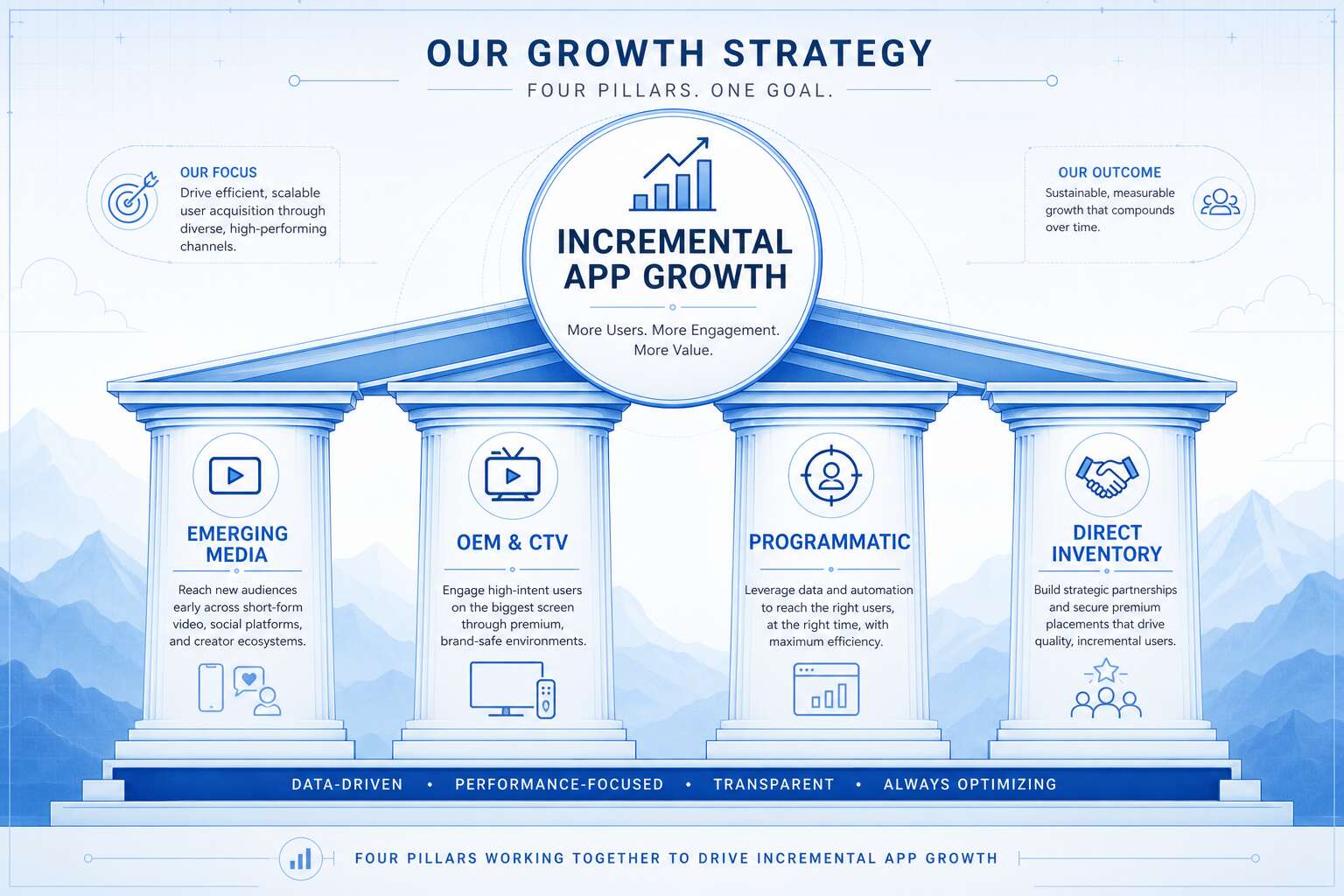
This shift demands a transition from single-platform dependency to a diversified, multi-channel growth engine. Forward-thinking brands are achieving this through a comprehensive four-pillar framework: integrating regional emerging media, capturing device-level intent through OEM and Connected TV (CTV), leveraging intelligent programmatic buying, and securing exclusive access via direct inventory partnerships.
Quick Answer
What are the defining mobile marketing trends of 2027, and how can apps achieve sustainable growth?
In 2027, mobile app growth hacking requires moving beyond saturated mainstream duopolies to focus on true incrementality. The most effective strategy relies on four core pillars: Emerging Media Solutions to capture fast-growing regional audiences; OEM & CTV Growth Channels for device-native placements and large-screen performance; Programmatic Growth Strategies that use AI to navigate privacy-first environments; and Direct Inventory Partnerships to access exclusive, middleman-free premium traffic. By combining these alternative traffic sources into a unified framework, brands can lower acquisition costs, reduce platform dependency, and unlock sustainable global scale.
Talk to Novabeyond about scaling your app growth in 2027
Trend 1: The Migration to Regional Emerging Media Solutions
For years, the default strategy for global app expansion was to increase bids on the world's two largest ad networks. However, in 2027, one of the most critical mobile marketing trends is the deliberate migration of budgets toward regional emerging media platforms.
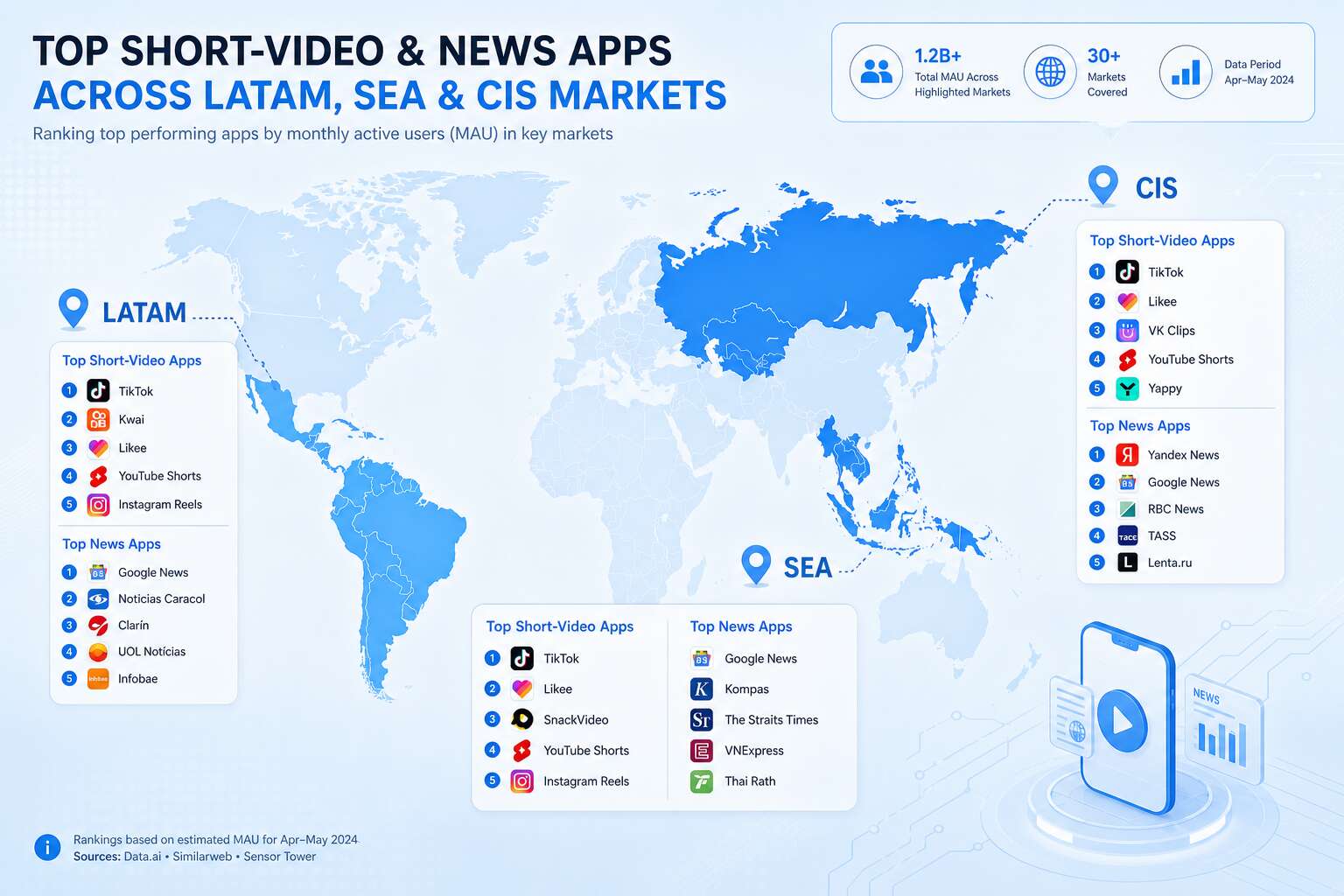
As mainstream ecosystems become increasingly congested, many of the world's most engaged digital audiences, particularly in high-growth markets like Southeast Asia, Latin America, and the CIS region, are spending their time on alternative short-video apps, local news aggregators, and specialized social networks. These environments boast massive, highly active user bases with distinct behavioral patterns, yet they remain severely underutilized by global advertisers.
The Barrier is Access, Not Intent
The primary reason brands hesitate to enter these alternative traffic sources is not a lack of user intent, but rather operational friction. Navigating unfamiliar onboarding processes, understanding localized compliance regulations, and integrating diverse tracking frameworks require specialized expertise. Furthermore, maintaining account stability in strict policy environments can drain internal resources.
This is where specialized agency support becomes essential. By working with a verified partner to establish a compliant agency ad account, brands can bypass administrative roadblocks. Fast-track onboarding allows growth teams to bypass common pitfalls and immediately initiate campaign testing. This seamless entry into alternative platforms is a cornerstone of scaling beyond mainstream channels, providing access to fresh audiences before they are saturated by competitors.
Market-Adaptive Execution
Success in emerging media cannot be achieved by copy-pasting campaigns from legacy platforms. It requires market-adaptive execution. Creative formats, bidding strategies, and engagement hooks must be tailored to the cultural nuances and algorithmic preferences of each specific regional platform. Brands that master this localized approach consistently report lower cost-per-install (CPI) metrics and higher early-retention rates compared to their mainstream campaigns.
Trend 2: Device-Native Placements and the CTV Boom (OEM & CTV Growth Channels)
If emerging media solves the problem of regional reach, the second pillar—OEM & CTV Growth Channels solves the problem of placement proximity. In 2027, getting closer to the consumer means bypassing the app store search bar altogether and appearing natively on the device.
Capturing Intent at the Source: OEM Advertising
Original Equipment Manufacturer (OEM) advertising has evolved from a niche tactic into a primary growth engine. By leveraging device-native placements such as pre-installed apps, system-level recommendations, native browser slots, and proprietary app stores, advertisers can reach users the moment they activate and explore their smartphones.
This strategy is particularly potent in emerging markets where specific handset manufacturers command massive market share. Unlike traditional in-app ads that interrupt user tasks, OEM placements integrate smoothly into the user's daily device interaction. Because these impressions occur at the operating system level, they represent a highly efficient avenue for app discovery. Brands that implement a structured OEM advertising placements strategy are seeing significant boosts in user acquisition volume, coupled with strong downstream engagement.
The Evolution of Connected TV (CTV) into a Performance Channel
Simultaneously, the living room has become a battlefield for performance marketing. Historically viewed as an upper-funnel brand awareness medium, Connected TV has firmly transitioned into a measurable conversion driver.
With US CTV ad spend projected to approach $38 billion in 2027, the technology backing these buys has matured. Today, programmatic CTV advertising allows advertisers to target specific household demographics, apply frequency capping across fragmented streaming services, and measure downstream mobile conversions triggered by large-screen exposure.
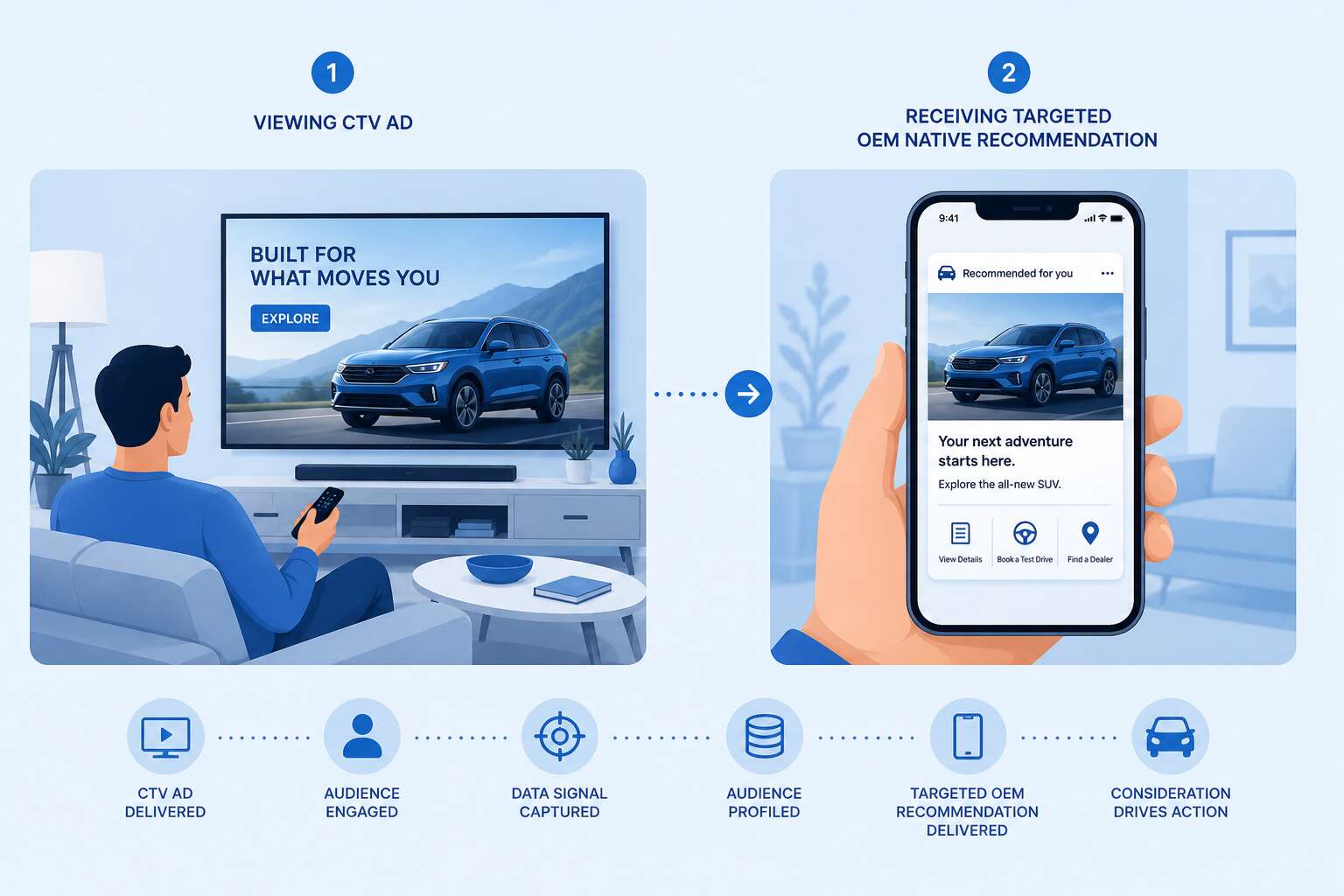
By unifying mobile OEM acquisition with CTV brand performance, advertisers can create a continuous cross-device user journey. A user might see a high-impact video ad on their smart TV in the evening and encounter a native app recommendation on their smartphone the next morning. This cohesive ecosystem maximizes touchpoints and significantly improves overall media effectiveness.
Trend 3: Privacy-First Programmatic Growth Strategies
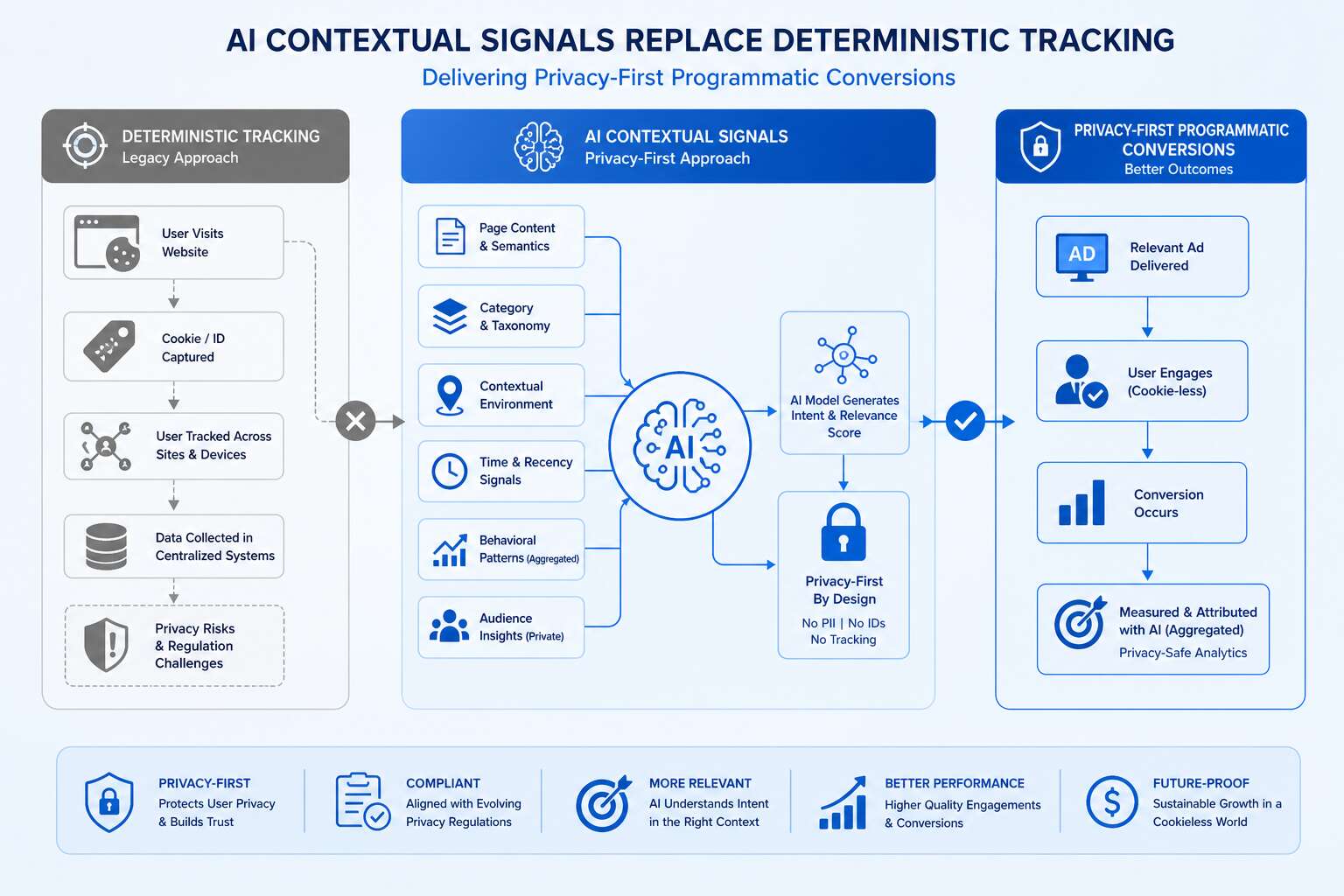
The digital advertising industry in 2027 is defined by an absolute mandate for privacy. With deterministic, user-level tracking drastically curtailed, reliance on third-party cookies phased out, and mobile operating systems enforcing strict aggregated measurement, marketers must rethink how they buy and evaluate traffic.
This environment has catalyzed a massive shift toward sophisticated Programmatic Growth Strategies. Programmatic buying is no longer just about accessing a Demand-Side Platform (DSP); it is about combining diversified global and local inventory with AI-driven traffic intelligence capable of modeling conversions in a privacy-compliant manner.
AI-Driven Traffic Intelligence
Without individual user identifiers, the industry has turned to contextual signals and artificial intelligence. Modern programmatic infrastructure utilizes proprietary optimization systems to score traffic quality in real-time, predict user behavior based on aggregated data sets, and automate bidding efficiency. This ensures that ad spend is directed toward placements with the highest statistical probability of conversion, mitigating the loss of deterministic tracking.
Comparing Media Buying Approaches in 2027
To understand the shift, it is helpful to look at how programmatic stacks up against legacy approaches in the current privacy environment.
| Feature | Saturated Mainstream Channels | Advanced Programmatic Ecosystems |
| Inventory Scope | Walled garden; limited to the platform's proprietary apps and direct network. | Open and flexible; spans thousands of premium global and local publishers via SSPs. |
| Bidding Intelligence | Black-box algorithms with limited transparency for the advertiser. | AI-driven traffic scoring with customizable CPA, CPI, and CPM optimization models. |
| Privacy Adaptation | Highly restricted by OS-level updates; reliant on delayed, aggregated platform postbacks. | Adapts via contextual targeting, probabilistic modeling, and integration with diverse measurement APIs. |
| Fraud Defense | Standardized platform-level filters. | Multi-layered traffic integrity systems and independent third-party verification protocols. |
By establishing a robust programmatic advertising framework, brands not only protect themselves against ad fraud but also gain access to a vastly larger pool of supply. This flexibility allows growth teams to dynamically allocate budget to the most efficient SSPs and ad exchanges globally.
Build a scalable programmatic growth framework tailored to your 2027 objectives.
Trend 4: The Strategic Advantage of Direct Inventory Partnerships
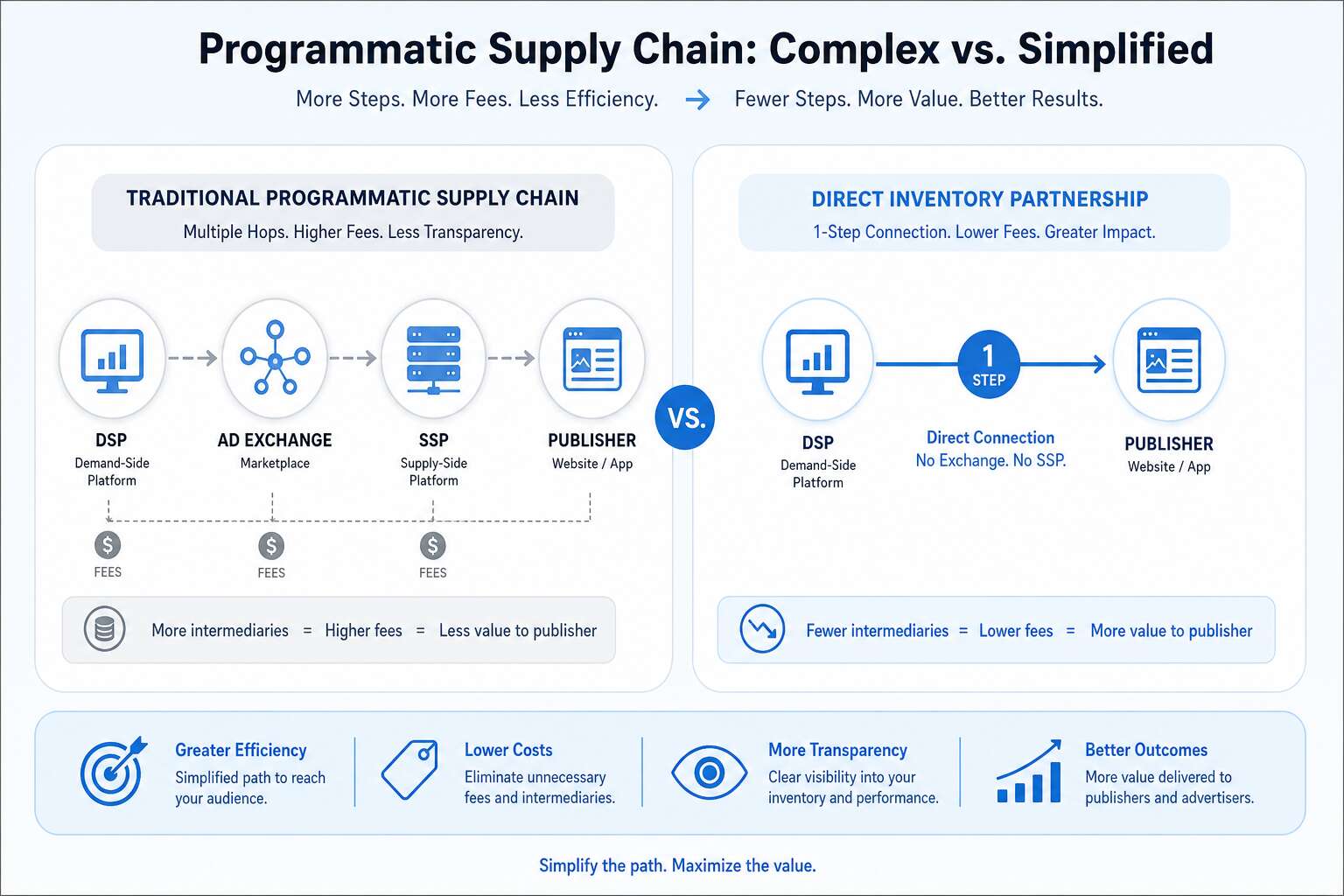
The fourth pillar of 2027 mobile marketing trends is a structural response to the inefficiencies of open-market bidding. While programmatic advertising offers scale, navigating the open web can sometimes involve high intermediary take rates and opaque supply paths. To counter this, elite growth marketers are heavily prioritizing Direct Inventory Partnerships.
Bypassing the Middleman
Direct inventory means establishing exclusive commercial relationships with local market leaders, premium web publishers, super apps, and category-dominant digital ecosystems. By integrating directly with media owners and developers, advertisers remove intermediary layers from the supply chain.
This middleman-free approach delivers three distinct advantages:
Cost Efficiency: Without multiple tech taxes eating into the CPM, more of the advertiser's budget goes directly toward working media.
Priority Access: Advertisers gain first look at premium placements and custom contextual formats that are rarely available on the open exchange.
Brand Safety and Transparency: With a direct relationship, brands have 100% visibility into exactly where their ads are appearing, ensuring contextual suitability.
Synergy with Search Arbitrage and RSOC
Direct inventory also plays a crucial role in modern performance tactics like search arbitrage. In 2027, buying paid social or native traffic and routing it toward high-intent search feeds requires pristine, compliant landing pages. By securing direct placements on premium content sites, advertisers can execute sophisticated RSOC and direct inventory strategies with higher revenue-per-click (RPC) and minimal risk of platform suspension. Ultimately, direct partnerships guarantee that scale does not come at the expense of quality.
FAQ
1. What are the top mobile marketing trends for 2027?
The dominant trends include the shift away from saturated duopolies toward regional emerging media, the rapid integration of Connected TV (CTV) as a measurable performance channel, the rise of device-level OEM advertising, and the strategic use of AI-driven programmatic buying to navigate strict privacy regulations.
2. How is AI impacting mobile app user acquisition in 2027?
AI is now core infrastructure. It powers real-time traffic scoring, predicts conversion likelihood without relying on individual user tracking, automates budget pacing across multiple networks, and rapidly generates creative variations tailored to specific audience segments.
3. What is incremental growth in performance marketing?
Incremental growth refers to acquiring users and driving conversions that would not have occurred through existing campaigns. Instead of paying increasingly higher costs for the same audience on mainstream platforms, incrementality focuses on reaching net-new audiences via untapped channels like OEM, CTV, and emerging media.
4. Why are brands moving budget to OEM and CTV channels?
OEM placements allow brands to reach users natively at the device level (e.g., pre-installs, system recommendations) before they even open an app store. CTV offers the premium, high-attention environment of a television screen combined with the digital ability to track downstream mobile conversions, making it a powerful dual-purpose channel.
5. How does privacy affect programmatic advertising in 2027?
With deterministic tracking (like cookies and broad device IDs largely deprecated), programmatic advertising relies on aggregate measurement APIs, machine learning, and contextual signals. Success now requires advanced DSPs that can accurately model attribution and optimize bids without violating user privacy.
6. What are direct inventory partnerships?
Direct inventory partnerships involve bypassing open ad exchanges and SSPs to establish direct commercial relationships with app developers, super apps, and premium publishers. This reduces intermediary tech fees, ensures 100% placement transparency, and unlocks exclusive access to high-performing ad slots.
7. Why is it important to use an agency ad account for emerging media?
Opening and managing accounts on regional emerging media platforms often involves strict local compliance checks, unfamiliar interfaces, and complex payment routing. A verified agency partner provides fast-tracked account provisioning, localized policy guidance, and dedicated support, preventing operational delays and account suspensions.
Conclusion
The mobile marketing trends of 2027 make one thing clear: what worked two years ago will not suffice today. Relying on a single mainstream channel creates a precarious foundation susceptible to policy changes, rising costs, and growth stagnation. To build resilient, long-term success, brands must adopt a diversified portfolio approach.
By implementing this 4-pillar strategy, advertisers can achieve true incrementality. Emerging Media Solutions provide the geographical and audience expansion; OEM & CTV Growth Channels deliver intent right at the device screen; Programmatic Growth Strategies offer the intelligent, privacy-first scale; and Direct Inventory Partnerships secure the premium, transparent supply paths.
Novabeyond is a global growth marketing agency uniquely positioned to help advertisers build and execute this exact framework. From securing agency ad accounts across regional platforms to deploying intelligent programmatic campaigns and brokering direct media relationships, Novabeyond helps brands unlock sustainable incremental growth beyond the limitations of mainstream channels.
Ready to break through your growth ceiling?
Partner with Novabeyond to unlock global incremental growth today
more posts
Beyond the Duopoly: The 2027 Guide to Alternative Traffic Sources and Emerging Media Solutions
October. 26 2026
LEARN MORE

Diversified Acquisition Strategies for Global Advertisers: A Framework for Evaluating New Channels
September. 11 2026
LEARN MORE
The Hidden Cost of Platform Dependency: What One Policy Change Can Destroy
August. 27 2026
LEARN MORE
How Incremental Growth Is Changing Performance Marketing
August. 25 2026
LEARN MORE