




Copyright © 2026 NOVABEYOND LIMITED (company number 2833487). All rights reserved.
Address: UNIT 616 6/F KAM TEEM INDUSTRIAL BUILDING 135 CONNAUGHT ROAD WEST SAI WAN HONGKONG.
Introduction
If you have ever run performance marketing campaigns on Facebook, TikTok, or Google, you have likely faced the sudden panic of an unexpected ad account suspension. Ads receive disapproval notices without a clear reason. Business managers get flagged mid-campaign. Daily spending limits face aggressive restrictions right when you are ready to scale a winning creative. For performance marketers, media buyers, and growth leads, losing an ad account is not just a minor operational headache. It is a direct and immediate disruption to your revenue, team morale, and overall business continuity.
As major advertising platforms tighten their compliance algorithms and automated risk-control mechanisms in 2026, relying on standard self-serve accounts has become a severe operational bottleneck. You cannot build a scalable, predictable growth machine on a fragile foundation that might collapse without warning. That is why agency ad accounts have transitioned from an optional structural upgrade to an absolute necessity for advertisers who want stability, rapid scaling, and direct platform support.
In this comprehensive guide, we examine exactly how these high-trust ad accounts work, how their requirements differ across major networks like Meta and TikTok, and how you can use them to build a resilient, uninterrupted acquisition infrastructure. Whether you are scaling an app, expanding an e-commerce brand, or running lead generation in regulated verticals, securing the right infrastructure is your first step toward sustainable growth.
Quick Answer
An agency ad account is an advertising account opened, managed, or settled with the assistance of an ad agency, media partner, or platform partner. Unlike standard self-opened accounts, they inherit the compliance history, established credit line, and credibility of the managing agency. This structural difference results in drastically fewer automated suspensions, significantly faster creative review times, and much higher initial daily spending limits. Advertisers retain full operational control over their day-to-day campaign execution, targeting, and dashboards, while the agency handles the complex backend elements like billing, cross-border payment compliance, and platform escalations. For high-growth brands or businesses in regulated industries, deploying an agency ad account is the fastest, most reliable way to eliminate frustrating bot-driven bans, scale campaign budgets predictably, and secure direct, human platform support when issues arise.

Talk to Novabeyond to secure your agency ad accounts
What Are Agency Ad Accounts?
To understand why agency ad accounts are so powerful, you first need to understand how advertising networks evaluate risk. At their core, agency ad accounts are enterprise-grade advertising environments provisioned directly by an official, certified platform partner rather than through a public self-serve portal.
When a brand new business opens a standard self-serve ad account, the platform's machine-learning algorithm treats it as a blank slate with a high risk profile. Because there is no historical spending data, no established payment trust, and no proven record of policy compliance, the ad account faces incredibly strict automated scrutiny. During this probationary period, a single creative violation, a minor billing mismatch, or even an unusual login location can trigger an immediate automated restriction.
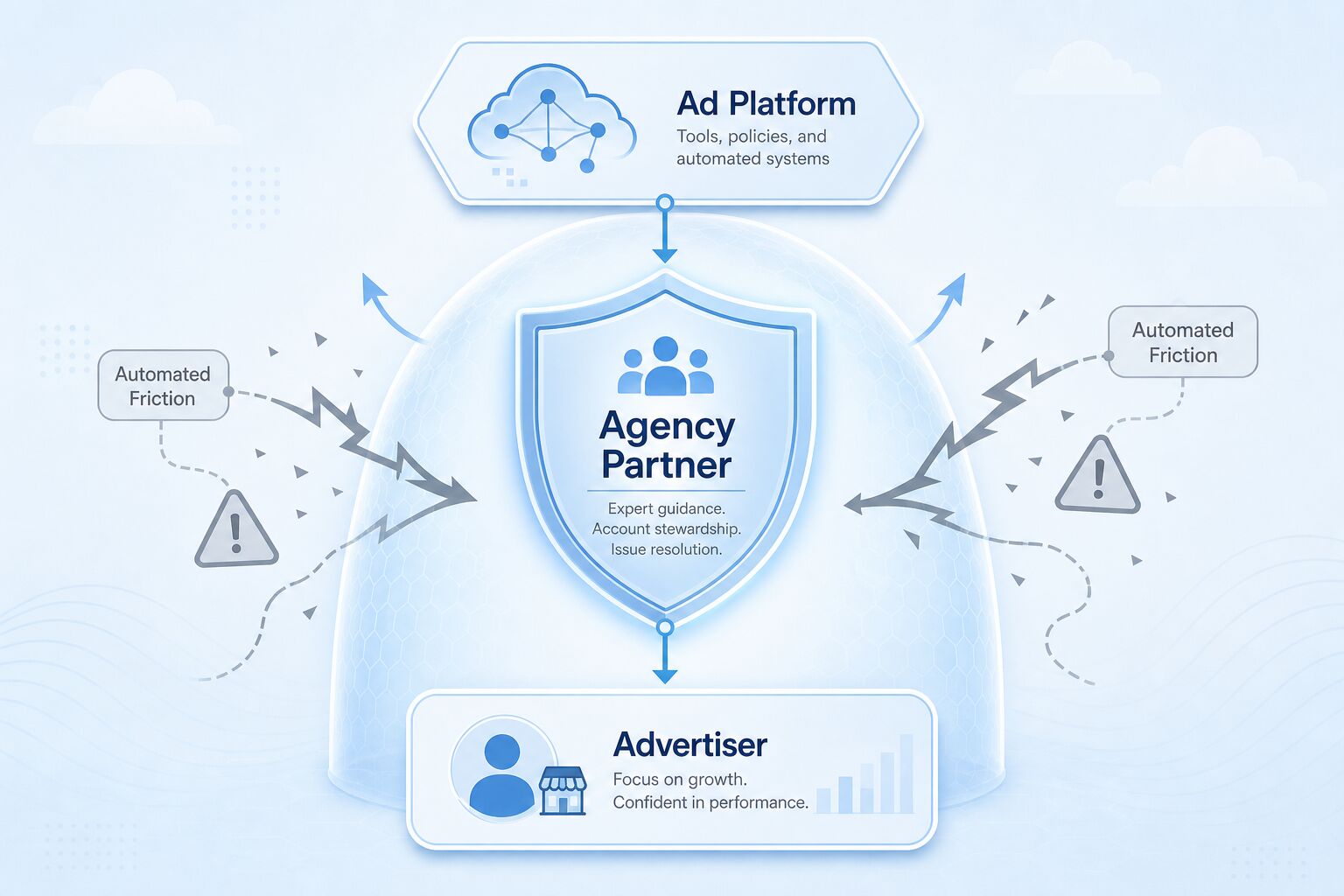
Agency ad accounts operate on an entirely different trust paradigm. They are backed by a certified agency’s established reputation, vast historical spend data, and direct contractual relationship with the media platform. Platforms like Meta, Google, and TikTok grant these select agencies special provisioning rights because the agency assumes partial responsibility for the compliance, financial health, and operational integrity of the advertisers they onboard.
When you transition to this model, you do not sacrifice your autonomy. You still get full, unrestricted control over your campaign execution, ad creation, audience targeting, and analytics within your native Ads Manager. The fundamental difference lies entirely in the backend architecture. The agency manages the credit line, business verification, and ad account provisioning. If a false-positive flag or a policy issue arises, the agency can route it through dedicated, priority representative channels, rather than forcing your media buying team to wait weeks for an unhelpful automated support ticket response.
Why Top Brands Prefer Agency Ad Accounts in 2026
The industry-wide shift toward agency-provisioned infrastructure is not driven by convenience alone; it is driven by tangible return on investment and necessary operational efficiency. When you remove the friction of unpredictable platform enforcement, your media buying team can focus entirely on what actually drives revenue: testing creatives, optimizing bids, and finding new audiences.
More Stable Account Operations & Support
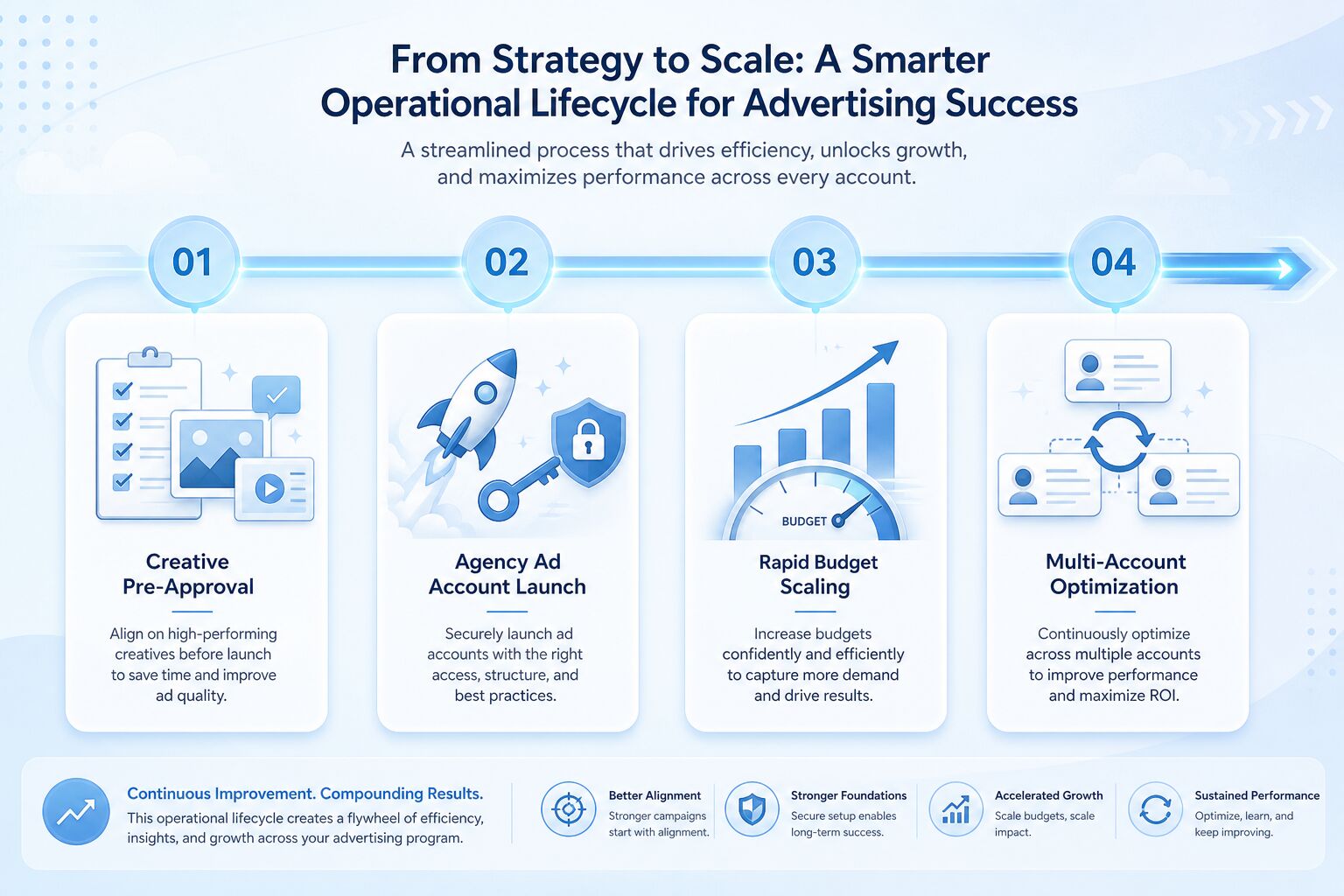
For brands focusing on long-term campaign delivery, the value of working with an agency lies in reducing operational friction across account setup, payments, management, and policy communications. Professional agencies also review creatives, landing pages, and account configurations prior to launch, mitigating risks stemming from operational errors or obvious compliance issues. For a deeper look at recovering from restrictions and maintaining a clean profile, review our strategic guide on the Ad Account Blocked Solution.
Accelerated Budget Scaling for Rapid Growth
Standard accounts typically start with severe daily spending limits, often capped under $50 a day, which can take weeks or even months of consistent, compliant spending to lift. Agency ad accounts completely bypass this frustrating warm-up period. Because the agency has already established financial trust with the platform, these accounts receive high or sometimes completely unrestricted daily spend caps from day one. If you are executing a rapid product launch, entering a highly competitive new region, or trying to capitalize on a fleeting seasonal trend, this immediate scaling capacity is critical to capturing market share before your competitors do.
Dedicated Platform Support and Priority Escalation
When a self-opened ad account goes down, advertisers are entirely at the mercy of automated appeal systems, which often return generic, unhelpful responses. Agencies, however, have direct communication channels with dedicated platform representatives. This exclusive access means faster appeal resolution, early access to powerful beta features, and firsthand, actionable insights into upcoming algorithmic changes before they hit the general public.
Flexible Financial Operations and Global Reach
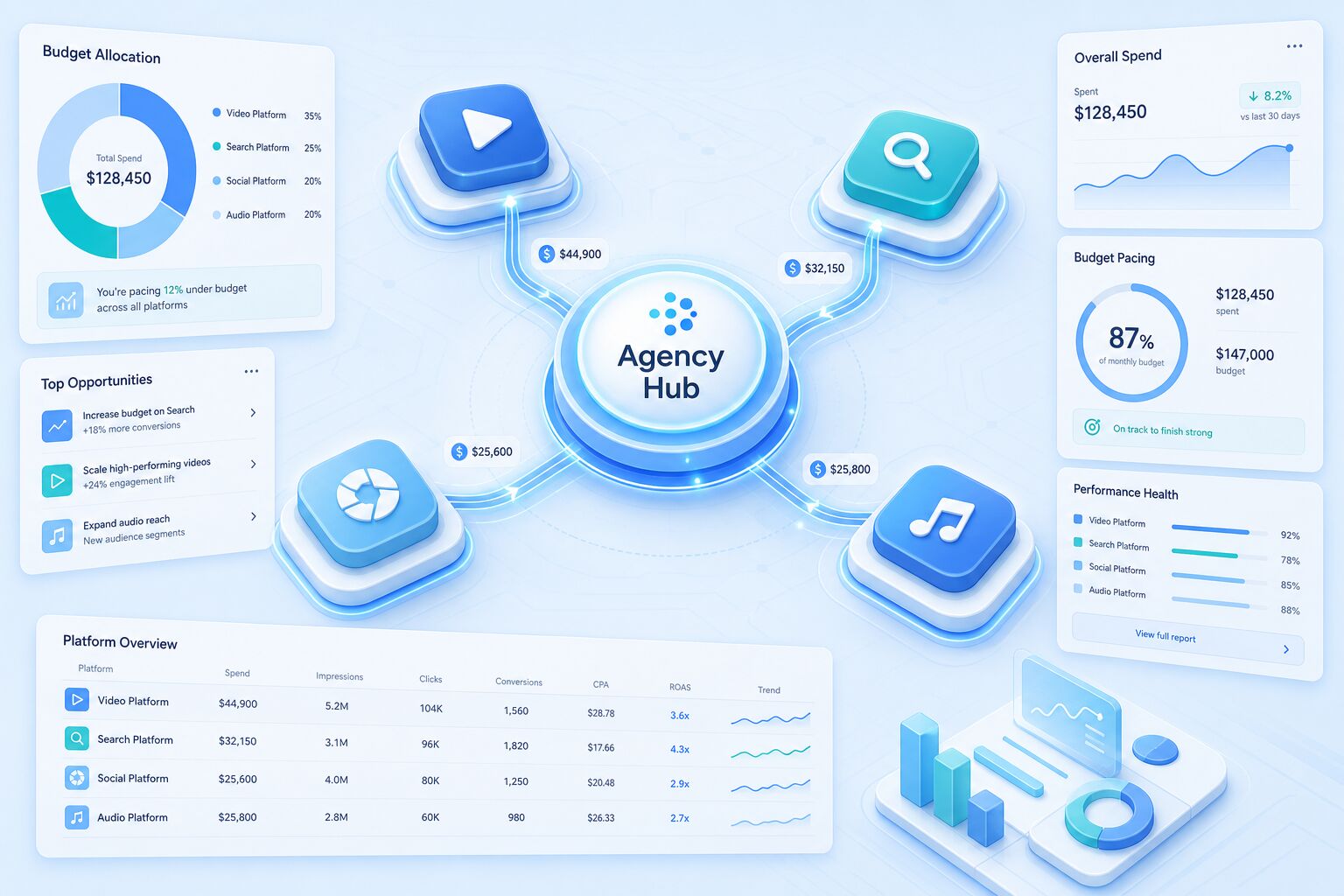
Managing multiple corporate credit cards across different global networks is an accounting nightmare that frequently triggers automated payment fraud flags, instantly pausing your campaigns. Agency partners consolidate and streamline this financial process. Advertisers can fund their agency ad accounts using flexible, predictable methods like traditional wire transfers or localized payment gateways. The agency then ensures smooth, compliant budget allocation across Meta, Google, TikTok, and any emerging channels your brand wishes to test.
Ready to eliminate ad account limits and focus on growth? Upgrade your infrastructure with Novabeyond
Agency Ad Account vs. Self-Opened Account Detailed Comparison
When deciding whether to build your advertising infrastructure internally or partner with a specialized agency, it helps to weigh the operational differences clearly. Every day your account spends in a suspended state is a day of lost revenue and wasted creative momentum.
| Comparison Metric | Self-Opened Ad Account | Agency Ad Account |
| Onboarding Speed | 5 to 15 business days with high risk of verification delays | 1 to 3 business days through fast-track agency KYC processes |
| Approval Pass Rate | Moderate risk of rejection for minor compliance or billing errors | High pass rate with agency pre-screened creatives and documents |
| Initial Spend Limits | Often restricted to very low amounts and painfully slow to increase | High or completely unrestricted scaling capacity from day one |
| Support Access | Basic automated support tickets and frustrating AI chat bots | Dedicated account manager and direct, priority platform rep access |
| Compliance Load | Internal team must monitor evolving platform policies alone | Agency provides proactive policy updates, training, and safety checks |
| Cost Structure | High internal labor costs for troubleshooting and campaign downtime | Transparent service fees easily offset by zero downtime and speed |
Self-opening an account may make sense for local, small-scale businesses with tiny budgets and highly straightforward, low-risk compliance profiles. However, if you are running aggressive cross-border campaigns, managing large-scale budgets, operating in sensitive verticals, or simply cannot afford days of campaign downtime, securing agency ad accounts is the only efficient path forward. You can learn more about the broader onboarding requirements and global strategies in our Ad Account Opening: The Complete 2025 Guide for Global Businesses.
Platform Specifics and How to Get Agency Ad Accounts
Every advertising network has distinct policy sensitivities, review windows, and localized documentation requirements. Working with a specialized partner who understands these subtle nuances prevents costly delays and ensures your launch timeline remains intact.
Facebook Agency Ad Account
Securing a stable Facebook agency ad account is almost always the top priority for performance marketers. Meta’s automated enforcement algorithm is notoriously aggressive, frequently disabling ad accounts for perceived billing mismatches, subtle landing page issues, or nuanced creative violations. To launch successfully, you will need valid business registration documents, transparent admin identity verification, and clear proof of domain ownership.
Agencies hold pre-verified Business Manager relationships with Meta. Through these relationships, they completely bypass the standard trust-building phase, allowing you to launch with much higher daily thresholds. Agencies also help structure your Business Manager strategically to isolate risk, ensuring that one flagged experimental asset does not bring down your entire operation. For a practical look at overcoming Meta's unique hurdles and avoiding common setup errors, read our analysis in Facebook Agency Accounts: The Mistakes I Made and What Finally Worked.
TikTok Agency Ad Account
TikTok's algorithm heavily favors fresh, high-velocity creative testing. If your ad account is restricted even temporarily, your winning creatives burn out while you wait for sluggish appeals to process. TikTok is highly sensitive to creative policies regarding restricted products, copyright infringement, and aggressive, over-promising claims. A specialized agency provides vital pre-flight creative audits to ensure your fast-paced videos meet local platform guidelines before submission. This dramatically reduces the risk of a shadowban or a hard suspension, allowing you to maintain the creative velocity required to win on the platform.
Google Agency Ad Account
Google Ads remains the most intent-driven and consistent acquisition channel available, but its specific policies around financial services, healthcare, software, and data collection are incredibly rigorous and constantly evolving. Payment profile suspensions are one of the most common, frustrating issues on Google. Using a Google agency ad account practically eliminates this payment risk because the core billing relationship is anchored firmly by the agency. Additionally, agencies can easily expedite complex policy appeals for sensitive product categories through their dedicated Google representatives, turning weeks of waiting into hours.
Emerging Regional Platforms
As brands look heavily beyond mainstream channels to discover true incremental growth, platforms like Kwai, BIGO Ads, and Mintegral offer massive, untapped opportunities in high-growth regions like Latin America, the Middle East, and Southeast Asia. However, navigating their unique KYC processes, language barriers, and local entity requirements can be daunting for an outsider. Agencies that specialize in these specific networks can instantly provision agency ad accounts, provide critical local market insights.
How to Maximize Performance with Agency Ad Accounts
Acquiring an agency ad account solves the foundational infrastructure problem, but driving elite, scalable performance requires strategic execution. Follow these proven best practices to maximize your return on ad spend and protect your assets.
Build a Bulletproof Account Structure
Never put all your campaigns, pixels, and domains into a single ad account. Use a structured, modular approach where aggressive testing happens in completely isolated environments. If a highly experimental creative triggers an unexpected policy warning, a modular setup ensures it will not pause your core scaling campaigns or infect your primary pixel data.
Mandate Creative Pre-Approvals
Before pushing aggressive angles, especially in high-scrutiny sectors like lead generation, app installs, or e-commerce, run them past your agency team. At Novabeyond, we routinely review diverse assets against the latest internal platform guidelines. This collaborative approach helps catch potential, hidden violations before the algorithm does, preserving your account's health score.
Maintain Consistent Downstream Compliance
An agency ad account is highly resilient and forgiving, but it is not a license to violate core platform rules repeatedly. You must ensure your post-click experience is flawless: your landing pages must match your ad claims exactly, your domain reputation must remain clean, and your overall customer feedback scores must stay in the green.
Deploy Account Redundancy at Scale
The most sophisticated global media buyers never rely on a single point of failure. You must deploy multiple agency ad accounts concurrently. This advanced strategy allows you to test vastly different optimization goals, structure unique pixel setups, and isolate regional strategies while ensuring that your baseline business revenue is always protected from unexpected, platform-wide algorithmic shifts.
Integrating Agency Ad Accounts into a Global Strategy
A highly stable agency ad account is the absolute foundation of every successful campaign, but it must connect seamlessly to a broader, diversified growth framework to truly scale. As a comprehensive global growth partner, Novabeyond integrates these essential ad accounts into a complete, end-to-end ecosystem.
Whether you are using Emerging Media Solutions for rapid new market entry, exploring OEM & CTV Growth Channels for precise device-level targeting, utilizing Programmatic Growth Strategies for diverse programmatic inventory, or tapping into Direct Inventory Partnerships for exclusive placements, secure infrastructure ensures your campaigns never miss a critical day of delivery.
We understand the highly specific pain points of verticals like financial services, e-commerce, mobile gaming, and utility app acquisition. Our localized, hands-on support ensures that whether you are scaling aggressively in the United States, launching in Brazil, or testing in Southeast Asia, your agency ad accounts remain stable, your billing is seamless, and your growth trajectory remains unbroken.
FAQ
1. What exactly is an agency ad account profile?
An agency ad account profile is a certified, high-trust business relationship established directly between a specialized marketing agency and an advertising platform. It allows the approved agency to provision, manage, and vouch for advertising accounts on behalf of their clients, granting those clients significantly better stability, higher spend limits, and dedicated human support.
2. How to get a Facebook agency ad account?
To secure a Facebook agency ad account, you need to partner with an official, recognized Meta agency partner. You will provide your verified business registration, website domain, and centralized funding details to the agency. The agency then securely provisions an ad account within their whitelisted Business Manager and grants your team full operational access to run and optimize your campaigns.
3. Are agency ad accounts completely safe from bans?
While they are exponentially more resilient and enjoy much faster appeal resolutions than standard ad accounts, they are not entirely immune to deliberate, severe policy violations. Extreme breaches, such as promoting illegal goods, engaging in massive financial fraud, or cloaking malicious URLs, will still result in suspensions. They do, however, effectively protect you from the random, frustrating automated bot bans that constantly plague self-opened ad accounts.
4. How much does an agency ad account cost?
Costs vary significantly depending on the specific provider, the region, and the platform. Most legitimate agencies charge a combination of a one-time onboarding setup fee, a fixed monthly management retainer, or a percentage of the total media ad spend. This media fee typically ranges from small single digits up to fifteen percent, heavily dependent on the level of hands-on service, creative support, and the risk profile of the vertical.
5. Which industries benefit most from agency ad accounts?
High-budget global e-commerce brands, aggressive mobile app developers, and businesses operating in heavily regulated sectors like decentralized finance, healthcare, and real-money gaming see the absolute highest return on ad spend. These complex industries face strict, ever-changing policy environments and require the rapid scaling capabilities that only agency ad accounts can reliably provide.
6. Do I lose control of my data with an agency ad account?
Absolutely not. You retain complete, transparent visibility into your native Ads Manager. Your media buying team can accurately track performance metrics, adjust bids and budgets, analyze deep demographic data, and export comprehensive reports exactly as you would with a self-owned ad account. The agency simply holds the structural and billing relationship with the network to provide a shield of trust.
7. What documents are commonly required for onboarding an agency ad account?
Standard onboarding requirements typically include your company's official business license or registration certificate, a valid corporate tax ID, verified identity details of the authorized signatory, and your active website domain. Certain platforms may request additional localized licenses or certifications depending on the specific market you are targeting or the nature of the product you are promoting.
Conclusion
The digital advertising landscape in 2026 demands flawless, uninterrupted execution. With rising acquisition costs and fierce competition, you simply cannot afford to let automated ad account suspensions dictate your daily revenue trajectory. Upgrading from vulnerable, high-risk self-opened profiles to incredibly stable, high-trust agency ad accounts is the single most effective strategic move you can make. It stabilizes your acquisition funnel, allows you to scale your daily budgets without artificial algorithmic limits, and secures the dedicated platform support your business actually deserves.
Whether you need to secure an invincible Facebook agency ad account to launch a global e-commerce brand, or require robust, cross-platform infrastructure across TikTok and Google to aggressively scale a mobile app, choosing the right growth partner makes all the difference. Stop letting unpredictable algorithm flags slow down your momentum. Partner with a certified provider, build a resilient advertising foundation, and empower your team to focus on what actually drives results: phenomenal creatives and intelligent media buying.
Ready to launch without limits?
more posts
Google Ads Suspended in 2026? How to Appeal and Unblock Your Manager Account
September. 20 2026
LEARN MORE

MediaGo Ads Not Delivering? Zero-Traffic Checklist to Restore Spend in 2026
September. 17 2026
LEARN MORE

BIGO Ads vs MediaGo: How to Combine Short-Video & Native Ads for Max ROI
September. 09 2026
LEARN MORE
Mintegral Campaign Not Spending or Scaling? 4 Fixes to Restore Delivery in 2026
August. 27 2026
LEARN MORE