





UNIT 616 6/F KAM TEEM INDUSTRIAL BUILDING 135 CONNAUGHT ROAD WEST SAI WAN HONGKONG.
Copyright © 2026 NOVABEYOND LIMITED (company number 2833487). All rights reserved.
In the evolving global mobile app economy, Southeast Asia (SEA) has rapidly transformed from an experimental "low-cost testing ground" into a mission-critical revenue engine. Among the region's diverse markets, Indonesia and Vietnam stand out as the twin motors of User Acquisition (UA) growth.
With massive mobile-first populations, high daily screen time, and booming digital adoption across e-commerce, fintech, gaming, and digital entertainment, these two markets offer unparalleled scale. However, relying solely on self-serve SANs (Self-Attributing Networks like Meta and Google) often leads to rising CACs, rapid ad fatigue, and audience saturation.
To achieve sustainable growth and true incremental scale, growth teams are turning to Programmatic Advertising, leveraging Machine Learning (ML)-driven DSPs, OEM inventory, and in-app bidding networks.
This comprehensive guide breaks down why Indonesia and Vietnam are leading this programmatic boom, the core market dynamics driving them, and an actionable programmatic UA playbook to capture high-LTV users in both regions.
Part 1: Why Indonesia & Vietnam Are UA Growth Hotspots
Understanding the unique underlying market drivers of Indonesia and Vietnam is essential before committing UA capital to programmatic inventory.
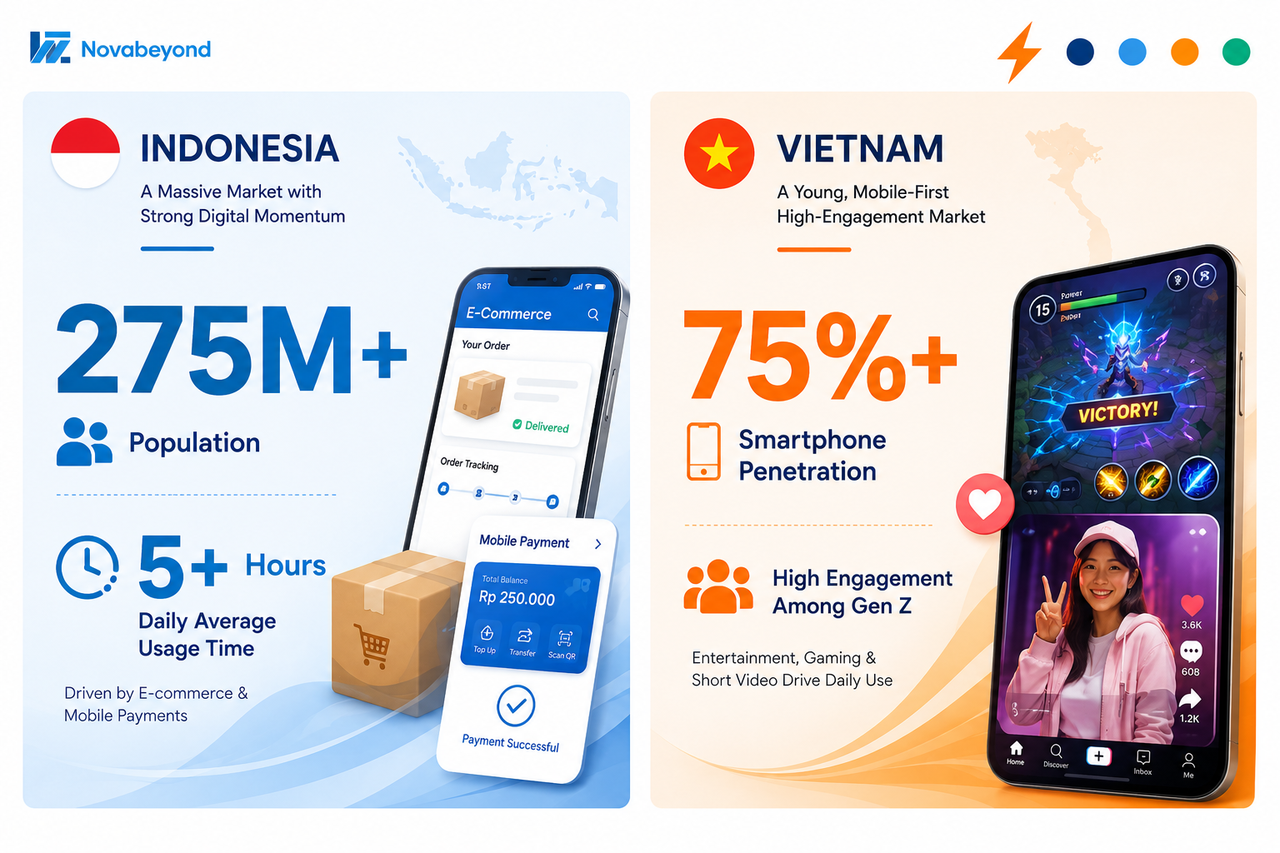
1. The Demographic & Mobile-First Dividend
• Indonesia (Scale & Volume): As the 4th most populous country in the world, Indonesia boasts over 275 million people and more than 210 million mobile internet users. Mobile devices account for over 90% of all internet connections. Indonesian users spend an average of 5+ hours per day on mobile apps—leading globally in screen-time engagement across social media, e-commerce platforms, and super-apps.
• Vietnam (Tech-Savvy & High Engagement): With a population of nearly 100 million, Vietnam features an extraordinarily young, tech-literate demographic. Over 75% of the population uses smartphones, with heavy daily consumption of mobile gaming, short-form video content, and social commerce. Vietnam is also a global hub for app development and publishing, creating an ecosystem highly receptive to digital ads.
2. High programmatic Infrastructure Adoption
Both regions have rapidly matured past standard social feeds and search engine ads. The market entry and expansion of specialized mobile DSPs (such as Moloco, Appier, and Bigabid) alongside direct telco-data partnerships have made localized, real-time programmatic buying both accessible and highly efficient.
3. Favorable eCPMs with Strong Down-Funnel Conversion Potential
While Tier-1 markets (US, JP, KR) suffer from sky-high eCPMs and intense competition, Indonesia and Vietnam offer highly cost-effective user acquisition. Crucially, when programmatic campaigns shift focus from top-of-funnel installs to post-install optimization (such as first deposits, in-app purchases, or subscription sign-ups), the Return on Ad Spend (ROAS) potential scales rapidly.
Part 2: Regional Market Comparison Matrix
While grouped together under the SEA banner, Indonesia and Vietnam exhibit distinct consumer behaviors, preferred app categories, and channel dynamics.
| Creative Vector | Traditional Approach | 2026 High-Performing Standard |
| Format | Polished corporate video / static banner | Dynamic, native-feeling short vertical video |
| Hook | "Download the #1 Wealth App" | Real-world problem hooks ("Why your high-yield savings account is secretly losing money") |
| Production Volume | 3–5 core creatives per quarter | 15–20 AI-assisted concept variants monthly |
| Social Proof | Generic press quotes | Contextual micro-influencer UGC showing actual app UI |
Part 3: The Programmatic UA Playbook for ID & VN
Navigating programmatic advertising in Southeast Asia requires moving away from generic global templates. Success hinges on precise inventory selection, event-based bidding, and localized creative strategies.
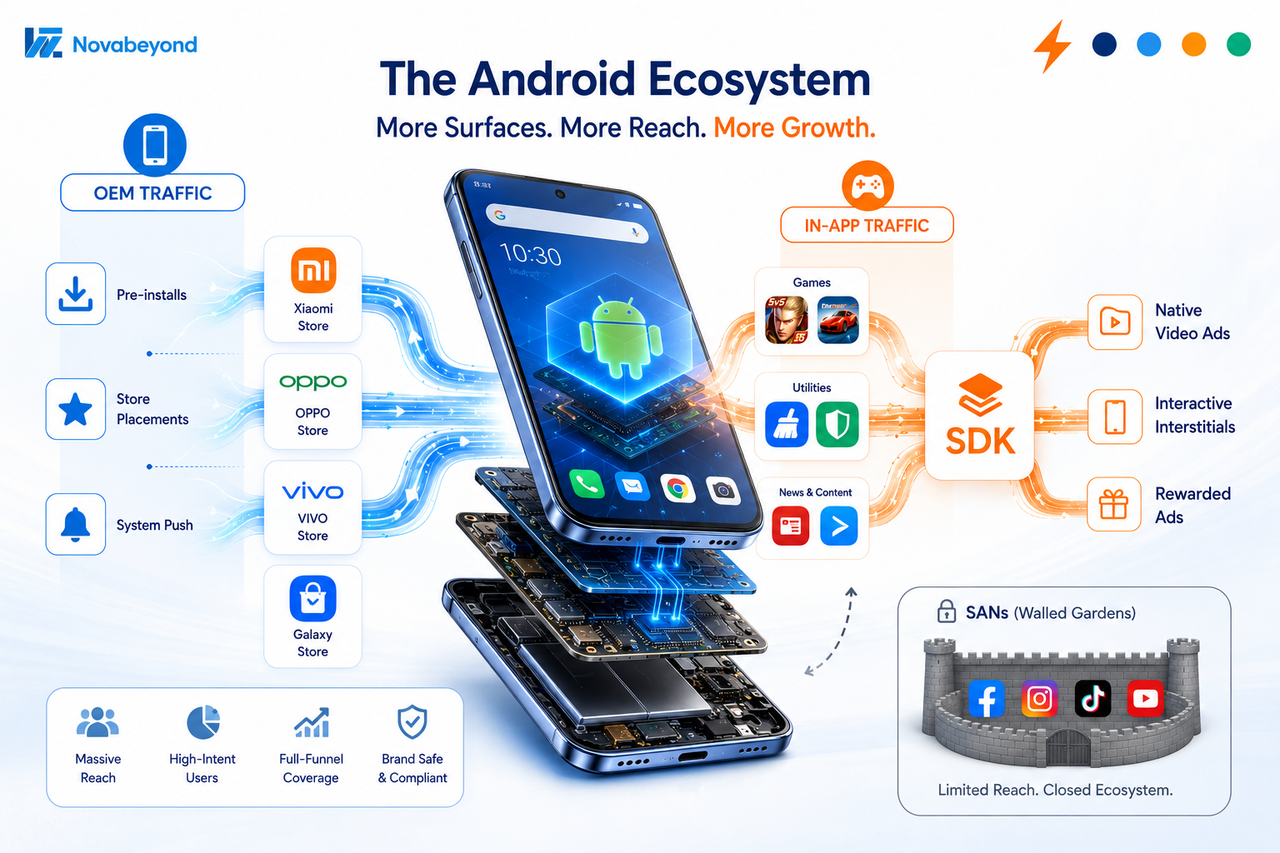
1. Diversifying Inventory Beyond SANs
Relying solely on walled gardens creates artificial bidding ceilings. Programmatic scale in ID and VN is unlocked through two core channels:
• OEM & On-Device User Acquisition: Android dominates both markets. Partnering with OEM DSPs (Xiaomi, Oppo, Vivo, Samsung) via programmatic platforms allows performance marketers to access inventory at the device level. Options include direct pre-installs, native app store feature placements, and system-level push recommendations, reaching users before they even open an app store.
• In-App Bidding & Supply-Side Integration: Instead of bidding on low-quality web banner remnant traffic, focus budget on SDK-integrated programmatic inventory within high-engagement local gaming, utility, and publisher apps.
2. Shifting to Event-Based Bidding (tCPA / tROAS)
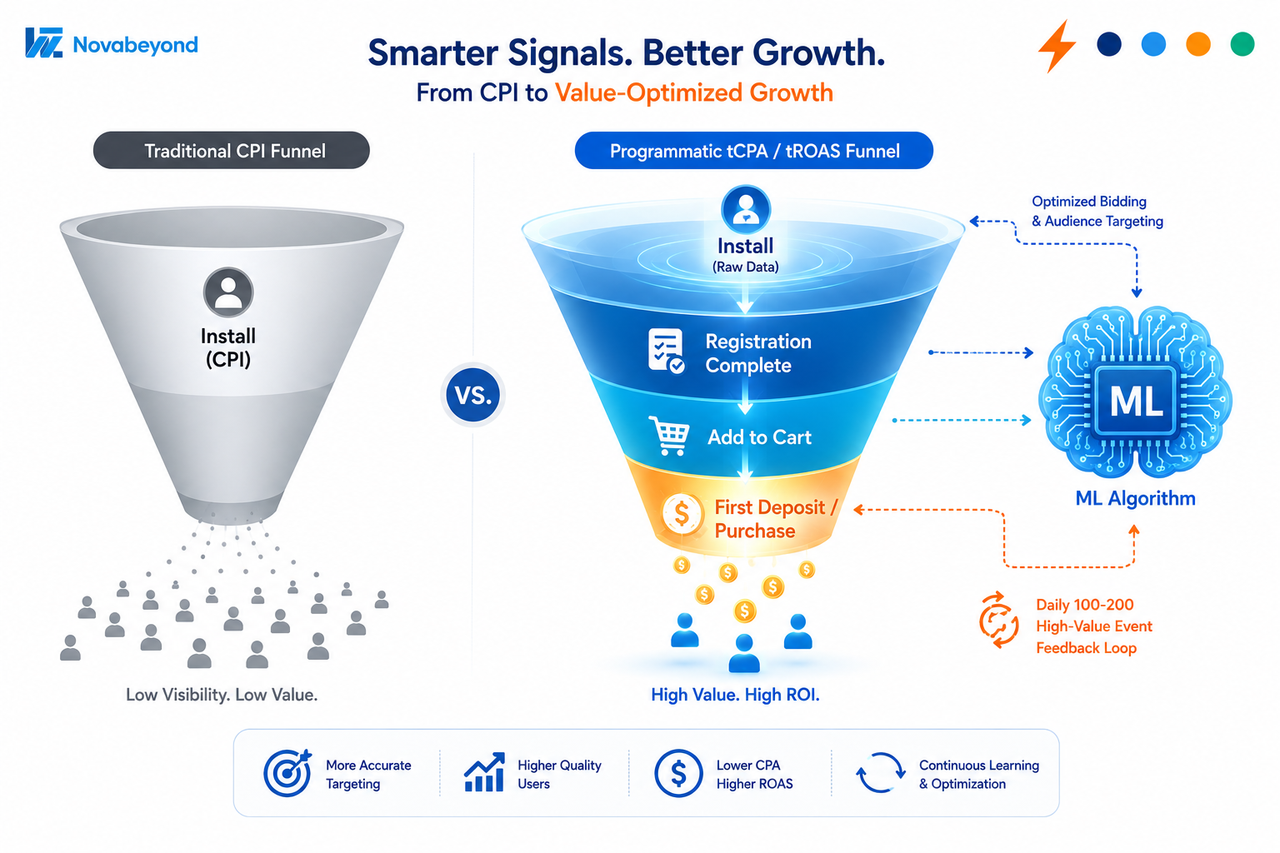
In markets with low CPIs, driving raw install volumes often yields low long-term retention. Modern programmatic DSPs rely on machine learning models that require continuous post-install telemetry.
• Funnel Optimization Thresholds: Feed key down-funnel events, such as registration_complete, add_to_cart, first_deposit, or level_achieved, back to your DSP via your Mobile Measurement Partner (MMP). Ensure your campaign generates at least 100–200 goal events per day so the programmatic engine can optimize bidding profiles accurately.
• Leveraging Local Data Profiles: In Indonesia, tap into telco-backed data segments via DSPs to target specific user segments with verified purchasing power or active financial app usage.
3. Creative Localization & High-Impact Ad Formats
Visual clarity, cultural resonance, and interactive formats drive performance in both markets.
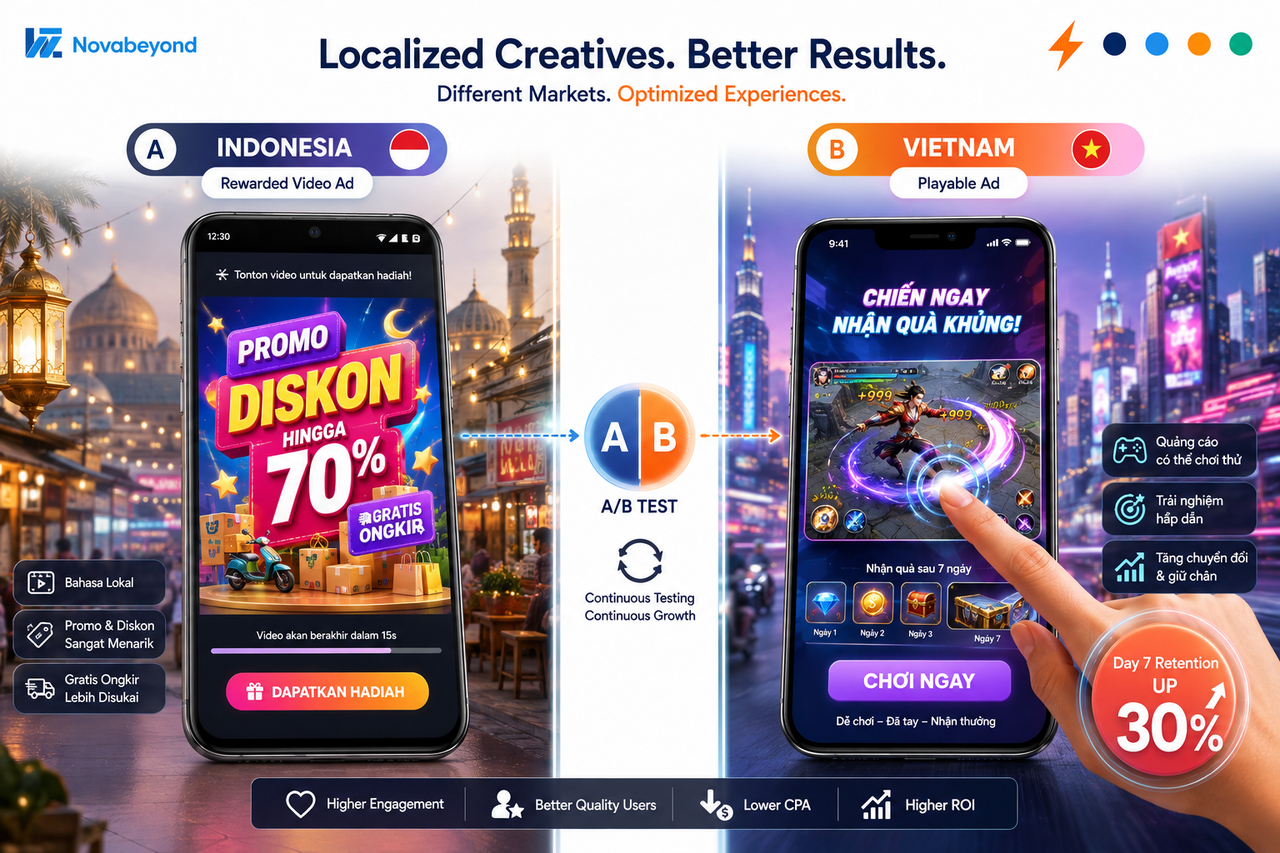
• Playable & Rewarded Video Ads: Particularly effective in Vietnam's gaming and utility sectors. Letting users sample core app features interactively before installing dramatically boosts Day 1 and Day 7 retention rates.
• Hyper-Localized Messaging & Visuals:
• Indonesia: Ad creatives must feature local context, Bahasa Indonesia copy, and clear value-adds (e.g., highlighting Promo, Diskon, or Gratis Ongkir). Seasonal relevance (such as tailored campaigns during Ramadan) is vital.
• Vietnam: Adopt fast-paced, high-energy visual formats mimicking popular short-form video aesthetics. Direct, benefit-driven messaging performs far better than abstract corporate branding.
Part 4: Risk Mitigation — Ad Fraud & Data Compliance
Scaling programmatically requires establishing guardrails against inventory fraud and ensuring compliance with local regulatory frameworks.
1. Anti-Fraud Implementation
Rapidly growing digital ad markets are natural targets for ad fraud, including click injection, device spoofing, and SDK fake installs.
• Integrate an MMP (e.g., AppsFlyer, Adjust, Singular) equipped with active anti-fraud modules.
• Monitor metric anomalies continuously, such as extremely short Time-To-Install (STTI) patterns or unnatural install-to-event ratios, and automatically black-list low-performing publisher IDs at the DSP level.
2. Regional Data Privacy Regulations
• Vietnam: Marketers must comply with strict data protection standards (such as Decree 13 and related national privacy laws) governing consumer data collection, consent storage, and cross-border transfers. Ensure explicit opt-in mechanics are mapped to your analytics telemetry.
• Indonesia: Campaign operators must adhere to national digital privacy guidelines (PDP Law / UU ITE) regarding user consent and programmatic ad transparency.
Conclusion: Unlocking Sustainable Growth
Indonesia and Vietnam represent the frontier of high-volume, cost-effective mobile user acquisition in Asia. However, realizing their full potential requires moving beyond simple social network campaigns.
By building a robust programmatic stack, combining OEM on-device inventory, down-funnel event-based ML bidding, and hyper-localized interactive ad creatives, growth marketers can build scalable, fraudulent-resistant UA engines that convert casual installs into valuable, long-term active users.
more posts

Mastering Mobile User Acquisition for Fintech Apps in 2026: What Actually Works
October. 08 2026
LEARN MORE

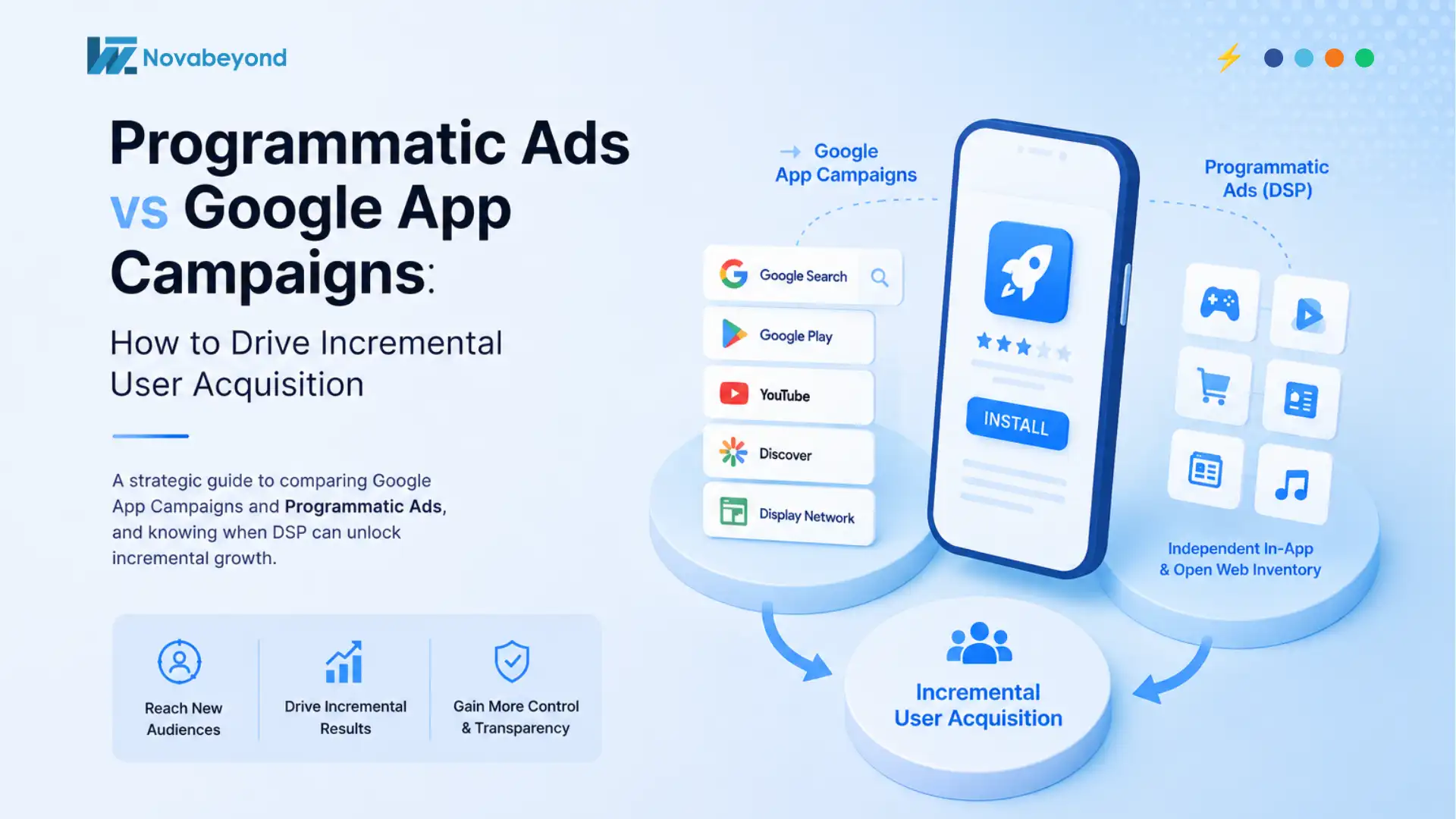
Programmatic Advertising vs. Google App Campaigns: How to Drive Incremental UA in 2026
September. 23 2026
LEARN MORE

The Complete Practical Guide to Mobile App User Acquisition in 2026: Bidding, Creatives, and Scaling
September. 22 2026
LEARN MORE
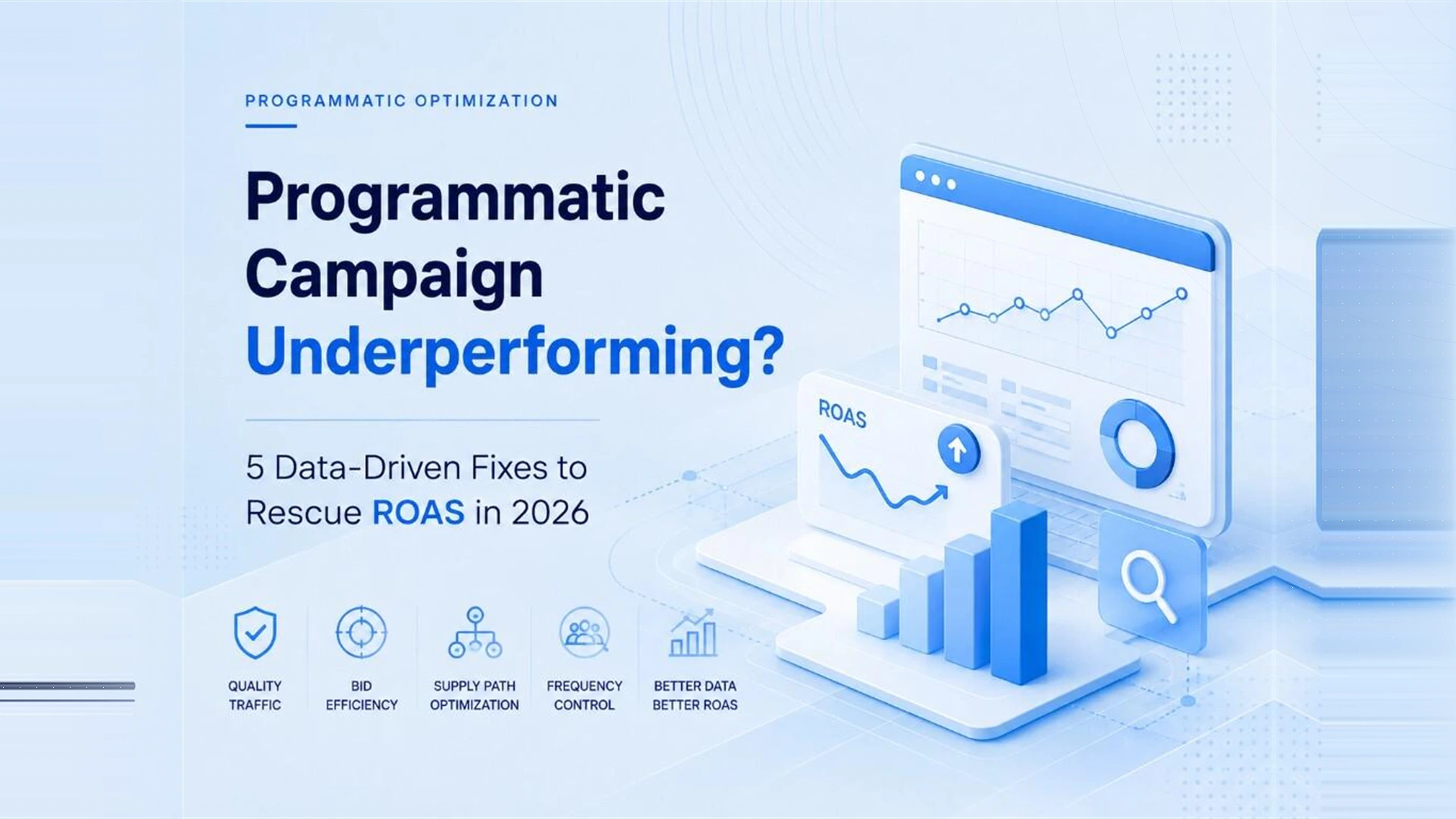
Programmatic Campaign Underperforming? 5 Data-Driven Fixes to Rescue ROAS in 2026
August. 31 2026
LEARN MORE