





UNIT 616 6/F KAM TEEM INDUSTRIAL BUILDING 135 CONNAUGHT ROAD WEST SAI WAN HONGKONG.
Copyright © 2026 NOVABEYOND LIMITED (company number 2833487). All rights reserved.
Introduction
Buying more traffic becomes difficult to justify when the same audiences keep seeing your ads, acquisition costs rise, and reports reveal little about the environments behind each click. A larger media budget can increase delivery without creating a meaningful new source of growth.
Direct inventory partnerships change the starting point. Instead of accepting whichever supply arrives through an intermediary's bundle, advertisers work with apps, publishers, and media owners to select relevant environments, define placements, and establish clearer commercial terms.
For 2027 planning, that creates an opportunity beyond cost control: access to local digital ecosystems and user moments that a mainstream campaign may miss. Novabeyond's approach brings these relationships together with audience matching, native experiences, and direct operational coordination. The same visibility also gives traffic arbitrage teams a stronger basis for evaluating acquisition cost against confirmed monetization.
Explore local media opportunities through Novabeyond's Direct Inventory Partnerships
Quick Answer
Direct inventory partnerships are commercial relationships with apps, publishers, and media owners that give advertisers access to defined advertising environments and placements. Their value combines clearer supply paths, fewer reseller layers, priority or exclusive placement opportunities, and collaboration on formats and reporting. Novabeyond uses these partnerships to connect brands with local digital ecosystems and identify potential net-new customers beyond existing channels. For traffic arbitrage, direct supply can make the source, cost, and quality of acquired visits easier to evaluate. The objective for 2027 is to turn differentiated media access into measurable customer growth or positive confirmed contribution margin.
What Are Direct Inventory Partnerships, and What Do You Actually Buy?
A direct inventory partnership connects the advertiser's objective with a media owner's audience and advertising environment. The agreement defines where campaigns can run, what experience users receive, how delivery is measured, and which commercial terms apply.
The inventory may include web placements, in-app touchpoints, native content, community sponsorships, or a premium package reserved for a particular campaign. This makes the relationship more valuable than a list of impressions: the buyer can discuss the placement, execution, and user journey with the parties responsible for them.
The relationship matters more than the buying interface
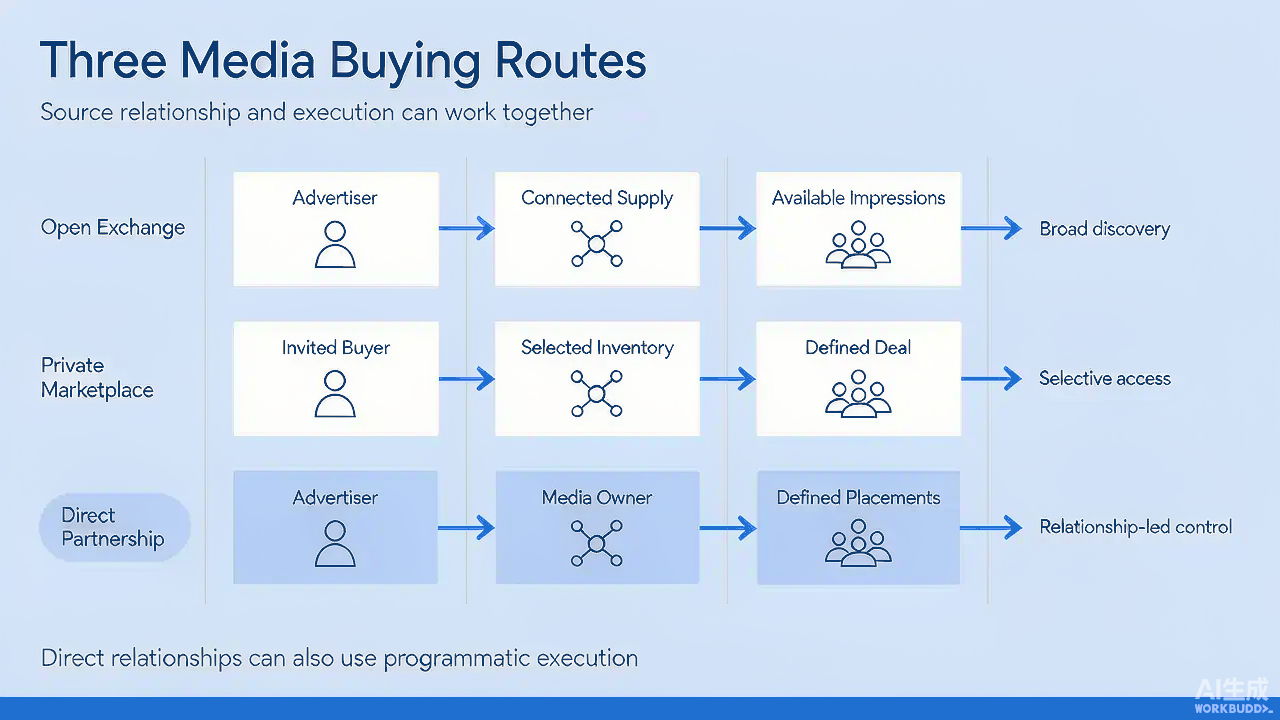
Direct inventory describes the source and commercial relationship. Programmatic describes how a transaction or campaign is executed. They can work together.
Google Ad Manager's Programmatic Direct documentation explains that directly negotiated campaigns can use Programmatic Guaranteed for reserved inventory or Preferred Deals for non-guaranteed, unreserved inventory. Automation can therefore support a direct agreement rather than replace it.
Buying approach | What the buyer selects | Main advantage | Planning requirement |
Open-exchange buying | Available impressions across connected supply | Broad discovery and flexible bidding | Inspect sellers, placements, and performance by source |
Private marketplace | Selected inventory offered to invited buyers | More defined access within a programmatic workflow | Confirm sellers, deal scope, and whether delivery is guaranteed |
Direct inventory partnership | Agreed media environments, placements, and experiences | Relationship-led access and execution control | Align scope, pricing, reporting, and operational responsibilities |
The distinctive value of a partnership is the ability to build around a specific opportunity. A content sponsorship, checkout integration, or local app campaign may require editorial coordination, developer support, and placement reservation that a standard auction configuration cannot arrange on its own.
Novabeyond organizes its offering around standard web and in-app activation, alongside premium placement exclusives, content and community partnerships, and programmatic premium inventory access. These options let buyers match the depth of collaboration to the campaign's objective.
Why Transparent Media Buying Starts With a Clearer Supply Relationship
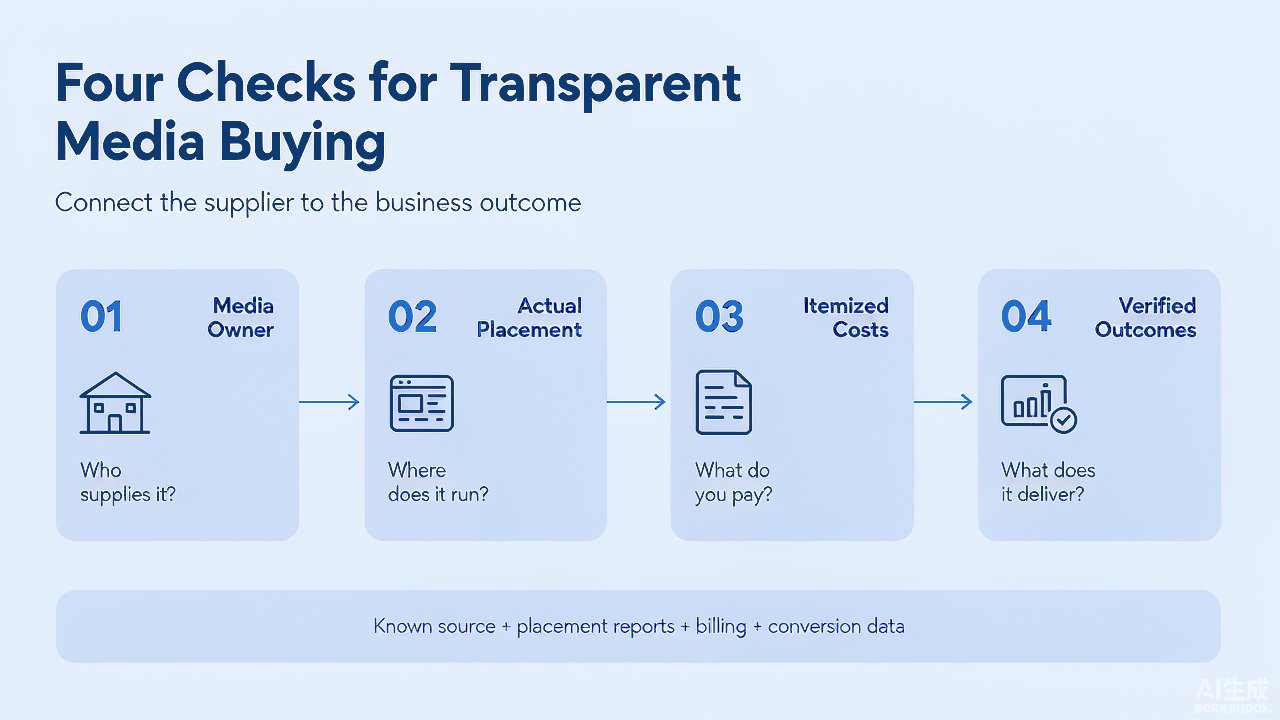
Transparent media buying answers four practical questions: who supplies the placement, where the ad appears, what the buyer pays, and how performance is verified. Without those answers, teams struggle to separate media quality from pricing and execution problems.
The ANA's Q2 2026 Programmatic Transparency Benchmark reported improving working-media efficiency alongside renewed pricing pressure. Its conclusion emphasizes quality, price, measurement, and supply curation rather than transaction costs alone. For buyers planning 2027 budgets, this supports a procurement approach that evaluates the complete media opportunity, not simply the lowest quoted CPM.
Make placement and cost visibility operational
Direct relationships give the buyer and media owner a shared reference point: an agreed app, site, placement, format, and delivery period. Teams can then compare actual delivery with that scope and investigate differences with the responsible operator.
A useful buying agreement separates media charges from applicable execution, technology, production, and measurement costs. Removing reseller layers makes the cost structure easier to inspect and gives buyers a clearer basis for allocating budget.
Novabeyond's direct-partnership model emphasizes direct integration, an auditable supply path, no hidden markups, and coordination with developer teams. The commercial benefit is a shorter route from a performance question to a practical change, whether that means adjusting an experience, reserving a placement, or resolving an ad-serving issue.
Connect the relationship with technical verification
For programmatic delivery, IAB Tech Lab's ads.txt and app-ads.txt standards identify authorized sellers, while its sellers.json and SupplyChain Object specifications identify participating sellers and intermediaries. Connect these records with actual placement reports, billing, and conversion data to trace the opportunity from supplier to outcome. A clear source makes it easier to identify which placement or experience to improve and where to move budget.
How Novabeyond Turns Local Ecosystem Access Into Net-New Growth
Some acquisition opportunities depend on relationships with local apps, publishers, and category-leading digital platforms. A buyer may need access to a particular user moment or native experience, not another standard display placement available through its usual channels.
Novabeyond's Direct Inventory Partnerships provide exclusive local ecosystem access through direct relationships with apps, publishers, and media owners. Premium placement exclusives and content partnerships let brands build campaigns around opportunities beyond their usual buying routes. Audience matching then connects that access with customers who fit the advertiser's goals and may be underreached by its existing media mix.
Start with audience fit, then evaluate incremental opportunity
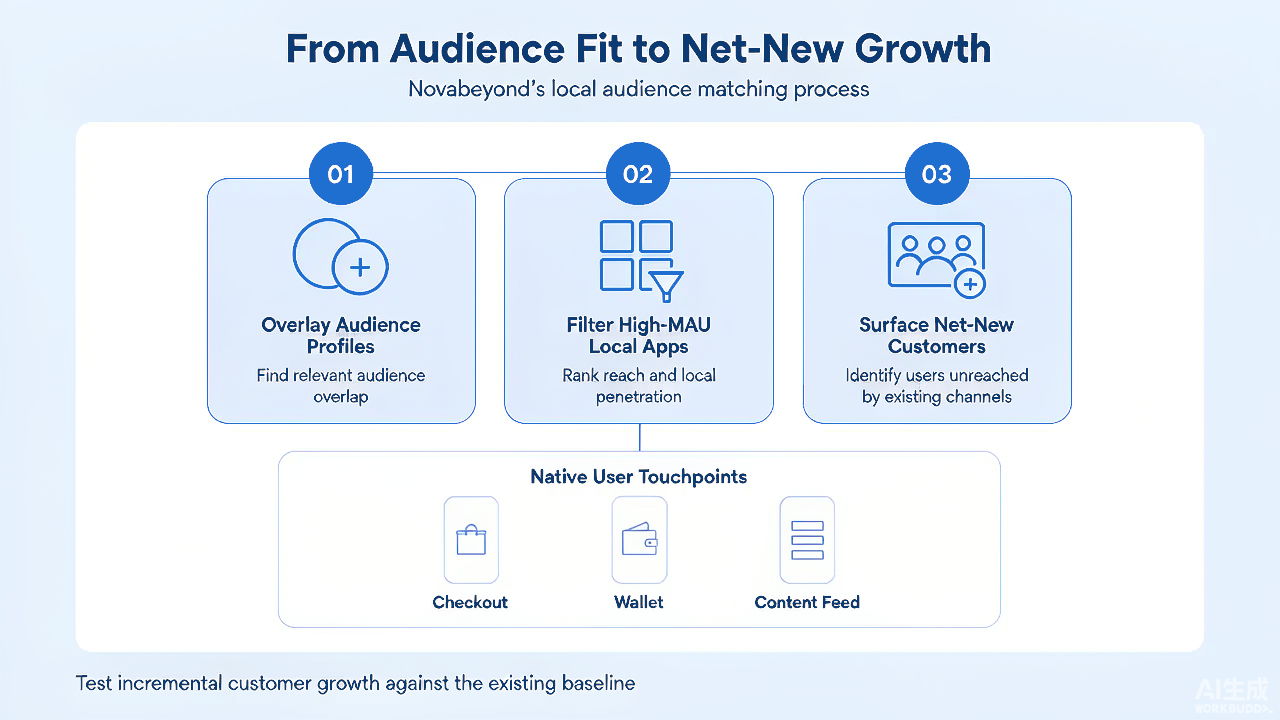
The audience workflow has three stages:
1. Overlay audience profiles. Compare first-party audience characteristics with local app profiles to identify relevant demographic and behavioral overlap.
2. Filter high-MAU local apps. Rank suitable environments by monthly active users and local penetration to shortlist partners with meaningful reach.
3. Surface potential net-new customers. Identify eligible users within those ecosystems who have not been reached through the advertiser's existing channels.
Audience overlap establishes relevance; the unreached segment establishes the opportunity to test. Compare acquisition and customer outcomes against the existing baseline. A new app placement becomes strategically valuable when it adds customers rather than repeatedly reaching the same ones.
Match the ad experience to the user's current task
Novabeyond's native experiences include branded editorial experiences, content hubs, sponsorships, and contextual in-app placements across checkout flows, ride tracking, wallet services, and content feeds.
A retailer could test a relevant offer near a shopping checkout, while a travel advertiser could explore a localized message within an appropriate app journey. A content-led campaign could use a publisher environment where users are already considering the subject.
The advantage is specific context. Creative can respond to what the user is doing, while the destination fulfills the same promise. Clear sponsorship disclosure keeps the experience native without hiding its commercial purpose.
Use direct coordination to improve execution
Custom placements need more than targeting settings. Creative dimensions, interaction rules, landing behavior, tracking events, frequency, and reporting must align with the host environment.
Direct developer coordination gives the campaign team a route to resolve these details with the people who control delivery. For brands entering a regional market, Novabeyond provides a relationship-led way to explore access and coordinate execution without treating every local platform as an isolated procurement project.
Discuss audience fit and native placement opportunities with Novabeyond
Where Direct Inventory Fits Traffic Arbitrage in 2027
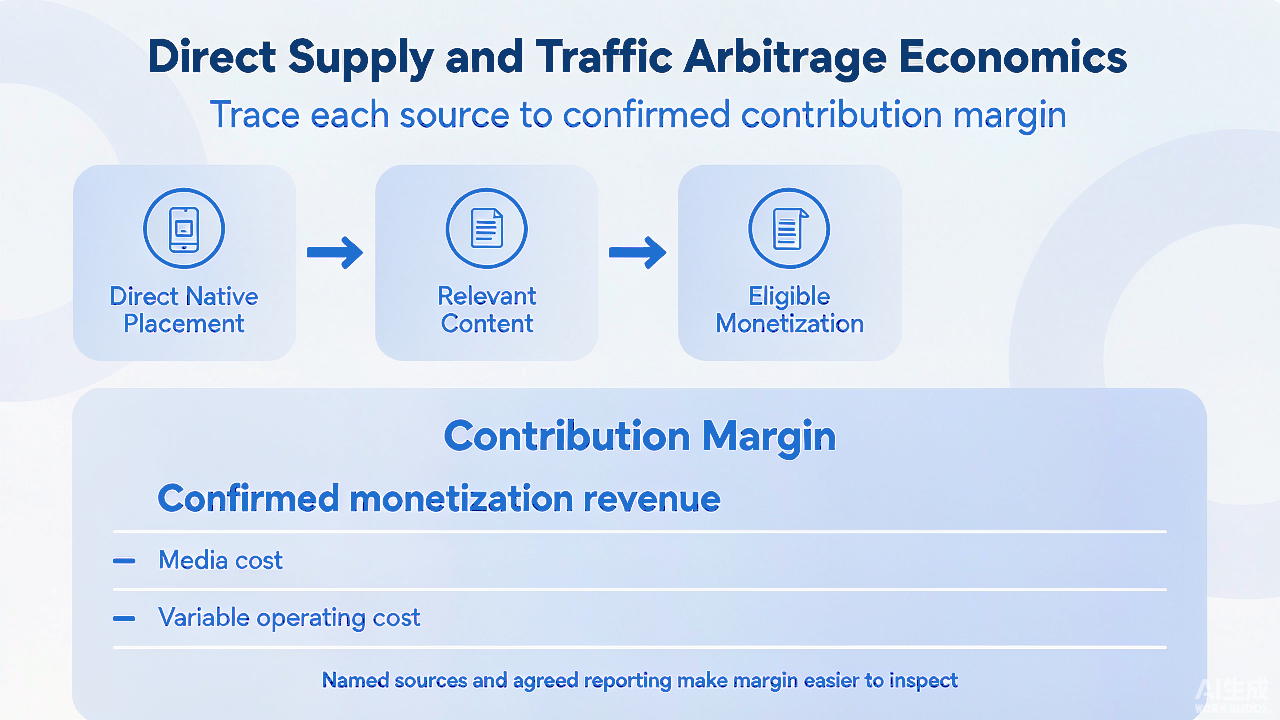
Traffic arbitrage acquires visits and monetizes them at a value above acquisition and variable operating costs. Direct inventory can support the acquisition side by giving operators clearer placement context, commercial terms, and access to relevant audiences.
For a content-led model, the journey could run from a disclosed native placement to a useful article and then to eligible monetization. For an approved performance offer, it could connect a contextual placement with an accepted lead or sale. Search monetization has its own eligibility and user-journey requirements; a media partnership supplies traffic, not automatic access to a monetization feed.
The opportunity is to connect identifiable placements with confirmed margin. Operators can examine which placement attracted the visit, whether the creative accurately prepared the user, and whether that source produces enough confirmed revenue to justify continued spending.
Compare confirmed value with the full cost of acquisition
A practical model is: Contribution margin = confirmed monetization revenue − media cost − variable operating cost.
For an illustrative cohort of 10,000 acquired visits, confirmed revenue of $1,800, media spend of $1,200, and variable operating costs of $300 produce $300 in contribution margin. If confirmed revenue falls to $1,400 with the same costs, the cohort loses $100. A low acquisition price cannot compensate for weak monetization indefinitely.
Direct partnerships make this analysis more actionable. A named source and agreed reporting structure help identify which placements create margin after deductions and variable costs. For broader tools and channel practices, Novabeyond's traffic arbitrage trends and operating guide provides supporting detail.
Connect source transparency with user intent
Google's traffic provider checklist recommends understanding the source, verifying placements, obtaining source reports, and starting with a small monitored test. A direct relationship gives operators a practical way to discuss these requirements with the supplier. Aligning the acquisition message with useful destination content helps preserve the value of those visits, while source-level reporting identifies unproductive placements.
Building a Direct Inventory Strategy for 2027
The case for 2027 is a planning direction: prioritize known media environments, relevant local audiences, and reporting that connects spending to business value. Direct partnerships put these choices into the buying relationship before a campaign scales.
Three priorities follow from that approach. First, compete through differentiated access. Select environments and user moments that add something to the existing mix. Second, make transparency actionable. Agree on source-level delivery and cost information that can guide changes. Third, combine relationships with automation. Use programmatic workflows where they fit, while retaining direct coordination for custom experiences and premium placements.
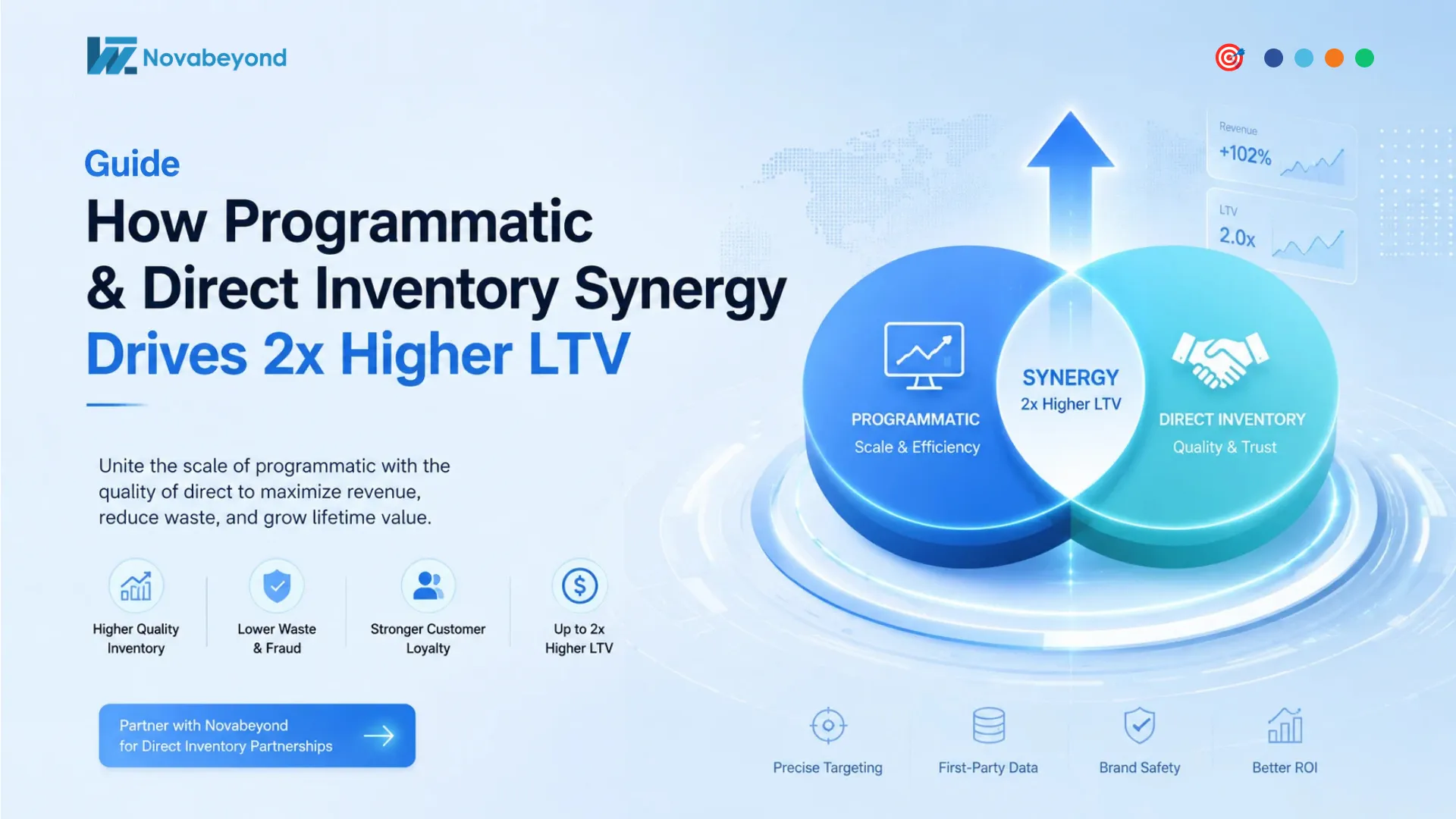
Novabeyond's guide to combining programmatic discovery with direct inventory explores how these roles can complement each other. Discovery can reveal promising environments; a direct relationship can then support a more deliberate placement or experience.
Turn the opportunity into a testable brief
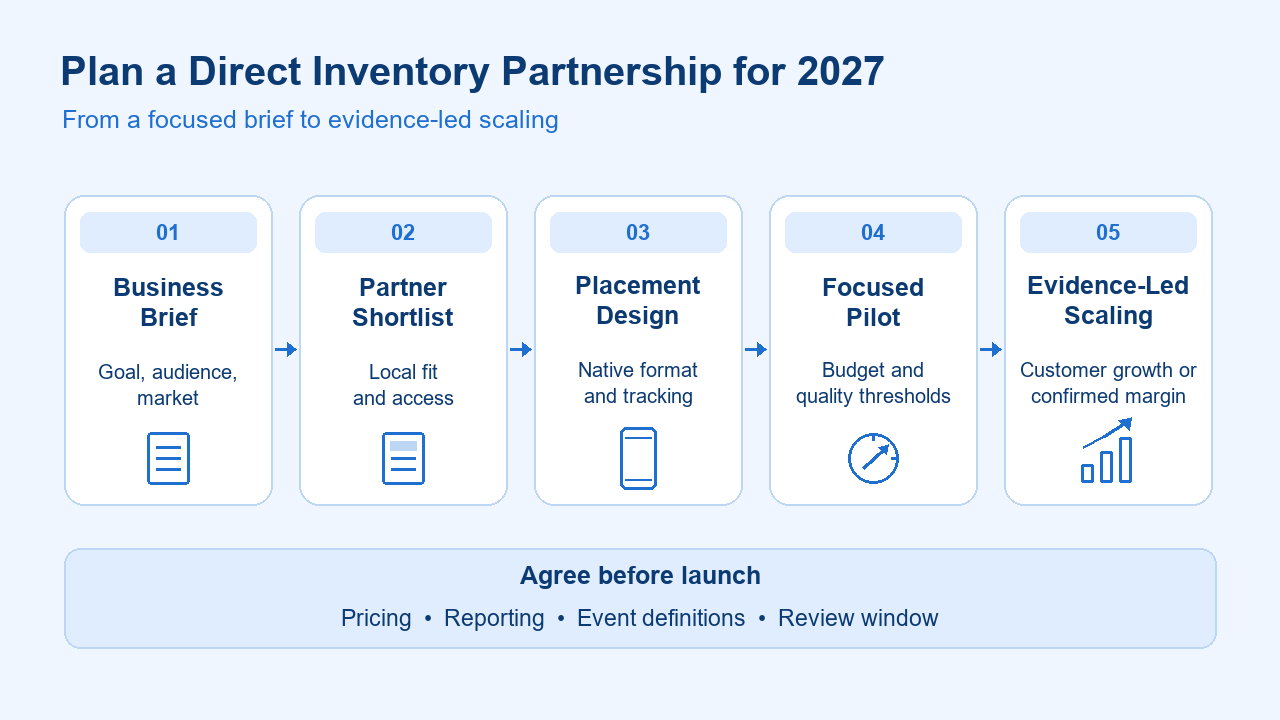
Before requesting a proposal, define:
Business objective: net-new customers, qualified acquisitions, incremental sales, or confirmed monetization margin.
Audience and market: who the campaign needs to reach and which existing-channel overlap matters.
Environment and experience: app or publisher category, placement, native format, and destination.
Commercial and reporting terms: pricing, fees, delivery scope, event definitions, and reconciliation.
Test decision: budget, review window, quality thresholds, and the evidence required to scale.
Start with a focused pilot. For acquisition, assess customer quality as well as delivery; Novabeyond's quality-adjusted CPI and direct-supply guide provides a deeper evaluation framework. For arbitrage, use confirmed cohort margin. For either model, test incremental impact when additional customer growth is the objective.
This gives Novabeyond a concrete starting point for matching local media opportunities to the buyer's economics. The partnership becomes a growth mechanism with defined decisions, not simply a new inventory package.
FAQ
1. What is the difference between direct inventory partnerships and direct media buying?
Direct media buying describes purchasing from a media owner. A direct inventory partnership can extend that transaction into ongoing collaboration around audience access, premium placements, native experiences, reporting, and execution. The agreement defines which elements are included.
2. Can direct inventory partnerships use programmatic technology?
Yes. Directly negotiated inventory can be delivered through automated workflows. Programmatic Guaranteed reserves inventory, while Preferred Deals provide a non-guaranteed buying opportunity. Select the mechanism that fits the campaign's volume, timing, and flexibility requirements.
3. Which advertisers should consider local direct inventory?
Brands seeking regional expansion, more relevant customer touchpoints, or differentiated reach beyond existing campaigns should consider it. The strongest brief identifies a specific audience or experience gap and a business outcome against which the placement can be evaluated.
4. How can direct inventory support traffic arbitrage?
It supplies identifiable acquisition placements and clearer buying terms. Operators can connect each source's cost and visit quality with confirmed monetization, then prioritize placements that produce positive contribution margin.
5. Does direct inventory mean lower media prices?
Removing reseller layers can improve cost efficiency, but premium placements and custom production carry their own prices. Compare the complete cost with qualified customer outcomes or confirmed revenue rather than treating the lowest CPM as the best buy.
6. How does Novabeyond identify potential net-new audiences?
Its audience workflow compares profiles, shortlists relevant high-MAU local apps, and identifies potential customers unreached by existing channels. Campaign measurement then tests whether those opportunities translate into additional customer growth.
7. What should I prepare before speaking with Novabeyond?
Prepare the target market, audience, business objective, current channels, preferred experience, measurement setup, and pilot budget. Include acquisition-quality or monetization-margin requirements so the team can assess local media fit against a clear commercial goal.
Conclusion
Direct inventory partnerships offer a more deliberate way to buy media: choose the environment, collaborate on the experience, understand the supply relationship, and evaluate the business outcome. For 2027, their strongest value combines differentiated local access with transparent execution.
Novabeyond turns direct relationships with local apps, publishers, and media owners into audience-matched campaigns, exclusive premium placement opportunities, native experiences, and developer-coordinated execution. For brands, the goal is net-new customer growth. For traffic arbitrage teams, it is an acquisition source whose quality and economics can be inspected before scaling.
Build your 2027 Direct Inventory Partnerships strategy with Novabeyond
more posts